Great Plains Tribal Chairman’s Association approves Bear Butte resolution
By Babette Herrmann, Today correspondent
Story Published: Sep 15, 2008
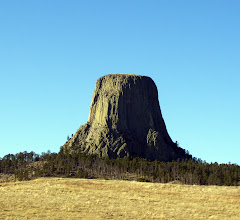
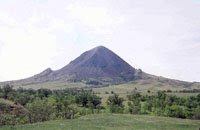
RAPID CITY, S.D. – Tamra Brennan, founder/director of the grass-roots organization Protect Sacred Sites Indigenous People, One Nation, has dedicated her life to protecting Bear Butte, known as Mato Paha to the Sioux, and countless other sacred sites across the nation.
One of her recent endeavors comprised of drawing up a draft resolution that entails guidelines for the Great Plains Tribal Chairman’s Association to refer to in their quest to protect Bear Butte and sacred areas listed in the Fort Laramie treaties of 1851 and 1868.
Since time immemorial, Plains tribes have held vision quests and an array of ceremonies and rites of passages at Bear Butte, especially during the summer months. American Indian veterans have left prayer offerings in gratitude of their safe return. Numerous other Natives simply go there to pray.
The threat of encroaching development and the raucous annual Sturgis Motorcycle Rally were the main reasons Brennan drew up the resolution, and just a couple of the reasons why the area needs watchdog groups such as Protect Sacred Sites and its subsidiary, Protect Bear Butte.
Brennan submitted the draft copy to GPTCA in June, which approved it in early July. It was the perfect organization to coalesce, as it consists of 16 tribal chairmen from the Great Plains, covering North Dakota, South Dakota and Nebraska.
“This helps show people that tribes are in the loop and they are active in what’s going on in the protection of Bear Butte,” she said.
GPTCA Executive Director A. Gay Kingman said that some minor revisions were made and legal terminology added to the resolution to make it an official document for the organization to call upon when making decisions that directly impact Bear Butte.
Kingman, Cheyenne River Sioux, said the GPTCA was formed about 25 years ago (it was formerly known as the Aberdeen Area Tribal Chairman’s Association) and that each chairman shares the common bond of working together on issues that affect their people, including the protection of sacred sites.
When it comes to tribes working with state government on Native issues, Kingman said legislators need further education on the indigenous people of South Dakota. But she was impressed when Gov. Mike Rounds introduced legislation to establish a buffer zone around Bear Butte. The measure failed earlier this year, but it was the thought that counted.
“The tribes would have been supportive, but it was a five-mile buffer zone and it encroached upon the town of Sturgis,” she said. “I think if it could have been three or maybe even four miles, it would have been more acceptable.”
Meanwhile, Brennan and volunteers work on discouraging new development, while watching the actions of businesses that already exist. A total of 10 businesses encroach upon the site – consisting of bars and campgrounds – most of which were built within the past several years.
The Northern Cheyenne, Lower Brule and Rosebud Sioux tribes own land bordering Bear Butte and primarily utilize it for gatherings and ceremonies. Kingman said that other tribes within the region would like to buy up the remaining land, but they consider the asking prices exorbitant and unaffordable.
The annual Sturgis Motorcycle Rally wrapped up its 68th year in August. Each year, the event features concerts around the clock, and revelers crowd local bars, hotels and campgrounds. Sturgis is located about eight miles east of Bear Butte.
For the past three years, Brennan has made it a point to educate bikers before, during and after the motorcycle rally on the significance of Bear Butte and surrounding sacred sites as a part of the “Bikers for Bear Butte” campaign. This year, volunteers sent out flyers to more than 6,000 motorcycle clubs and dealers across the nation prior to the event.
“What we heard the last couple of years from the bikers is that they had no idea that this is a sacred site because no one ever told them,” she said. “When we were walking around and passing flyers out in town, we never got a single negative response.”
The biggest challenge came this year when she learned that four local campgrounds were going to offer helicopter rides. She was worried that pilots would fly over Bear Butte, so she garnered the support of the Federal Aviation Administration. Officials from the FAA met with helicopter pilots and instructed them not to fly over the site. Out of the four campgrounds, only three ended up offering the rides and just one flew over the mountain on an evening flight.
As for next year’s rally, Brennan, Eastern Cherokee, wants to host educational forums at a venue in Sturgis. “You have to reach out to everybody for the protection of these sites. You don’t want to alienate any particular kind of group.”
For more information, visit www.protectbearbutte.com and www.protectsacredsites.org.
http://www.indiancountrytoday.com/national/plains/28417374.html
Tuesday, September 23, 2008

Saturday, September 20, 2008
Native American skull discovered
Native American skull discovered
An avid Indian artifact hunter discovered a rare find on the banks of the 102 River just north of Barnard on August 19.
The item was an early American Indian skull stuck in a sandbar along the tributary.
The investigation was performed locally by the Nodaway County Sheriff’s Department, Nodaway County Coroner’s Office and the Missouri Highway Patrol DDCC.
Once the skull was unearthed, it was sent to Dr. Michael Finnegan, a forensics anthropologist at Kansas State University, Manhattan, KS.
Finnegan reported back to the Sheriff’s Department that it was a 35-45 year old man’s skull dating back to the 1800s.
He also said he would alert the Missouri State Historical Preservation Office, which is part of the Missouri Department of Natural Resources, to this discovery. There has been no word yet on where the skull may be housed.
http://www.nodawaynews.com/modules.php?op=modload&name=News&file=article&sid=10642&mode=thread&order=0&thold=0
An avid Indian artifact hunter discovered a rare find on the banks of the 102 River just north of Barnard on August 19.
The item was an early American Indian skull stuck in a sandbar along the tributary.
The investigation was performed locally by the Nodaway County Sheriff’s Department, Nodaway County Coroner’s Office and the Missouri Highway Patrol DDCC.
Once the skull was unearthed, it was sent to Dr. Michael Finnegan, a forensics anthropologist at Kansas State University, Manhattan, KS.
Finnegan reported back to the Sheriff’s Department that it was a 35-45 year old man’s skull dating back to the 1800s.
He also said he would alert the Missouri State Historical Preservation Office, which is part of the Missouri Department of Natural Resources, to this discovery. There has been no word yet on where the skull may be housed.
http://www.nodawaynews.com/modules.php?op=modload&name=News&file=article&sid=10642&mode=thread&order=0&thold=0
Tribe reburying remains of more than 300 people
Tribe reburying remains of more than 300 people
More than five years after state construction crews inadvertently unearthed human remains from a Native American site dating back 2,700 years, more than 300 remains are being reburied.
PORT ANGELES, Wash. —
More than five years after state construction crews inadvertently unearthed human remains from a Native American site dating back 2,700 years, more than 300 remains are being reburied.
Members of the Lower Elwha Klallam Tribe of Washington state's Olympic Peninsula began burial ceremonies Monday with singing and praying. A mass grave has been prepared as the resting place for the tribe's ancestors. Those remains had been kept in boxes.
"It's really hard to express our emotions at this point in time. We are still in mourning," Lower Elwha Tribal Chairwoman Frances Charles told The Seattle Times. "But it is good to see some of the smiles come back to our community members, knowing the heaviness is lifted off."
In 2003, the state Department of Transportation began construction on a waterfront property near here to build pontoons for a nearby bridge project. Tribe members had warned that a tribal site was nearby, but a state-hired archaeologist did not find anything. It only took a few days for construction workers to start digging out remains.
After spending about $70 million, the state halted construction in 2004 at the request of the tribe. The reburial grounds were returned by the state to the tribe in 2006.
Digs at the site have uncovered thousands of artifacts, like spindles made out of whale bone. Archaeologists say the Indian village is one of the largest and oldest in Washington.
Tribal leaders said the ground will remain a cemetery, and they hope a longhouse and museum will be built nearby.
Carmen Watson Charles, who worked with other tribal members pulling the bones from the path of construction, said that there's a lot of emotion coming from tribal members.
"Unity and respect for one another, that's what I hope is learned from this," Charles said.
Copyright © 2008 The Seattle Times Company
http://seattletimes.nwsource.com/html/localnews/2008184200_apwatribalremains1stldwritethru.html
More than five years after state construction crews inadvertently unearthed human remains from a Native American site dating back 2,700 years, more than 300 remains are being reburied.
PORT ANGELES, Wash. —
More than five years after state construction crews inadvertently unearthed human remains from a Native American site dating back 2,700 years, more than 300 remains are being reburied.
Members of the Lower Elwha Klallam Tribe of Washington state's Olympic Peninsula began burial ceremonies Monday with singing and praying. A mass grave has been prepared as the resting place for the tribe's ancestors. Those remains had been kept in boxes.
"It's really hard to express our emotions at this point in time. We are still in mourning," Lower Elwha Tribal Chairwoman Frances Charles told The Seattle Times. "But it is good to see some of the smiles come back to our community members, knowing the heaviness is lifted off."
In 2003, the state Department of Transportation began construction on a waterfront property near here to build pontoons for a nearby bridge project. Tribe members had warned that a tribal site was nearby, but a state-hired archaeologist did not find anything. It only took a few days for construction workers to start digging out remains.
After spending about $70 million, the state halted construction in 2004 at the request of the tribe. The reburial grounds were returned by the state to the tribe in 2006.
Digs at the site have uncovered thousands of artifacts, like spindles made out of whale bone. Archaeologists say the Indian village is one of the largest and oldest in Washington.
Tribal leaders said the ground will remain a cemetery, and they hope a longhouse and museum will be built nearby.
Carmen Watson Charles, who worked with other tribal members pulling the bones from the path of construction, said that there's a lot of emotion coming from tribal members.
"Unity and respect for one another, that's what I hope is learned from this," Charles said.
Copyright © 2008 The Seattle Times Company
http://seattletimes.nwsource.com/html/localnews/2008184200_apwatribalremains1stldwritethru.html
Historic sites, parks face possible closure
Historic sites, parks face possible closure
Supporters are bracing for the state's budget woes to trickle down.
By Brandon Larrabee, The Times-Union
CARTERSVILLE - You could call it Kenneth Akins' dream job.
He was a child when he first came to the Etowah Indian Mounds, a state historic site in Northeast Georgia that features one mound 67 feet high, two smaller bumps in the ground and several other rises that indicate where other mounds were.
"I was excited when I came here as a kid," recalled Akins, now the manager of the site. "Turned me on to this place, turned me on to history."
He knew what he wanted to do with his life.
"I was so fascinated with this place, and I told my dad, 'I want to work here.' "
Akins studied history in college and got a job with the state park system in 1981. For 23 years, he moved from site to site. He was working at Fort King George in Darien, helping that park survive the threat of closing, when Akins finally got the position he always wanted.
Now, four years into a drive to spruce up the site and give visitors more of a sense of how the Muscogee Creek who roamed the area 500 years ago lived, Akins is cutting back. Savings in water-use are helping Etowah weather budget cuts. Grass is being cut less often.
And there is the returning prospect that the state's deepening fiscal crisis could force the Department of Natural Resources to close as many as six state parks and seven historic sites. That would be the latest blow, advocates say, in a six-year long financial struggle for sites such as Etowah.
"It comes after state park budgets have been cut every year since 2002," said Andy Fleming, executive director of Friends of Georgia State Parks and Historic Sites. "We feel that, right now, the parks could really suffer if we have any additional cuts."
The Department of Natural Resources argues that, while it would hate to make the cuts, it has little choice. Nearly $25.1 million of its $115.8 million budget is wrapped up in parks, and Gov. Sonny Perdue has asked each agency for plans to slice spending by as much as 10 percent to deal with a shortfall that could surpass $2 billion.
On the mounds
Akins' work includes trying to raise awareness of what the mounds are and aren't, educating the public about life in the 54-acre city that was home to the Muscogee Creek from around A.D. 1000 until shortly after Spanish explorer Hernando de Soto's visit in 1540.
For example: Only one of the mounds, known as Mound C, was used for burial. Mound A, the site's tallest and one of the highest in the Southeast, was where the chief of the area would live. When each chief died, his house would be burned, and the new chief would want the mound raised a bit to show that he had a higher status than his predecessor.
The shorter Mound B was likely for an assistant to the chief, and the other mounds - long since eroded - probably served as the homes of other prominent people in the city's life, though none as prominent as those who lived on the higher mounds.
Akins has moved to increase the educational thrust of the park since arriving in 2004.
He worked to establish the Friends of Etowah Indian Mounds, which holds fundraisers and other events at the park. He increased signage, solicited donations to build a house resembling those the Muscogee would have lived in, and recommended projects to the Friends group such as a small nursery of grasses and wildflowers native to the area. The hope is to get rid of the non-native, common grass now in the area so, in a decade or so, visitors will have a truer picture of what Etowah looked like centuries ago.
Finding the funds
According to the Department of Natural Resources, about 29,091 people attended Etowah in fiscal year 2007-08. That would make the park one of the least visited in the system, even as the state says visitation will be one of several factors used to decide which parks to close.
Other components of figuring out which places to shutter could cut in Etowah's favor - including its cultural and historic significance.
"I don't feel that there's any reason that they'll cut this park and close it," said Patty Wallenburg, president of Friends of Etowah Indian Mounds.
What that means for other lightly visited locations, such as the Robert Toombs House in Washington or Hofwyl-Broadfield Plantation in Brunswick, is unclear.
The department stresses that no final decisions have been made, and Perdue or the General Assembly could decide to spare the parks by cutting elsewhere.
"We really have to wait to see the dollars that we have to find and then we can chart our course of action from there," department spokeswoman Beth Brown said in an e-mail. "And, it may be that once we have 'the list,' we can work with local communities to find alternative ways to keep those facilities operating closer to normal ... which may modify what ends up on the final list."
Some supporters have pressed the state to instead increase the relatively modest park fees. But Fleming pointed out that, while that idea has merit, there also are pitfalls.
"You say that, and then you have to remember that, especially in a down economy, the inexpensive or affordable outdoor recreation opportunities become even more important," he said.
Meanwhile, those like Akins, who discovered his love of history through a boy's eyes peering at the mounds of Etowah, wait to see what will happen to Georgia's publicly owned spaces.
"I'm concerned, but I feel very positive," he said. "I think we're all concerned. Everybody's concerned. It would be a big blow to the state of Georgia."
brandon.larrabee@morris.com, (678) 977-3709
--------------------------------------------------------------------------------
CLOSING PARKS?
A look at what selected parks spend, their profit or loss, the attendance and how much they cost per visitor. (Fiscal year 2007-08)
Park (Location) Expenses Profit/Loss Attendance Cost per visitor
Fort Yargo State Park (Winder) $716,879 -$231,340 500,449 $1.43
Hard Labor Creek Park (Rutlege) $665,803 $59,485 329,684 $2.02
Skidaway Island State Park (Savannah) $306,696 $125,388 190,386 $1.61
Laura S. Walker State Park (Waycross) $351,818 -$186,537 170,823 $2.06
Mistletoe State Park (Appling) $407,827 $45,696 143,996 $2.83
Ft. McAllister Historic Site (Richmond Hill) $399,339 -$66,278 125,980 $3.17
Crooked River State Park (St. Marys) $458,451 -$3,132 99,454 $4.61
Gordonia Altamaha State Park (Reidsville) $181,013 -$113,195 84,962 $2.13
Wormsloe State Historic Site (Savannah) $263,167 -$162,181 71,513 $3.68
Stephen C. Foster State Park (Fargo) $642,327 -$279,595 54,844 $11.71
Fort King George Historic Site (Darien) $187,857 -$128,059 39,530 $4.75
Etowah Indian Mounds State Historic Site $279,302 -$178,223 29,091 $9.60
Fort Morris Historic Site (Midway) $134,672 -$116,325 12,069 $11.16
Hofwyl-Broadfield Plantation (Brunwick) $228,745 -$157,476 10,730 $21.32
Reynolds Mansion (Darien) $616,385 -$128,022 8,957 $68.82
Robert Toombs House (Washington) $80,255 -$70,388 2,756 $29.12
Source: Department of Natural Resources
http://www.jacksonville.com:80/tu-online/stories/090708/geo_329359633.shtml
Supporters are bracing for the state's budget woes to trickle down.
By Brandon Larrabee, The Times-Union
CARTERSVILLE - You could call it Kenneth Akins' dream job.
He was a child when he first came to the Etowah Indian Mounds, a state historic site in Northeast Georgia that features one mound 67 feet high, two smaller bumps in the ground and several other rises that indicate where other mounds were.
"I was excited when I came here as a kid," recalled Akins, now the manager of the site. "Turned me on to this place, turned me on to history."
He knew what he wanted to do with his life.
"I was so fascinated with this place, and I told my dad, 'I want to work here.' "
Akins studied history in college and got a job with the state park system in 1981. For 23 years, he moved from site to site. He was working at Fort King George in Darien, helping that park survive the threat of closing, when Akins finally got the position he always wanted.
Now, four years into a drive to spruce up the site and give visitors more of a sense of how the Muscogee Creek who roamed the area 500 years ago lived, Akins is cutting back. Savings in water-use are helping Etowah weather budget cuts. Grass is being cut less often.
And there is the returning prospect that the state's deepening fiscal crisis could force the Department of Natural Resources to close as many as six state parks and seven historic sites. That would be the latest blow, advocates say, in a six-year long financial struggle for sites such as Etowah.
"It comes after state park budgets have been cut every year since 2002," said Andy Fleming, executive director of Friends of Georgia State Parks and Historic Sites. "We feel that, right now, the parks could really suffer if we have any additional cuts."
The Department of Natural Resources argues that, while it would hate to make the cuts, it has little choice. Nearly $25.1 million of its $115.8 million budget is wrapped up in parks, and Gov. Sonny Perdue has asked each agency for plans to slice spending by as much as 10 percent to deal with a shortfall that could surpass $2 billion.
On the mounds
Akins' work includes trying to raise awareness of what the mounds are and aren't, educating the public about life in the 54-acre city that was home to the Muscogee Creek from around A.D. 1000 until shortly after Spanish explorer Hernando de Soto's visit in 1540.
For example: Only one of the mounds, known as Mound C, was used for burial. Mound A, the site's tallest and one of the highest in the Southeast, was where the chief of the area would live. When each chief died, his house would be burned, and the new chief would want the mound raised a bit to show that he had a higher status than his predecessor.
The shorter Mound B was likely for an assistant to the chief, and the other mounds - long since eroded - probably served as the homes of other prominent people in the city's life, though none as prominent as those who lived on the higher mounds.
Akins has moved to increase the educational thrust of the park since arriving in 2004.
He worked to establish the Friends of Etowah Indian Mounds, which holds fundraisers and other events at the park. He increased signage, solicited donations to build a house resembling those the Muscogee would have lived in, and recommended projects to the Friends group such as a small nursery of grasses and wildflowers native to the area. The hope is to get rid of the non-native, common grass now in the area so, in a decade or so, visitors will have a truer picture of what Etowah looked like centuries ago.
Finding the funds
According to the Department of Natural Resources, about 29,091 people attended Etowah in fiscal year 2007-08. That would make the park one of the least visited in the system, even as the state says visitation will be one of several factors used to decide which parks to close.
Other components of figuring out which places to shutter could cut in Etowah's favor - including its cultural and historic significance.
"I don't feel that there's any reason that they'll cut this park and close it," said Patty Wallenburg, president of Friends of Etowah Indian Mounds.
What that means for other lightly visited locations, such as the Robert Toombs House in Washington or Hofwyl-Broadfield Plantation in Brunswick, is unclear.
The department stresses that no final decisions have been made, and Perdue or the General Assembly could decide to spare the parks by cutting elsewhere.
"We really have to wait to see the dollars that we have to find and then we can chart our course of action from there," department spokeswoman Beth Brown said in an e-mail. "And, it may be that once we have 'the list,' we can work with local communities to find alternative ways to keep those facilities operating closer to normal ... which may modify what ends up on the final list."
Some supporters have pressed the state to instead increase the relatively modest park fees. But Fleming pointed out that, while that idea has merit, there also are pitfalls.
"You say that, and then you have to remember that, especially in a down economy, the inexpensive or affordable outdoor recreation opportunities become even more important," he said.
Meanwhile, those like Akins, who discovered his love of history through a boy's eyes peering at the mounds of Etowah, wait to see what will happen to Georgia's publicly owned spaces.
"I'm concerned, but I feel very positive," he said. "I think we're all concerned. Everybody's concerned. It would be a big blow to the state of Georgia."
brandon.larrabee@morris.com, (678) 977-3709
--------------------------------------------------------------------------------
CLOSING PARKS?
A look at what selected parks spend, their profit or loss, the attendance and how much they cost per visitor. (Fiscal year 2007-08)
Park (Location) Expenses Profit/Loss Attendance Cost per visitor
Fort Yargo State Park (Winder) $716,879 -$231,340 500,449 $1.43
Hard Labor Creek Park (Rutlege) $665,803 $59,485 329,684 $2.02
Skidaway Island State Park (Savannah) $306,696 $125,388 190,386 $1.61
Laura S. Walker State Park (Waycross) $351,818 -$186,537 170,823 $2.06
Mistletoe State Park (Appling) $407,827 $45,696 143,996 $2.83
Ft. McAllister Historic Site (Richmond Hill) $399,339 -$66,278 125,980 $3.17
Crooked River State Park (St. Marys) $458,451 -$3,132 99,454 $4.61
Gordonia Altamaha State Park (Reidsville) $181,013 -$113,195 84,962 $2.13
Wormsloe State Historic Site (Savannah) $263,167 -$162,181 71,513 $3.68
Stephen C. Foster State Park (Fargo) $642,327 -$279,595 54,844 $11.71
Fort King George Historic Site (Darien) $187,857 -$128,059 39,530 $4.75
Etowah Indian Mounds State Historic Site $279,302 -$178,223 29,091 $9.60
Fort Morris Historic Site (Midway) $134,672 -$116,325 12,069 $11.16
Hofwyl-Broadfield Plantation (Brunwick) $228,745 -$157,476 10,730 $21.32
Reynolds Mansion (Darien) $616,385 -$128,022 8,957 $68.82
Robert Toombs House (Washington) $80,255 -$70,388 2,756 $29.12
Source: Department of Natural Resources
http://www.jacksonville.com:80/tu-online/stories/090708/geo_329359633.shtml
Tuesday, September 9, 2008
Yucca Mountain today, nuclear dump ‘forever’
Yucca Mountain today, nuclear dump ‘forever’
The US Department of Energy’s (DOE) application for the proposed Yucca Mountain radioactive waste dumpsite in Nevada has been accepted for review by the U.S. Nuclear Regulatory Commission (NRC).
“After three decades of site studies, this action officially kicks off the Yucca Mountain repository licensing proceeding,” explains a September 8 bulletin from Beyond Nuclear. “The State of Nevada, and other dump opponents, will now have 60 days to intervene by submitting contentions to NRC citing legal or technical flaws with the proposal. Nevada is expected to submit hundreds of contentions. An NRC licensing board will decide which contentions will be granted a hearing. NRC’s licensing proceeding will last three to four years. It will then decide whether or not to approve the Yucca Mountain dump.”
Commenting on the decision, Kevin Kamps from Beyond Nuclear says: “The U.S. Nuclear Regulatory Commission (NRC) today showed its blatant bias in favor of the proposed high-level radioactive waste dump in Nevada by docketing the U.S. Department of Energy’s (DOE) license application before the pro-nuclear Bush administration leaves office. In record time, NRC rubberstamped DOE’s half-baked submission, despite its lack of a final repository design, waste transport-storage-burial canister design, and national routing plan for shipping the deadly wastes by road, rail, and waterway through 45 states.
“Despite DOE being nearly six years late in filing its still incomplete license application, NRC recently denied the State of Nevada’s humble and reasonable request for a mere six months to prepare contentions against the dump.
“Why is NRC rushing into the Yucca proceeding at breakneck speed, especially when the U.S. Environmental Protection Agency (EPA) has not even finalized radiation release regulations for the dumpsite?
“Nevadans know the reason better than anyone, that politics have long trumped science at Yucca Mountain. Interestingly, Nevada’s contentions against the dump are now due right around Election Day. If elected, Barack Obama has pledged to withdraw the Yucca license application. Even John McCain, who has consistently voted in favor of the Yucca dump, has indicated that burying radioactive waste in Nevada may not be the best idea after all. Politics singled out Nevada in the first place, kept the Yucca Mountain Project alive for two decades despite glaring scientific unsuitability, and ironically may now kill the dump in the end.”
Don’t forget the Shoshone
A glaring issue not mentioned by Kevin Kamps, which is altogether ignored by the NRC, EPA, DOE, and both presidential candidates — is that Yucca Mountain falls within the 60 million acres of territory that the US government acknowledged when it signed the 1863 Treaty of Ruby Valley with the Western Shoshone.
Signed “in peace and friendship,” the treaty formed a relationship similar to the Six Nations Two Row Wampum, which affirmed the Indigenous Nation as culturally and politically distinct from the Nation State.
And so it follows that “even the mere study of the [Yucca Mountain] site is a violation of the treaty,” notes the late Corbin Harney, in a 2000 article, Yucca Mountain: No Place for Waste.
Violation of the treaty goes far beyond holding studies without the Shoshone’s consent, however. Denying their own legislation from time time, the government claims ownership of about 90 per cent of the territory, making it into the Most Atom-Bombed Place on Earth.
As a result, the Shoshone have been “exposed to many years of nuclear weapons testing, suffer from high rates of cancer, leukemia, and other diseases,” notes an in depth article about Yucca Mountain, by Amy Corbin.
The waste dump threatens to intensify this ongoing, near-irreversible health crisis.
It further threatens to harm the Shoshone’s culture, their livelihoods, and their spiritual practices. The Mountain range has been a site to gather medicines and hold Ceremonies for thousands of years. In the place of this, the government wants to store anywhere up to 77,000 metric tons of spent nuclear fuel and radioactive waste.
“Current Department of Energy plans call for the highly radioactive nuclear waste to be encased in steel containers and buried deep in the mountain. Since the canisters will last for 1,000 years at most, the dryness of the mountain will have to guarantee against leakage and migration — an idea that environmentalists and many scientists say is a flawed and dangerous assumption. Surface water percolates into the mountain, and will carry radioactive particles into the water table and render it toxic. This water table currently supplies water to local communities and farming regions which produce milk and other food products for the entire country,” Corbin explains.
In addition, “with several local fault lines and a volcano nearby, earthquakes make it likely that the mountain will fracture the repository and send even more water to the waste.”
“Beyond [these and other health and safety] issues lies the fact that the Shoshone should be able to determine what goes on at the mountain due to treaty rights and their historical and spiritual ties to the area. Government work has already disturbed burial remains and denied Native Americans access to the rock prayer rings. The Yucca Mountain controversy is rarely acknowledged as one that, at its heart, is about native sovereignty and the need to care for the land in a way that is spiritually responsible and environmentally sound.”
http://intercontinentalcry.org/yucca-mountain-today-nuclear-dump-forever/
The US Department of Energy’s (DOE) application for the proposed Yucca Mountain radioactive waste dumpsite in Nevada has been accepted for review by the U.S. Nuclear Regulatory Commission (NRC).
“After three decades of site studies, this action officially kicks off the Yucca Mountain repository licensing proceeding,” explains a September 8 bulletin from Beyond Nuclear. “The State of Nevada, and other dump opponents, will now have 60 days to intervene by submitting contentions to NRC citing legal or technical flaws with the proposal. Nevada is expected to submit hundreds of contentions. An NRC licensing board will decide which contentions will be granted a hearing. NRC’s licensing proceeding will last three to four years. It will then decide whether or not to approve the Yucca Mountain dump.”
Commenting on the decision, Kevin Kamps from Beyond Nuclear says: “The U.S. Nuclear Regulatory Commission (NRC) today showed its blatant bias in favor of the proposed high-level radioactive waste dump in Nevada by docketing the U.S. Department of Energy’s (DOE) license application before the pro-nuclear Bush administration leaves office. In record time, NRC rubberstamped DOE’s half-baked submission, despite its lack of a final repository design, waste transport-storage-burial canister design, and national routing plan for shipping the deadly wastes by road, rail, and waterway through 45 states.
“Despite DOE being nearly six years late in filing its still incomplete license application, NRC recently denied the State of Nevada’s humble and reasonable request for a mere six months to prepare contentions against the dump.
“Why is NRC rushing into the Yucca proceeding at breakneck speed, especially when the U.S. Environmental Protection Agency (EPA) has not even finalized radiation release regulations for the dumpsite?
“Nevadans know the reason better than anyone, that politics have long trumped science at Yucca Mountain. Interestingly, Nevada’s contentions against the dump are now due right around Election Day. If elected, Barack Obama has pledged to withdraw the Yucca license application. Even John McCain, who has consistently voted in favor of the Yucca dump, has indicated that burying radioactive waste in Nevada may not be the best idea after all. Politics singled out Nevada in the first place, kept the Yucca Mountain Project alive for two decades despite glaring scientific unsuitability, and ironically may now kill the dump in the end.”
Don’t forget the Shoshone
A glaring issue not mentioned by Kevin Kamps, which is altogether ignored by the NRC, EPA, DOE, and both presidential candidates — is that Yucca Mountain falls within the 60 million acres of territory that the US government acknowledged when it signed the 1863 Treaty of Ruby Valley with the Western Shoshone.
Signed “in peace and friendship,” the treaty formed a relationship similar to the Six Nations Two Row Wampum, which affirmed the Indigenous Nation as culturally and politically distinct from the Nation State.
And so it follows that “even the mere study of the [Yucca Mountain] site is a violation of the treaty,” notes the late Corbin Harney, in a 2000 article, Yucca Mountain: No Place for Waste.
Violation of the treaty goes far beyond holding studies without the Shoshone’s consent, however. Denying their own legislation from time time, the government claims ownership of about 90 per cent of the territory, making it into the Most Atom-Bombed Place on Earth.
As a result, the Shoshone have been “exposed to many years of nuclear weapons testing, suffer from high rates of cancer, leukemia, and other diseases,” notes an in depth article about Yucca Mountain, by Amy Corbin.
The waste dump threatens to intensify this ongoing, near-irreversible health crisis.
It further threatens to harm the Shoshone’s culture, their livelihoods, and their spiritual practices. The Mountain range has been a site to gather medicines and hold Ceremonies for thousands of years. In the place of this, the government wants to store anywhere up to 77,000 metric tons of spent nuclear fuel and radioactive waste.
“Current Department of Energy plans call for the highly radioactive nuclear waste to be encased in steel containers and buried deep in the mountain. Since the canisters will last for 1,000 years at most, the dryness of the mountain will have to guarantee against leakage and migration — an idea that environmentalists and many scientists say is a flawed and dangerous assumption. Surface water percolates into the mountain, and will carry radioactive particles into the water table and render it toxic. This water table currently supplies water to local communities and farming regions which produce milk and other food products for the entire country,” Corbin explains.
In addition, “with several local fault lines and a volcano nearby, earthquakes make it likely that the mountain will fracture the repository and send even more water to the waste.”
“Beyond [these and other health and safety] issues lies the fact that the Shoshone should be able to determine what goes on at the mountain due to treaty rights and their historical and spiritual ties to the area. Government work has already disturbed burial remains and denied Native Americans access to the rock prayer rings. The Yucca Mountain controversy is rarely acknowledged as one that, at its heart, is about native sovereignty and the need to care for the land in a way that is spiritually responsible and environmentally sound.”
http://intercontinentalcry.org/yucca-mountain-today-nuclear-dump-forever/
Saving Shiprock: Community hopes to make sacred monument a state or national park
Saving Shiprock: Community hopes to make sacred monument a state or national park
09/09/2008
SHIPROCK — Legends abound among Navajo people about their sacred Shiprock pinnacle.
Called Tse' Bit' Ai in the Diné language, the 1,800-foot peak is at the core of Navajo culture, and the rock soon may be the focus of a state park.
"It's no surprise to Navajo people that Shiprock is a tremendously significant resource," said David Simon, director of New Mexico State Parks, to state Indian Affairs Committee on Monday. The committee, an interim legislative council, met in Shiprock to hear an update of the proposed state park and tour the area surrounding the rock.
"It meets all the criteria to be designated as a state park," Simon said of the site. "The pinnacle is an extremely important cultural site. It is very much worthy of our respect and protection."
Monday's meeting came six months after the 2008 legislative session ended. During the session, Rep. Ray Begaye, D-Shiprock, introduced a bill calling for a feasibility study on the proposed park. Begaye sits on the Indian Affairs Committee.
Simon presented the results of the $15,000 study Monday, along with recommendations for protecting and preserving the rock. The study will be released to the public this week, he said, and New Mexico State Parks will accept public comments for 60 days.
The state's recommendation is for the Navajo Nation to establish a park while partnering with the state for design, development and management assistance. The park would be listed alongside other state parks in tourism packets, Simon said. It would join the ranks of other Navajo-owned parks like Canyon de Chelly and Monument Valley.
It also would be part of the Grand Circle of Parks, Simon said. Thirteen state, tribal and national parks are located within 150 miles of Shiprock and draw an annual visitation of more than 130,000 people.
Simon called the pinnacle "one of the most important features in the country," but said development may be complex.
"There are unique issues to be resolved because it's on tribal lands," he said. "All of them can be resolved, but they will have to be addressed through the legislature's direction and a joint agreement with the Navajo Nation."
A bill calling for a state and tribal agreement in the creation and maintenance of the park may appear on the legislative agenda as early as January, Begaye said.
"One of the sad things about the Shiprock pinnacle is that there's no real limits to what people can do," he said. "We have accidents out here and parties with alcohol. If we made this into a park, we would have a sense of belonging, of ownership, of business development. Without a strong plan, this area will deteriorate."
Ideally, the park would include a visitors center, picnic tables, restrooms and aerial view facilities, Begaye said. Funding also would go toward road improvements. Other attractions include maintained trails, guided tours and designated areas for bird watching or photography.
The estimated price tag for the park is $3 million, Simon said. The cost goes up $125,000 per year if the Nation opts for state employees to help staff the park.
The Navajo Parks and Recreation Department already is pushing for preservation and partnership, Manager Martin Begaye said.
"The community wants to see it as at least a state park because of the money it would bring to the community," he said.
Some residents are even calling for a national monument, Martin Begaye said. The feasibility study revealed that communities with national parks bring in between $1.6 and $40 million annually.
"When you say tribal park, that sounds like it's for tribal members," he said. "If you say national park, a lot more visitors would come to the area."
The proposed park is not without opposition.
Development of the area would encroach on grazing lands, Ray Begaye said. A park also would increase traffic to roads already in need of repair.
Further opposition comes from surrounding chapters who contend the pinnacle does not lie within the Shiprock Chapter's boundaries. The Sanostee, Red Valley and Gadii'ahi chapters all claim some ownership of the rock.
"What we're doing is grappling with the boundary lines," Ray Begaye said. "Legally, we still have some questions and we have a way to go."
The Indian Affairs Committee hopes to hear a full feasibility report by the end of November, leaving time to draft legislation before January.
http://www.daily-times.com/news/ci_10415328
09/09/2008
SHIPROCK — Legends abound among Navajo people about their sacred Shiprock pinnacle.
Called Tse' Bit' Ai in the Diné language, the 1,800-foot peak is at the core of Navajo culture, and the rock soon may be the focus of a state park.
"It's no surprise to Navajo people that Shiprock is a tremendously significant resource," said David Simon, director of New Mexico State Parks, to state Indian Affairs Committee on Monday. The committee, an interim legislative council, met in Shiprock to hear an update of the proposed state park and tour the area surrounding the rock.
"It meets all the criteria to be designated as a state park," Simon said of the site. "The pinnacle is an extremely important cultural site. It is very much worthy of our respect and protection."
Monday's meeting came six months after the 2008 legislative session ended. During the session, Rep. Ray Begaye, D-Shiprock, introduced a bill calling for a feasibility study on the proposed park. Begaye sits on the Indian Affairs Committee.
Simon presented the results of the $15,000 study Monday, along with recommendations for protecting and preserving the rock. The study will be released to the public this week, he said, and New Mexico State Parks will accept public comments for 60 days.
The state's recommendation is for the Navajo Nation to establish a park while partnering with the state for design, development and management assistance. The park would be listed alongside other state parks in tourism packets, Simon said. It would join the ranks of other Navajo-owned parks like Canyon de Chelly and Monument Valley.
It also would be part of the Grand Circle of Parks, Simon said. Thirteen state, tribal and national parks are located within 150 miles of Shiprock and draw an annual visitation of more than 130,000 people.
Simon called the pinnacle "one of the most important features in the country," but said development may be complex.
"There are unique issues to be resolved because it's on tribal lands," he said. "All of them can be resolved, but they will have to be addressed through the legislature's direction and a joint agreement with the Navajo Nation."
A bill calling for a state and tribal agreement in the creation and maintenance of the park may appear on the legislative agenda as early as January, Begaye said.
"One of the sad things about the Shiprock pinnacle is that there's no real limits to what people can do," he said. "We have accidents out here and parties with alcohol. If we made this into a park, we would have a sense of belonging, of ownership, of business development. Without a strong plan, this area will deteriorate."
Ideally, the park would include a visitors center, picnic tables, restrooms and aerial view facilities, Begaye said. Funding also would go toward road improvements. Other attractions include maintained trails, guided tours and designated areas for bird watching or photography.
The estimated price tag for the park is $3 million, Simon said. The cost goes up $125,000 per year if the Nation opts for state employees to help staff the park.
The Navajo Parks and Recreation Department already is pushing for preservation and partnership, Manager Martin Begaye said.
"The community wants to see it as at least a state park because of the money it would bring to the community," he said.
Some residents are even calling for a national monument, Martin Begaye said. The feasibility study revealed that communities with national parks bring in between $1.6 and $40 million annually.
"When you say tribal park, that sounds like it's for tribal members," he said. "If you say national park, a lot more visitors would come to the area."
The proposed park is not without opposition.
Development of the area would encroach on grazing lands, Ray Begaye said. A park also would increase traffic to roads already in need of repair.
Further opposition comes from surrounding chapters who contend the pinnacle does not lie within the Shiprock Chapter's boundaries. The Sanostee, Red Valley and Gadii'ahi chapters all claim some ownership of the rock.
"What we're doing is grappling with the boundary lines," Ray Begaye said. "Legally, we still have some questions and we have a way to go."
The Indian Affairs Committee hopes to hear a full feasibility report by the end of November, leaving time to draft legislation before January.
http://www.daily-times.com/news/ci_10415328
Monday, September 8, 2008
Native Americans ‘in a constant state of mourning’
For more info and details about the monthly protests of Bolsa Chica, contact their coordinator Paul Moreno at 949-228-7262 or email bigrockcreek@msn.com.
If you are in the area of Huntington Beach, Calif. PLEASE support these folks and attend their protest walks! These folks are working very hard to bring attention to this issue, it's important to support their efforts for the cause!
Develop Your Mind Not Sacred Sites!
In peace & solidarity,
Tamra Brennan
Founder/Director
Protect Sacred Sites Indigenous People, One Nation
www.protectsacredsites.org
www.protectbearbutte.com
"Our sacred lands are all that remain keeping us connected to our place on Mother Earth, to our spirituality, our heritage and our lands; what’s left of them. If they take it all away, what will remain except a vague memory of a past so forgotten?"
Native Americans ‘in a constant state of mourning’
Brightwater protest on Brightwater Drive.
By MICHÈLE MARR
Updated: Tuesday, September 2, 2008 5:20 PM PDT
There are 3 comment(s)
On the first Saturday of this month Susana Salas walked out to what once was a large prehistoric village and its cemetery near Warner Avenue and Bolsa Chica Street. It was her first visit to the place since luxury homes with views of the Pacific coast and Huntington Beach wetlands were built atop it.
She felt anxious, she said, her voice beginning to catch. This had been the home, then the resting place, of her ancestors; three decades of trying hadn’t prevented them from being disturbed.
The story isn’t a new one or even exceptional except for the rare artifacts found at the site known as ORA-83. Ed Mountford, chief executive of Hearthside Homes, which is building the 356-home gated community known as Brightwater, has said that nearly all of Orange County’s most coveted coastal dwelling places were once home to indigenous California Indians.
Which together with the unique discoveries at this site might seem like the best reason of all to preserve rather than build on it. Few, if any, like it are left.
An 8,000-year-old village, it once encompassed 17 acres on the Bolsa Chica Mesa. Along with 174 human remains and tens of thousands of artifacts, more than 1,000 stone carvings known as cogged stones have been found there.
The site is thought to have been a manufacturing and distribution center for the stones, part of a complex, interactive ritual associated with a now unknown religion. Only a small number of other cogged stones, which resemble cogged wheels, have been found at a 9,000-year-old indigenous site on the northern coast of Chile.
The idea that the stones have an archaeoastronomical, ceremonial and ritual significance — along the lines of the much larger stones found at Stonehenge — became a crippling point of contention in attempts to win ORA-83 a place on the National Register of Historic Places. Several of the staff on the California Department of Parks and Recreation State Historical Resources Commission just wouldn’t have it.
Never mind that Tom Hoskinson, an aerospace engineer with expertise in Native American sky watching practices, calendars and mathematics, supported the notion. Never mind that Commissioner Carol L. Novey pointed out that as Westerners, commission staff might “simply not understand the ideas put forth in the nomination.”
Minutes from a 2004 meeting considering the matter reads more like a transcript from a wiretap of the Mad Hatter’s Tea Party. While the commission deemed preservation of the site “paramount,” it nit-picked the reasons why — especially the archaeoastronomical reasons.
Yet along with its being a sacred burial ground, this spiritual significance may have been one of the most important reasons to leave ORA-83 intact. For, aside from the loss of life in earlier generations, it’s the Native American spirituality, so tied to the land, that has suffered the greatest blow by urbanization.
“Native American religion [when it] comes up,” Cindi Alvitre wrote in an e-mail, “is perceived as a novelty or curiosity.” Which may explain why the SHRC found the spiritual aspects of the cogged stones at ORA-83 so disconcerting.
Alvitre is descended from the Gabrieleno and Tongva. She is moompetam, a salt-water clan. The land of her tribe was the same land that is now Orange and Los Angeles counties and the Channel Islands.
With a bachelor’s in anthropology and a master’s in history, she is a part-time lecturer in the department of American Indian Studies at Cal State Long Beach. She is completing her doctoral dissertation at UCLA.
Her thesis is concerned with recovery from cultural and historical trauma among Indian tribes in Southern California.
“We are in a constant state of mourning,” Alvitre says.
Susana Salas, a Yaqui, whom I met at a protest of the Brightwater development, reflects this point as well.
“We live our lives trying to protect the graves of our ancestors from destruction,” Alvitre says, adding that they rarely succeed. “We are constantly reburying our dead.”
She asked if readers of this column could imagine their loved ones pulled from their graves “with all the prayers, tears, offerings [and] annual commemorations” so a developer could put up a tract of multimillion dollar homes. It’s a question I can’t answer.
I wonder how many of us would say, in the name of profit or progress, “Sure. Fine. Bury them somewhere else.” After all, as a society, we are cremating more — often scattering ashes to the wind — to save money and to save ourselves the traditional funerary spectacle of death.
At Brightwater, in the face of accusations that ancestral remains have not been dealt with properly, California Indians are again protesting the assault on their culture and spirituality. They plan to gather at Bolsa Chica Street and Warner Avenue at 10 a.m. each first Saturday of the month.
When the California Coastal Commission convenes on Oct. 15, 16 and 17, they will ask it to revoke Hearthside Homes’ permit to build on ORA-83, based on the site’s cultural and sacred significance. Alvitre knows better than to hold her breath.
She says commemorative plaques to the tribes that once occupied the land are the developers’ idea of compromise. “Fixed obituaries … badges of contemporary conquest,” she calls them.
With the reburial of the dead and limited access to the land for sacred ceremonies, “our spiritual way of life has been impacted by this development in the most extreme way humanly possible,” Alvitre says.
She thinks the developer should share the land it now holds title to. It should give a portion of the land back to the tribes.
To view a slideshow of a recent protest, click here.
GET INVOLVED
Attend the California Coastal Commission revocation hearing, October 15-17, time and place TBA. For updates, go to www.bolsachicalandtrust.org. Voice your concerns to the following:
Native American Heritage Commission
Mr. Larry Myers, Executive Secretary, NAHC915, Capitol Mall, Room 364, Sacramento, CA 95814; E-mail lm_nahc@pacbell.net
California Coastal Commission
Mrs. Teresa Henry, C.C.C., 200 Oceangate, 10th floor, Long Beach, CA 90802-4416; E-mail thenry@coastal.ca.gov
If you are in the area of Huntington Beach, Calif. PLEASE support these folks and attend their protest walks! These folks are working very hard to bring attention to this issue, it's important to support their efforts for the cause!
Develop Your Mind Not Sacred Sites!
In peace & solidarity,
Tamra Brennan
Founder/Director
Protect Sacred Sites Indigenous People, One Nation
www.protectsacredsites.org
www.protectbearbutte.com
"Our sacred lands are all that remain keeping us connected to our place on Mother Earth, to our spirituality, our heritage and our lands; what’s left of them. If they take it all away, what will remain except a vague memory of a past so forgotten?"
Native Americans ‘in a constant state of mourning’
Brightwater protest on Brightwater Drive.
By MICHÈLE MARR
Updated: Tuesday, September 2, 2008 5:20 PM PDT
There are 3 comment(s)
On the first Saturday of this month Susana Salas walked out to what once was a large prehistoric village and its cemetery near Warner Avenue and Bolsa Chica Street. It was her first visit to the place since luxury homes with views of the Pacific coast and Huntington Beach wetlands were built atop it.
She felt anxious, she said, her voice beginning to catch. This had been the home, then the resting place, of her ancestors; three decades of trying hadn’t prevented them from being disturbed.
The story isn’t a new one or even exceptional except for the rare artifacts found at the site known as ORA-83. Ed Mountford, chief executive of Hearthside Homes, which is building the 356-home gated community known as Brightwater, has said that nearly all of Orange County’s most coveted coastal dwelling places were once home to indigenous California Indians.
Which together with the unique discoveries at this site might seem like the best reason of all to preserve rather than build on it. Few, if any, like it are left.
An 8,000-year-old village, it once encompassed 17 acres on the Bolsa Chica Mesa. Along with 174 human remains and tens of thousands of artifacts, more than 1,000 stone carvings known as cogged stones have been found there.
The site is thought to have been a manufacturing and distribution center for the stones, part of a complex, interactive ritual associated with a now unknown religion. Only a small number of other cogged stones, which resemble cogged wheels, have been found at a 9,000-year-old indigenous site on the northern coast of Chile.
The idea that the stones have an archaeoastronomical, ceremonial and ritual significance — along the lines of the much larger stones found at Stonehenge — became a crippling point of contention in attempts to win ORA-83 a place on the National Register of Historic Places. Several of the staff on the California Department of Parks and Recreation State Historical Resources Commission just wouldn’t have it.
Never mind that Tom Hoskinson, an aerospace engineer with expertise in Native American sky watching practices, calendars and mathematics, supported the notion. Never mind that Commissioner Carol L. Novey pointed out that as Westerners, commission staff might “simply not understand the ideas put forth in the nomination.”
Minutes from a 2004 meeting considering the matter reads more like a transcript from a wiretap of the Mad Hatter’s Tea Party. While the commission deemed preservation of the site “paramount,” it nit-picked the reasons why — especially the archaeoastronomical reasons.
Yet along with its being a sacred burial ground, this spiritual significance may have been one of the most important reasons to leave ORA-83 intact. For, aside from the loss of life in earlier generations, it’s the Native American spirituality, so tied to the land, that has suffered the greatest blow by urbanization.
“Native American religion [when it] comes up,” Cindi Alvitre wrote in an e-mail, “is perceived as a novelty or curiosity.” Which may explain why the SHRC found the spiritual aspects of the cogged stones at ORA-83 so disconcerting.
Alvitre is descended from the Gabrieleno and Tongva. She is moompetam, a salt-water clan. The land of her tribe was the same land that is now Orange and Los Angeles counties and the Channel Islands.
With a bachelor’s in anthropology and a master’s in history, she is a part-time lecturer in the department of American Indian Studies at Cal State Long Beach. She is completing her doctoral dissertation at UCLA.
Her thesis is concerned with recovery from cultural and historical trauma among Indian tribes in Southern California.
“We are in a constant state of mourning,” Alvitre says.
Susana Salas, a Yaqui, whom I met at a protest of the Brightwater development, reflects this point as well.
“We live our lives trying to protect the graves of our ancestors from destruction,” Alvitre says, adding that they rarely succeed. “We are constantly reburying our dead.”
She asked if readers of this column could imagine their loved ones pulled from their graves “with all the prayers, tears, offerings [and] annual commemorations” so a developer could put up a tract of multimillion dollar homes. It’s a question I can’t answer.
I wonder how many of us would say, in the name of profit or progress, “Sure. Fine. Bury them somewhere else.” After all, as a society, we are cremating more — often scattering ashes to the wind — to save money and to save ourselves the traditional funerary spectacle of death.
At Brightwater, in the face of accusations that ancestral remains have not been dealt with properly, California Indians are again protesting the assault on their culture and spirituality. They plan to gather at Bolsa Chica Street and Warner Avenue at 10 a.m. each first Saturday of the month.
When the California Coastal Commission convenes on Oct. 15, 16 and 17, they will ask it to revoke Hearthside Homes’ permit to build on ORA-83, based on the site’s cultural and sacred significance. Alvitre knows better than to hold her breath.
She says commemorative plaques to the tribes that once occupied the land are the developers’ idea of compromise. “Fixed obituaries … badges of contemporary conquest,” she calls them.
With the reburial of the dead and limited access to the land for sacred ceremonies, “our spiritual way of life has been impacted by this development in the most extreme way humanly possible,” Alvitre says.
She thinks the developer should share the land it now holds title to. It should give a portion of the land back to the tribes.
To view a slideshow of a recent protest, click here.
GET INVOLVED
Attend the California Coastal Commission revocation hearing, October 15-17, time and place TBA. For updates, go to www.bolsachicalandtrust.org. Voice your concerns to the following:
Native American Heritage Commission
Mr. Larry Myers, Executive Secretary, NAHC915, Capitol Mall, Room 364, Sacramento, CA 95814; E-mail lm_nahc@pacbell.net
California Coastal Commission
Mrs. Teresa Henry, C.C.C., 200 Oceangate, 10th floor, Long Beach, CA 90802-4416; E-mail thenry@coastal.ca.gov
Subscribe to:
Posts (Atom)


 Posts
Posts