Subject: WESTERN SHOSHONE GRANDMOTHER'S DAY OF RESISTANCE - DEVASTATION AND DESTRUCTION WITNESSED
From: Western Shoshone Defense Project [mailto:wsdp@usa.com]
Sent: Thursday, November 27
For Immediate Release:
Contact: Carrie Dann, Western Shoshone grandmother, (775) 468-0230
Western Shoshone Grandmothers’ Day of Resistance – Devastation and
Destruction Witnessed
(November 27, 2008, Crescent Valley, Newe Sogobia (Nevada). Western
Shoshone grandmothers and other Western Shoshone supporters gathered
in solidarity yesterday to oppose the clear cutting of pinion trees
at the spiritual Mount Tenabo where Barrick Gold Company is planning
one of the country’s largest open pit gold mines known as the Cortez
Hills Expansion Project on the flank of the Mountain. Earlier this
week, several Western Shoshone tribes and non-profit indigenous and
environmental organizations have filed a restraining order in the
federal District Court in Reno, NV, against the construction of the
proposed mine site.
Unable to wait for the hearing that is scheduled for early next week
and the mine’s continual slaughter of the pinion forest, the Western
Shoshone grandmothers and supporters traveled to the site demanding
Barrick to stop cutting the trees. As heavy machinery used to tear
out the pinion trees came to a halt upon the arrival of the Shoshones,
Barrick Gold employees ignored the Shoshones’ demand that they cease
the clear cutting. They witnessed piles of pinion and other trees
strewn across the landscape and unfenced polluted ponds. Today we
went to a war zone, a war zone against the trees by the Barrick Gold
Company. “If people can eat or drink gold to sustain life, maybe we
can call it a sacrifice of the life of trees, trees that gives us
pine nuts and other medicinal uses,” stated Carrie Dann, Western
Shoshone grandmother and Executive Director of the Western Shoshone
Defense Project.
The Western Shoshone had lived in the area of Mount Tenabo since the
beginning of time. Today it is the homelands to local Shoshones and
continues to be the home to Shoshone creation stories, spirit life,
medicinal foods and plants as well as a site for spiritual and
ceremonial practices. Mount Tenabo is in the heart of Western
Shoshone territory and is part of the ancestral lands that has been
identified and recognized as Western Shoshone territory through the
ratification of the Treaty of Ruby Valley between the Western
Shoshone and the United States. “The mining company and the Bureau
of Land Management are trespassing on the Western Shoshone treaty
land and are destroying our mountains, trees, food, medicine and
leaving dirty polluted water ponds that are wide open making it
unsafe to the birds and animals. Why doesn’t the mining company go
dig up the Vatican or the Mormon Tabernacle instead of Western
Shoshone lands? I’m sure they will find gold there, because this is
what you are doing to our mountains and trees,” stated Mary McCloud,
another Western Shoshone grandmother.
As the Shoshone grandmothers witnessed the devastation on the Sacred mountain, a rain began to fall. “The tears of the Mother,” said one Grandmother.
Western Shoshone Defense Project
So-Ho-Bi (South Fork) office:
775-744-2565 (fax and phone)
Main office:
P.O. Box 211308
Crescent Valley, NV 89821
Newe Sogobi
775-468-0230
775-468-0237 (fax)
Friday, November 28, 2008

Tuesday, November 25, 2008
Etowah Indian Mounds provide unique insight into past civilization
Etowah Indian Mounds provide unique insight into past civilization
November 23, 9:51 AM
by Todd DeFeo, Atlanta Leisure Travel Examiner
CARTERSVILLE, Ga. – Centuries before Europeans came to Northwest Georgia, a number of Native American tribes inhabited the area. But, one particular tribe left its mark on the area by building ceremonial mounds that served as the centerpiece of their city.
These mounds – today known as the Etowah Indian Mounds – have survived for centuries and offer a one-of-a-kind look at this bygone civilization.
Located on the north shore of the Etowah River and south of modern-day Cartersville, the mounds were inhabited from 1000 to 1550 by Muskogean Native Americans of the Mississippian culture, so named because the culture originated along the banks of the Mississippi River. Designated a National Historic Landmark in the 1960s, this 54-acre state park includes a museum with artifacts discovered at the site, six mounds the natives built, and a number of other related sites.
The now 1,000-year-old Native American town is generally believed to be a city Hernando de Soto visited in 1540 when he was exploring the area. By that time, according to historians, the civilization was in decline and the Etowah Indian Mounds may have been abandoned.
The largest mound, today known as Mound A, stands about 65 feet tall, making roughly as tall as a six-story building, and offering travelers willing to climb the stairs to the top a nice view of the surrounding landscape. The chief priest and his family lived on top of this mound, and from here, he presided over the ceremonies that took place in the city’s plazas below. After the chief died, his successor would burn the house on top and heighten the existing mound before building a new home on top.
One of the smaller mounds, known as Mound C, was completely excavated and rebuilt. What archeologists discovered inside of Mound C has provided historians with a wealth of information they use to study and understand this society.
The entire city was fortified and a number of “wattle and daub” single-family houses stood in the area surrounding the mounds. The people who lived here grew crops and caught fish and mussels from the Etowah River.
Park officials say they have excavated about 9 percent of the site, but those excavations have revealed an abundance of information about the society and its rituals. Many of the artifacts unearthed at the site – including tools, artwork and jewelry –are on display at the park’s museum.
For years, the land on which the Etowah Indian Mounds sit was privately owned, but the state purchased the property in 1953. Interestingly, Gen. William T. Sherman visited the Etowah Indian Mounds in the 1840s, calling them “remarkable” in his memoir.
http://www.examiner.com/x-1179-Atlanta-Leisure-Travel-Examiner~y2008m11d23-Etowah-Indian-Mounds-provide-unique-insight-into-past-civilization
November 23, 9:51 AM
by Todd DeFeo, Atlanta Leisure Travel Examiner
CARTERSVILLE, Ga. – Centuries before Europeans came to Northwest Georgia, a number of Native American tribes inhabited the area. But, one particular tribe left its mark on the area by building ceremonial mounds that served as the centerpiece of their city.
These mounds – today known as the Etowah Indian Mounds – have survived for centuries and offer a one-of-a-kind look at this bygone civilization.
Located on the north shore of the Etowah River and south of modern-day Cartersville, the mounds were inhabited from 1000 to 1550 by Muskogean Native Americans of the Mississippian culture, so named because the culture originated along the banks of the Mississippi River. Designated a National Historic Landmark in the 1960s, this 54-acre state park includes a museum with artifacts discovered at the site, six mounds the natives built, and a number of other related sites.
The now 1,000-year-old Native American town is generally believed to be a city Hernando de Soto visited in 1540 when he was exploring the area. By that time, according to historians, the civilization was in decline and the Etowah Indian Mounds may have been abandoned.
The largest mound, today known as Mound A, stands about 65 feet tall, making roughly as tall as a six-story building, and offering travelers willing to climb the stairs to the top a nice view of the surrounding landscape. The chief priest and his family lived on top of this mound, and from here, he presided over the ceremonies that took place in the city’s plazas below. After the chief died, his successor would burn the house on top and heighten the existing mound before building a new home on top.
One of the smaller mounds, known as Mound C, was completely excavated and rebuilt. What archeologists discovered inside of Mound C has provided historians with a wealth of information they use to study and understand this society.
The entire city was fortified and a number of “wattle and daub” single-family houses stood in the area surrounding the mounds. The people who lived here grew crops and caught fish and mussels from the Etowah River.
Park officials say they have excavated about 9 percent of the site, but those excavations have revealed an abundance of information about the society and its rituals. Many of the artifacts unearthed at the site – including tools, artwork and jewelry –are on display at the park’s museum.
For years, the land on which the Etowah Indian Mounds sit was privately owned, but the state purchased the property in 1953. Interestingly, Gen. William T. Sherman visited the Etowah Indian Mounds in the 1840s, calling them “remarkable” in his memoir.
http://www.examiner.com/x-1179-Atlanta-Leisure-Travel-Examiner~y2008m11d23-Etowah-Indian-Mounds-provide-unique-insight-into-past-civilization
Shellmound Walk by those that respect the Ohlone ancestors and honor Sacred Burial Grounds
Shellmound Walk by those that respect the Ohlone ancestors and honor Sacred Burial Grounds
by Francisco Da Costa
Monday Nov 24th, 2008 9:03 PM
Every year the Shellmound Walkers - visit the various Shellmounds, Sacred Burial Grounds in the Bay Area and pay their respects to the Ohlone ancestors. The First People of San Francisco and the Bay Area. We have many Shellmounds - the San Bruno Mountains, the Bayview Hill, the two hills that were but demolished by the U.S. Navy at Hunters Point. Other Shellmounds that one can read about - if they go to any decent Library.
Shellmounds are Sacred Burial Grounds and the First People have Patrimonial Jurisdiction over these Sacred Sites.
Of course in San Francisco - the Bay Area - the various Cities and Counties do not respect the Ohlone - because they are NOT on the Federal Register. Imagine being treated as second class citizens in America - the home of the First People - the Native American.
The Ohlone were here for over 10,000 years all carbon dated and documented.
The United States Government signed treaties - Eighteen to be precise - and never, ever ratified them. Some tribes were on the Federal Register - but the Bureau of Indian Affairs - chose to remove some Tribes without justification - from the Federal Register.
Case in point the Muwekma Ohlone. The Muwekma Ohlone were on the Federal Register until 1927 and then illegaly removed by one L.A. Dorrington - a Bureau of Indian Affairs - agent.
The Shellmounds are healing points that I believe are important. But, to see them as healing points - one must be educated on issues. Of course be sensitive to the Native American.
Until 1924 it was legal to kill any Native American - no questions asked - think about that for a second. The land was stolen - Native American women raped and killed and with them innocent children. Such atrocities cry to heaven for restitution - and of course there is Karma.
Those that practice "Greed" - destroy what is good by polluting, desecrate the graves, and do injustice to all that should be respected - foul the air and bring disgrace on the human race.
We have atrocities committed in the Bay Area and we witness it mostly with the remains linked to the Ohlone - that when found - and not treated with respect.
The Shellmound Walkers - walk miles and bring honor and respect - to the millions they represent - every year. It is always a pleasure to see the Shellmound Walkers - in action and witness their acts of kindness.
This year the Shellmound Walk started on November 14 and end November 28, 2008.
Enjoy the photographs:
http://www.flickr.com/photos/franciscodacosta/sets/72157610035672130/show/
Francisco Da Costa
Director
Environmental Justice Advocacy
******************************
http://www.muwekma.org
http://www.indybay.org:80/newsitems/2008/11/24/18552775.php
by Francisco Da Costa
Monday Nov 24th, 2008 9:03 PM
Every year the Shellmound Walkers - visit the various Shellmounds, Sacred Burial Grounds in the Bay Area and pay their respects to the Ohlone ancestors. The First People of San Francisco and the Bay Area. We have many Shellmounds - the San Bruno Mountains, the Bayview Hill, the two hills that were but demolished by the U.S. Navy at Hunters Point. Other Shellmounds that one can read about - if they go to any decent Library.
Shellmounds are Sacred Burial Grounds and the First People have Patrimonial Jurisdiction over these Sacred Sites.
Of course in San Francisco - the Bay Area - the various Cities and Counties do not respect the Ohlone - because they are NOT on the Federal Register. Imagine being treated as second class citizens in America - the home of the First People - the Native American.
The Ohlone were here for over 10,000 years all carbon dated and documented.
The United States Government signed treaties - Eighteen to be precise - and never, ever ratified them. Some tribes were on the Federal Register - but the Bureau of Indian Affairs - chose to remove some Tribes without justification - from the Federal Register.
Case in point the Muwekma Ohlone. The Muwekma Ohlone were on the Federal Register until 1927 and then illegaly removed by one L.A. Dorrington - a Bureau of Indian Affairs - agent.
The Shellmounds are healing points that I believe are important. But, to see them as healing points - one must be educated on issues. Of course be sensitive to the Native American.
Until 1924 it was legal to kill any Native American - no questions asked - think about that for a second. The land was stolen - Native American women raped and killed and with them innocent children. Such atrocities cry to heaven for restitution - and of course there is Karma.
Those that practice "Greed" - destroy what is good by polluting, desecrate the graves, and do injustice to all that should be respected - foul the air and bring disgrace on the human race.
We have atrocities committed in the Bay Area and we witness it mostly with the remains linked to the Ohlone - that when found - and not treated with respect.
The Shellmound Walkers - walk miles and bring honor and respect - to the millions they represent - every year. It is always a pleasure to see the Shellmound Walkers - in action and witness their acts of kindness.
This year the Shellmound Walk started on November 14 and end November 28, 2008.
Enjoy the photographs:
http://www.flickr.com/photos/franciscodacosta/sets/72157610035672130/show/
Francisco Da Costa
Director
Environmental Justice Advocacy
******************************
http://www.muwekma.org
http://www.indybay.org:80/newsitems/2008/11/24/18552775.php
Shoshone Indians Sue to Stop Barrick's Nevada Gold Mine
Shoshone Indians Sue to Stop Barrick's Nevada Gold Mine
By Lisa J. Wolf
CRESCENT VALLEY, Nevada, November 24, 2008 (ENS) - Five tribal and public interest parties filed a lawsuit in Nevada Federal Court on Thursday, seeking an immediate injunction to stop one of the largest open pit cyanide heap leach gold mines in the United States - the Cortez Hills Expansion Project on Mt. Tenabo.
Canadian Barrick Gold, the world's largest gold mining company, plans to construct and operate the mine in an area that the lawsuit states is "located entirely within the territory of the Western Shoshone Nation."
The permit was granted on November 12, and the $500 million mine construction project could begin as early as this week
"After years of determined opposition from Western Shoshone, the U.S. Department of Interior, through its Bureau of Land Management approved one of the largest open pit cyanide heap leach gold mines in the United States on the flank of Mount Tenabo," the plaintiffs said in a joint statement.
They described the area as "well-known for its spiritual and cultural importance to the Western Shoshone" and "home to local Shoshone creation stories, spirit life, medicinal, food and ceremonial plants and items" which "continues to be used to this day by Shoshone for spiritual and cultural practices."
Mt. Tenabo, the sacred mountain (Photo courtesy Western Shoshone Defense Project)
The plaintiff groups are - the South Fork Band Council of Western Shoshone of Nevada, the Timbisha Shoshone Tribe, the Western Shoshone Defense Project, Great Basin Mine Watch and the nonprofit Western Mining Action Project, which provides free legal services for citizen groups and Native American tribes on hardrock mining issues in the Western U.S. and Alaska. They are asking that the mining permit be revoked.
Kathleen Holly says, "I visit Mt. Tenabo to pray to the Creator and to the life force of the world that resides in the mountain."
"The proposed Cortez Hills mine pit, along with its waste dumps and other mining facilities would be located right where I go to pray," Holly says. "BLM is wrong to limit the importance of Mt. Tenabo to Western Shoshone people to just the top of the mountain," which is owned by Barrick.
The Shoshone maintain that Mt. Tenabo and its environs are part of the ancestral land of the Western Shoshone, which has never been legally ceded to the federal government. Nevertheless, U.S. politicians and multinational corporations ignore the 1863 treaty between the U.S. government and the Western Shoshone, treating sacred land as a public resource to be mined for gold, the tribe says.
Barrick's Director of External Communications Louis Schack declined to comment on the lawsuit.
Gerald Smith, director of the BLM Battle Mountain Field Office, who along with the Department of the Interior and BLM is named in the suit, said Friday, "We complied with all the laws of Congress" and said he believes "all the actions are in compliance with the regulations we have to operate under."
Smith said, "We did appropriate consultation," and stated, "We've done, I think, a very outstanding and thorough job in issuing the best decision we can."
Smith says he knew there was going to be a court challenge once the project was approved. "There's a difference in opinion and we'll proceed from there," he said.
"This is a vitally important achievement for Barrick and for the communities where we do business in Nevada," said Greg Lang, president of Barrick's North America region. "The Cortez Hills project creates new economic development and job opportunities in rural Nevada at a time when other industry projects in Nevada are being shelved and jobs are being lost."
The Cortez property is expected to begin producing in the first half of 2010, with average annual production increasing to about 1.0 million ounces of gold for each of the first full five years of production.
There is a division of opinion also within the Shoshone tribal group over the gold mine.
Barrick recently signed a Collaborative Agreement with leaders of several Western Shoshone communities in Nevada to work together in partnership to improve education, business and employment opportunities for the Western Shoshone, enhance awareness of Native culture and to build greater mutual understanding.
The agreement establishes a Western Shoshone Educational Legacy Fund tied directly to revenues from the Cortez Hills mine. The Fund is expected to provide financial support for generations of Western Shoshone seeking higher education.
Lang said on November 12, "The Cortez Hills Project has been the object of criticism from activists who oppose mining and support failed claims of Native American title to much of Nevada's public lands. These groups are threatening litigation against the BLM's approval of the Cortez Hills EIS. The company will vigorously and expeditiously oppose any challenge."
The planned open pit mine on Mt. Tenabo will cover over 900 acres to a depth of 2,000 feet. New waste disposal and processing facilities are planned, including a cyanide heap-leaching facility, consisting of 1,577 million tons of waste rock, 53 million tons of tailings material, and 112 million tons of spent heap leach material.
The mine through an extensive groundwater pumping system will dewater Mt. Tenabo and "permanently destroy approximately 6,800 acres of land on and around Mt. Tenabo, over 90 percent of which is classified as federal 'public' land."
Larson Bill, vice-chairman of the South Fork Band Council, asks, "How are we, as a nation, showing our values, if we allow a transnational corporation to destroy this ‘church' for all time, just to get 10 years worth of gold."
Bill said that while Barrick has tried "to cloud the real issues with gifts and money, we continue to oppose this project."
"They have not bought our people, the traditions nor the lands of the Shoshone," he said.
Carrie Dann prays for the Earth (Photo by Erin Hetherington courtesy Oxfam)
Carrie Dann of the Western Shoshone Defense Project, a recipient of the prestigious Right Livelihood Award, warned, "This mine will drain the water from Mount Tenabo" and will suck "the water out of the mountain forever."
Dann characterizes the "destruction of the water" as "destruction of the blood of the earth" which entails "destroying life of the earth and the people and the wildlife that depend on it. Dewatering is taking the life of future generations."
Julie Cavanaugh-Bill of the Western Shoshone Defense Project said, "The question that the courts and the people of this country need to ask themselves is will we continue to tolerate these violations against the First People of this land or will we finally turn the tide of injustice and protect these sacred areas?"
Dan Randolph, executive director of Great Basin Resource Watch, said, "This is an example of how the Bush administration is rushing to protect their corporate friends in their last few months of power" as the "BLM denied requests to extend the comment period on the EIS not only from us, but also from several Western Shoshone tribal governments."
Randolph believes "Barrick will begin work on the mine as soon as they can, to cause enough harm in an attempt to make a religious rights argument moot, and the BLM and Bush administration appear to be more than willing to help them in every way possible."
The lawsuit claims the "Western Shoshone religious and cultural uses of the Mine site will be permanently eliminated."
The plaintiffs argue that "the BLM failed to adequately protect public and private resources, including the religious, cultural and environmental resources and uses at and around the Project site - the Trust Responsibility owed to Native Americans."
By failing in this protection, the governments have violated the Federal Land Policy and Management Act and the Religious Freedom Restoration Act, the plaintiff groups claim.
Drilling rig on the road through Crescent Valley (Photo courtesy Western Shoshone Defense Project)
In addition, the lawsuit alleges the BLM "failed to fully evaluate the project's impacts as required by the National Environmental Policy Act.
The BLM acknowledged in its 2004 Ethnographic Report that the "entire Mountain and pediment area, not just the top, was part of a Native American Traditional Cultural Property."
Yet, the agency stated in its both in its final environmental impact statement, FEIS, and in its record of decsion that the "BLM knows of no Western Shoshone uses that would be prevented or uses or resources that would be destroyed by the proposed project."
But the plaintiff groups point out that the "FEIS predicts that at least 22 springs or seeps, and at least one perennial stream, will suffer the loss or complete elimination of their flows." They maintain that these are waters that "are sacred to Western Shoshone people and are an integral part of their exercise of their religion."
The plaintiffs also complain that the air pollution from the mine would violate legal standards when it comes to fine particle emissions. Health effects associated with exposure to PM25 fine particle emissions "include premature death, aggravation of heart and lung disease and asthma attacks," the point out.
They claim that the gold mine violates the BLM'S own Visual Resource Management requirements to identify and protect scenic values on public lands set forth under two different laws and particularly would "constitute a severe visual intrusion into Western Shoshone religious/ceremonial sites."
The plaintiffs point out to the court that the BLM received 14,631 individual comments in opposition to the project from people around the world.
The lawsuit mentions that the United Nations recently found the United States and BLM in violation of the Western Shoshone's rights "due to the ongoing and proposed Cortez/Barrick operations on Mt. Tenabo."
http://www.ens-newswire.com:80/ens/nov2008/2008-11-24-02.asp
By Lisa J. Wolf
CRESCENT VALLEY, Nevada, November 24, 2008 (ENS) - Five tribal and public interest parties filed a lawsuit in Nevada Federal Court on Thursday, seeking an immediate injunction to stop one of the largest open pit cyanide heap leach gold mines in the United States - the Cortez Hills Expansion Project on Mt. Tenabo.
Canadian Barrick Gold, the world's largest gold mining company, plans to construct and operate the mine in an area that the lawsuit states is "located entirely within the territory of the Western Shoshone Nation."
The permit was granted on November 12, and the $500 million mine construction project could begin as early as this week
"After years of determined opposition from Western Shoshone, the U.S. Department of Interior, through its Bureau of Land Management approved one of the largest open pit cyanide heap leach gold mines in the United States on the flank of Mount Tenabo," the plaintiffs said in a joint statement.
They described the area as "well-known for its spiritual and cultural importance to the Western Shoshone" and "home to local Shoshone creation stories, spirit life, medicinal, food and ceremonial plants and items" which "continues to be used to this day by Shoshone for spiritual and cultural practices."
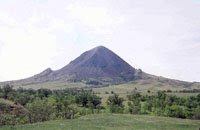
Mt. Tenabo, the sacred mountain (Photo courtesy Western Shoshone Defense Project)
The plaintiff groups are - the South Fork Band Council of Western Shoshone of Nevada, the Timbisha Shoshone Tribe, the Western Shoshone Defense Project, Great Basin Mine Watch and the nonprofit Western Mining Action Project, which provides free legal services for citizen groups and Native American tribes on hardrock mining issues in the Western U.S. and Alaska. They are asking that the mining permit be revoked.
Kathleen Holly says, "I visit Mt. Tenabo to pray to the Creator and to the life force of the world that resides in the mountain."
"The proposed Cortez Hills mine pit, along with its waste dumps and other mining facilities would be located right where I go to pray," Holly says. "BLM is wrong to limit the importance of Mt. Tenabo to Western Shoshone people to just the top of the mountain," which is owned by Barrick.
The Shoshone maintain that Mt. Tenabo and its environs are part of the ancestral land of the Western Shoshone, which has never been legally ceded to the federal government. Nevertheless, U.S. politicians and multinational corporations ignore the 1863 treaty between the U.S. government and the Western Shoshone, treating sacred land as a public resource to be mined for gold, the tribe says.
Barrick's Director of External Communications Louis Schack declined to comment on the lawsuit.
Gerald Smith, director of the BLM Battle Mountain Field Office, who along with the Department of the Interior and BLM is named in the suit, said Friday, "We complied with all the laws of Congress" and said he believes "all the actions are in compliance with the regulations we have to operate under."
Smith said, "We did appropriate consultation," and stated, "We've done, I think, a very outstanding and thorough job in issuing the best decision we can."
Smith says he knew there was going to be a court challenge once the project was approved. "There's a difference in opinion and we'll proceed from there," he said.
"This is a vitally important achievement for Barrick and for the communities where we do business in Nevada," said Greg Lang, president of Barrick's North America region. "The Cortez Hills project creates new economic development and job opportunities in rural Nevada at a time when other industry projects in Nevada are being shelved and jobs are being lost."
The Cortez property is expected to begin producing in the first half of 2010, with average annual production increasing to about 1.0 million ounces of gold for each of the first full five years of production.
There is a division of opinion also within the Shoshone tribal group over the gold mine.
Barrick recently signed a Collaborative Agreement with leaders of several Western Shoshone communities in Nevada to work together in partnership to improve education, business and employment opportunities for the Western Shoshone, enhance awareness of Native culture and to build greater mutual understanding.
The agreement establishes a Western Shoshone Educational Legacy Fund tied directly to revenues from the Cortez Hills mine. The Fund is expected to provide financial support for generations of Western Shoshone seeking higher education.
Lang said on November 12, "The Cortez Hills Project has been the object of criticism from activists who oppose mining and support failed claims of Native American title to much of Nevada's public lands. These groups are threatening litigation against the BLM's approval of the Cortez Hills EIS. The company will vigorously and expeditiously oppose any challenge."
The planned open pit mine on Mt. Tenabo will cover over 900 acres to a depth of 2,000 feet. New waste disposal and processing facilities are planned, including a cyanide heap-leaching facility, consisting of 1,577 million tons of waste rock, 53 million tons of tailings material, and 112 million tons of spent heap leach material.
The mine through an extensive groundwater pumping system will dewater Mt. Tenabo and "permanently destroy approximately 6,800 acres of land on and around Mt. Tenabo, over 90 percent of which is classified as federal 'public' land."
Larson Bill, vice-chairman of the South Fork Band Council, asks, "How are we, as a nation, showing our values, if we allow a transnational corporation to destroy this ‘church' for all time, just to get 10 years worth of gold."
Bill said that while Barrick has tried "to cloud the real issues with gifts and money, we continue to oppose this project."
"They have not bought our people, the traditions nor the lands of the Shoshone," he said.
Carrie Dann prays for the Earth (Photo by Erin Hetherington courtesy Oxfam)
Carrie Dann of the Western Shoshone Defense Project, a recipient of the prestigious Right Livelihood Award, warned, "This mine will drain the water from Mount Tenabo" and will suck "the water out of the mountain forever."
Dann characterizes the "destruction of the water" as "destruction of the blood of the earth" which entails "destroying life of the earth and the people and the wildlife that depend on it. Dewatering is taking the life of future generations."
Julie Cavanaugh-Bill of the Western Shoshone Defense Project said, "The question that the courts and the people of this country need to ask themselves is will we continue to tolerate these violations against the First People of this land or will we finally turn the tide of injustice and protect these sacred areas?"
Dan Randolph, executive director of Great Basin Resource Watch, said, "This is an example of how the Bush administration is rushing to protect their corporate friends in their last few months of power" as the "BLM denied requests to extend the comment period on the EIS not only from us, but also from several Western Shoshone tribal governments."
Randolph believes "Barrick will begin work on the mine as soon as they can, to cause enough harm in an attempt to make a religious rights argument moot, and the BLM and Bush administration appear to be more than willing to help them in every way possible."
The lawsuit claims the "Western Shoshone religious and cultural uses of the Mine site will be permanently eliminated."
The plaintiffs argue that "the BLM failed to adequately protect public and private resources, including the religious, cultural and environmental resources and uses at and around the Project site - the Trust Responsibility owed to Native Americans."
By failing in this protection, the governments have violated the Federal Land Policy and Management Act and the Religious Freedom Restoration Act, the plaintiff groups claim.
Drilling rig on the road through Crescent Valley (Photo courtesy Western Shoshone Defense Project)
In addition, the lawsuit alleges the BLM "failed to fully evaluate the project's impacts as required by the National Environmental Policy Act.
The BLM acknowledged in its 2004 Ethnographic Report that the "entire Mountain and pediment area, not just the top, was part of a Native American Traditional Cultural Property."
Yet, the agency stated in its both in its final environmental impact statement, FEIS, and in its record of decsion that the "BLM knows of no Western Shoshone uses that would be prevented or uses or resources that would be destroyed by the proposed project."
But the plaintiff groups point out that the "FEIS predicts that at least 22 springs or seeps, and at least one perennial stream, will suffer the loss or complete elimination of their flows." They maintain that these are waters that "are sacred to Western Shoshone people and are an integral part of their exercise of their religion."
The plaintiffs also complain that the air pollution from the mine would violate legal standards when it comes to fine particle emissions. Health effects associated with exposure to PM25 fine particle emissions "include premature death, aggravation of heart and lung disease and asthma attacks," the point out.
They claim that the gold mine violates the BLM'S own Visual Resource Management requirements to identify and protect scenic values on public lands set forth under two different laws and particularly would "constitute a severe visual intrusion into Western Shoshone religious/ceremonial sites."
The plaintiffs point out to the court that the BLM received 14,631 individual comments in opposition to the project from people around the world.
The lawsuit mentions that the United Nations recently found the United States and BLM in violation of the Western Shoshone's rights "due to the ongoing and proposed Cortez/Barrick operations on Mt. Tenabo."
http://www.ens-newswire.com:80/ens/nov2008/2008-11-24-02.asp
Subscribe to:
Posts (Atom)


 Posts
Posts