State should stay away from easement
By the Journal Editorial Board Friday, October 03, 2008
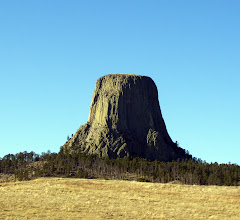
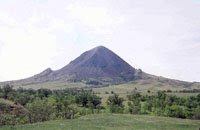
State lawmakers made it clear last week they had no intention of providing state dollars to secure easements around the butte to deter development to the west.
Last year, Gov. Mike Rounds proposed providing $250,000 to buy an easement around the site to ensure a future without encroaching development.
Lawmakers said no. And they’re saying it again this year.
We can’t fault lawmakers for putting a halt to the state-sponsored easement idea this year. Funding an easement shouldn’t be high on the state’s priority list. This year, more so even than last year, money is scarce and the burden on taxpayers could quickly become too heavy a load.
Would taxpayers give the nod to this state spending at Bear Butte? We don’t think so.
Today the landowner has no interest in developing the land beyond its agricultural use and we see no need for the state to get involved with the easement at this point.
While the Native Americans are rightfully concerned about development around the sacred site, there is a better option. The Native Americans could purchase the land in question. If the owner isn’t interested in selling, surely a deal could be crafted to offer the tribes the first right of refusal should the owner decide to sell.
That simple deal would keep the state out of the purchase and still guarantee the Native Americans interested in the site would have some control over future development.
Beyond the financial aspect, however, there may be merit to the state taking an interest in Bear Butte. First, it’s a state park. The state should have an interest in the development (or in this case, lack of development) at the state parks. Secondly, Bear Butte is considered a sacred site to the Native Americans. That doesn’t obligate the state to act but it should be part of the conversation as the state considers the future of the area.
Considering that, the future development should be under the watch of the Meade County Commissioners. We’ve said it before – the commissioners need to step in with zoning to protect Bear Butte from encroaching commercial interests.
The state, however, can’t pick up where the county is falling short. Any state revenue directed to securing easements at Bear Butte this year would be money misspent.
http://www.rapidcityjournal.com/articles/2008/10/03/news/opinions/doc48e153f0baf67852163365.txt
Friday, October 3, 2008

Tuesday, September 30, 2008

Sunday, September 28, 2008
Park Forest man's box of bones held remains of middle-aged Native American
Park Forest man's box of bones held remains of middle-aged Native American
September 25, 2008
In death, there is silence - cold, uncompromised quiet. But the secrets locked inside John Ray's box of bones are starting to talk.
The bones, which for years had been stored in a Park Forest basement, belonged to a Native American between the ages of 30 and 50 who walked the earth more than 100 years ago, according to the findings of an Indianapolis forensics lab.
The University of Indianapolis Archeology and Forensics Laboratory report released earlier this week also indicates the Native American died of natural causes.
Ray said the box of human remains has been sitting in his basement since 1982. He said he bought the bones, albeit accidentally, at an estate auction in Shipshewana, Ind., that year.
He said he purchased a tattered 150-year-old book titled "The History of the American Indian." Packaged with the book was a cardboard box containing bones.
This summer, Ray said he wanted to determine the origin of the bones. He said he wanted them to have a proper burial.
The LaGrange County Sheriff's Department in Indiana arranged for Ray to ship the bones to the forensics laboratory, where 65 bones were analyzed by anthropologist Stephen P. Nawrocki.
An analysis of cranial measurements confirmed the bones belonged to a Native American. While the sex of the skeleton is unknown, the person's age was between 30 and 50, based on dental wear and cranial suture closure, according to the report. The person, who was estimated at 5 feet 3 inches tall, likely died of natural causes, Nawrocki determined.
The bones possibly were deposited in a protected, above-ground environment such as a cave, a rock shelter or a mausoleum crypt as evidenced by the rodent-gnaw marks on rib and pelvic bones, according to the findings.
The report concludes the bones possibly were removed from a historical Native American burial site.
In light of that information, the bones fall under the jurisdiction of the Native American Graves Protection and Repatriation Act, which mandates a process for returning Native American remains and cultural items to lineal descendants and affiliated tribes.
Sherry Hutt, a manager of the federal program, said the Indiana Department of Natural Resources must add the bones to the inventory of Native American remains within two years.
"What the state needs to do is determine the cultural affiliation of the remains," Hutt said. "Because if they determine a tribe, the tribe can make a request for the bones."
If Indiana officials cannot determine a tribe, state officials then will confer with area tribes who might want to bury the bones.
"They can't stay in a box because that's not how society treats human remains," Hutt said.
Ray was unavailable for comment Wednesday.
http://www.southtownstar.com/news/1184180,092508bones.article
September 25, 2008
In death, there is silence - cold, uncompromised quiet. But the secrets locked inside John Ray's box of bones are starting to talk.
The bones, which for years had been stored in a Park Forest basement, belonged to a Native American between the ages of 30 and 50 who walked the earth more than 100 years ago, according to the findings of an Indianapolis forensics lab.
The University of Indianapolis Archeology and Forensics Laboratory report released earlier this week also indicates the Native American died of natural causes.
Ray said the box of human remains has been sitting in his basement since 1982. He said he bought the bones, albeit accidentally, at an estate auction in Shipshewana, Ind., that year.
He said he purchased a tattered 150-year-old book titled "The History of the American Indian." Packaged with the book was a cardboard box containing bones.
This summer, Ray said he wanted to determine the origin of the bones. He said he wanted them to have a proper burial.
The LaGrange County Sheriff's Department in Indiana arranged for Ray to ship the bones to the forensics laboratory, where 65 bones were analyzed by anthropologist Stephen P. Nawrocki.
An analysis of cranial measurements confirmed the bones belonged to a Native American. While the sex of the skeleton is unknown, the person's age was between 30 and 50, based on dental wear and cranial suture closure, according to the report. The person, who was estimated at 5 feet 3 inches tall, likely died of natural causes, Nawrocki determined.
The bones possibly were deposited in a protected, above-ground environment such as a cave, a rock shelter or a mausoleum crypt as evidenced by the rodent-gnaw marks on rib and pelvic bones, according to the findings.
The report concludes the bones possibly were removed from a historical Native American burial site.
In light of that information, the bones fall under the jurisdiction of the Native American Graves Protection and Repatriation Act, which mandates a process for returning Native American remains and cultural items to lineal descendants and affiliated tribes.
Sherry Hutt, a manager of the federal program, said the Indiana Department of Natural Resources must add the bones to the inventory of Native American remains within two years.
"What the state needs to do is determine the cultural affiliation of the remains," Hutt said. "Because if they determine a tribe, the tribe can make a request for the bones."
If Indiana officials cannot determine a tribe, state officials then will confer with area tribes who might want to bury the bones.
"They can't stay in a box because that's not how society treats human remains," Hutt said.
Ray was unavailable for comment Wednesday.
http://www.southtownstar.com/news/1184180,092508bones.article
Archaeologists fight nature, industry to protect area aboriginal structures
Archaeologists fight nature, industry to protect area aboriginal structures
September 22, 2008
Take a quick look at a map of Colorado created by Richard Ott and his colleagues, and you could mistake it for a depiction of recent oil and gas development concentrated in the northwest part of the state.
But this map doesn't show where man has erected drilling rigs in search of energy. Rather, it shows where American Indians put up primitive shelters and other structures in places where they once lived and roamed.
Ott is administrative director of the nonprofit, Grand Junction-based Dominquez Archaeological Research Group. The group is conducting what it calls the Colorado Wickiup Project, a project to document little-researched primitive shelters known as wickiups and other wooden aboriginal structures in the state.
The group already is in a race against time, thanks to the natural rate of decay of wood. But its efforts are becoming more urgent, thanks to Colorado's energy development boom. Much of that boom consists of oil and gas drilling in northwest Colorado, which overlaps the locations of many of the state's known wickiup sites. Many of those sites are believed to have been used by the Ute Indians.
"The reason we're focusing on those is they're so fragile, and also they're so important in coming to an understanding of that time period of Ute history, and Colorado history for that matter," Ott said.
In 2003, the nonprofit group Colorado Preservation Inc., named wickiup and teepee sites to its annual list of Colorado's Most Endangered Places. That same year, Ott's organization formed to conduct research and promote cultural resource preservation and education. Also in 2003, it launched its wickiup project with funding support from the Colorado Historical Society, U.S. Bureau of Land Management and private donors.
The project has involved trying to systematically study and record the state's 322 known aboriginal wooden structure sites, which contain 786 features. To date, the group has documented 281 features at 46 sites.
Looting of the sites has been one problem over the decades, and researchers are careful to keep the exact location of wickiup sites confidential. Meanwhile, federal law requires energy developers to do archaeological surveys on public lands and take steps to avoid harming anything that is found.
"But obviously, as the development becomes more dense it will make it more of a challenge to protect the sites," said Dan Haas, the BLM state archaeologist.
Ott said he would like to see protective measures taken in some cases on more of a landscape level. Haas also likes that idea. Haas said the BLM has a process to identify landscapes with natural values, not cultural ones, but there may be ways in which the agency can find congruence between those two values. The BLM might be able to look at requiring setbacks, use of new energy development technology and other measures to protect wickiup sites at a landscape level, he said.
One place of particular interest to Ott's group and the BLM is the Yellow Creek area, west of Meeker, where close to 50 aboriginal wooden structure sites have been found.
The same area is surrounded by hundreds of oil and gas leases and contains abundant reserves of oil shale that energy companies hope to figure out how to profitably convert to fuel. Ott fears oil shale development in particular could do heavy damage to the landscape.
"The energy stakes are pretty obvious, but the archaeological stakes are invisible up there, so that's the story we're trying to tell," Ott said.
Ott would like to see the entire Yellow Creek area designated as an archaeological district, which Ott said would provide no extra protections but would boost awareness about the area's archaeological importance.
Haas believes the wickiup sites at Yellow Creek have been documented well enough to proceed with nominating it for district designation. Some of the state's other sites also might qualify for listing on the National Register of Historic Places, which could lead to extra funding to protect them, he said.
Such actions would be taken only with consultation with Ute Indian tribes. Ute elder Clifford Duncan said he's worried about how oil and gas development, uranium prospecting and other activities could damage wickiup sites. He said many of these activities are driven solely by people's desire to make money.
"They really don't care what they destroy," he said.
http://www.gjsentinel.com/news/content/news/stories/2008/09/22/092208_wickiup_project.html?cxtype=rss&cxsvc=7&cxcat=7
September 22, 2008
Take a quick look at a map of Colorado created by Richard Ott and his colleagues, and you could mistake it for a depiction of recent oil and gas development concentrated in the northwest part of the state.
But this map doesn't show where man has erected drilling rigs in search of energy. Rather, it shows where American Indians put up primitive shelters and other structures in places where they once lived and roamed.
Ott is administrative director of the nonprofit, Grand Junction-based Dominquez Archaeological Research Group. The group is conducting what it calls the Colorado Wickiup Project, a project to document little-researched primitive shelters known as wickiups and other wooden aboriginal structures in the state.
The group already is in a race against time, thanks to the natural rate of decay of wood. But its efforts are becoming more urgent, thanks to Colorado's energy development boom. Much of that boom consists of oil and gas drilling in northwest Colorado, which overlaps the locations of many of the state's known wickiup sites. Many of those sites are believed to have been used by the Ute Indians.
"The reason we're focusing on those is they're so fragile, and also they're so important in coming to an understanding of that time period of Ute history, and Colorado history for that matter," Ott said.
In 2003, the nonprofit group Colorado Preservation Inc., named wickiup and teepee sites to its annual list of Colorado's Most Endangered Places. That same year, Ott's organization formed to conduct research and promote cultural resource preservation and education. Also in 2003, it launched its wickiup project with funding support from the Colorado Historical Society, U.S. Bureau of Land Management and private donors.
The project has involved trying to systematically study and record the state's 322 known aboriginal wooden structure sites, which contain 786 features. To date, the group has documented 281 features at 46 sites.
Looting of the sites has been one problem over the decades, and researchers are careful to keep the exact location of wickiup sites confidential. Meanwhile, federal law requires energy developers to do archaeological surveys on public lands and take steps to avoid harming anything that is found.
"But obviously, as the development becomes more dense it will make it more of a challenge to protect the sites," said Dan Haas, the BLM state archaeologist.
Ott said he would like to see protective measures taken in some cases on more of a landscape level. Haas also likes that idea. Haas said the BLM has a process to identify landscapes with natural values, not cultural ones, but there may be ways in which the agency can find congruence between those two values. The BLM might be able to look at requiring setbacks, use of new energy development technology and other measures to protect wickiup sites at a landscape level, he said.
One place of particular interest to Ott's group and the BLM is the Yellow Creek area, west of Meeker, where close to 50 aboriginal wooden structure sites have been found.
The same area is surrounded by hundreds of oil and gas leases and contains abundant reserves of oil shale that energy companies hope to figure out how to profitably convert to fuel. Ott fears oil shale development in particular could do heavy damage to the landscape.
"The energy stakes are pretty obvious, but the archaeological stakes are invisible up there, so that's the story we're trying to tell," Ott said.
Ott would like to see the entire Yellow Creek area designated as an archaeological district, which Ott said would provide no extra protections but would boost awareness about the area's archaeological importance.
Haas believes the wickiup sites at Yellow Creek have been documented well enough to proceed with nominating it for district designation. Some of the state's other sites also might qualify for listing on the National Register of Historic Places, which could lead to extra funding to protect them, he said.
Such actions would be taken only with consultation with Ute Indian tribes. Ute elder Clifford Duncan said he's worried about how oil and gas development, uranium prospecting and other activities could damage wickiup sites. He said many of these activities are driven solely by people's desire to make money.
"They really don't care what they destroy," he said.
http://www.gjsentinel.com/news/content/news/stories/2008/09/22/092208_wickiup_project.html?cxtype=rss&cxsvc=7&cxcat=7
Thieves Steal Irreplaceable Native American Art
Thieves Steal Irreplaceable Native American Art
By Chance Walser
Story Created: Sep 26, 2008
Story Updated: Sep 26, 2008
The Bureau of Land Management is looking for a prehistoric petroglyph this evening, that someone chiseled out of a rock face.
The BLM says thieves could be trying to sell it on the black market right now.
Local native americans want it back.
The BLM is offering a 5,000 dollar reward to whoever can give them information that leads to the recovery of the artifact and the arest and conviction of the thieves.
If you have any information that could help find those responsible call Special Agent Robert Babb at (602) 417-9332, or you can e-mail him at Robert_Babb@blm.gov
To make an anonymous report you can call (623) 580-5515.
http://www.kcsg.com:80/news/regional/29780824.html
By Chance Walser
Story Created: Sep 26, 2008
Story Updated: Sep 26, 2008
The Bureau of Land Management is looking for a prehistoric petroglyph this evening, that someone chiseled out of a rock face.
The BLM says thieves could be trying to sell it on the black market right now.
Local native americans want it back.
The BLM is offering a 5,000 dollar reward to whoever can give them information that leads to the recovery of the artifact and the arest and conviction of the thieves.
If you have any information that could help find those responsible call Special Agent Robert Babb at (602) 417-9332, or you can e-mail him at Robert_Babb@blm.gov
To make an anonymous report you can call (623) 580-5515.
http://www.kcsg.com:80/news/regional/29780824.html
Ancestors' reburial brings closure to Lower Elwha Klallam tribal members
Ancestors' reburial brings closure to Lower Elwha Klallam tribal members
Print This Email This
A cedar wreath and handmade roses made out of cedar adorns one of the reburial sites at Tse-whit-zen, the former Klallam village on the Port Angeles waterfront. -- Photo for peninsuladailynews.com by Chris Tucker/Peninsula Daily News
From the PDN:
By Jim Casey, Peninsula Daily News
PORT ANGELES — The ancestors have come back home.
In two days of painstaking earth moving, the intact remains and skeletal fragments that were disinterred from Tse-whit-zen have been reburied close to where they were unearthed.
The work ended late Tuesday morning with Indian Shaker Church prayers and Klallam songs, including one that, translated, said:
My heart aches for you.
You are so far away.
A large front-end loader dug clean fill dirt from a nearby pile, then slowly and carefully tipped it into the burial trench beside the handmade cedar boxes that held the remains.
Workmen shoveled the jet-black soil by hand over the boxes. Leveling the larger site also will be done manually.
"There will be no more machinery on top of them," said Tribal Council member Dennis Sullivan.
Sound of a familiar flute
As the work continued, tribal elder Johnson Charles played his wooden flute as he had for days on end during the grim discoveries at Tse-whit-zen in 2003.
When all the boxes had been covered, Shaker Church members prayed over the site, then planted it with dozens of handmade cedar roses.
Songs in Klallam followed.
"They will not be disturbed again," Tribal Chairwoman Frances Charles said.
The reburial came more than five years after human remains were found at the site of what was to be the Hood Canal Bridge graving yard.
Four of those years were spent in often bitter contention between the Lower Elwha Klallam tribe and those who wanted the graving yard finished — including the city of Port Angeles, construction unions, and the state Department of Transportation.
Among the observers at Monday's reburials was former Transportation Secretary Douglas MacDonald
http://www.peninsuladailynews.com:80/article/20080917/NEWS/809170311
Print This Email This
A cedar wreath and handmade roses made out of cedar adorns one of the reburial sites at Tse-whit-zen, the former Klallam village on the Port Angeles waterfront. -- Photo for peninsuladailynews.com by Chris Tucker/Peninsula Daily News
From the PDN:
By Jim Casey, Peninsula Daily News
PORT ANGELES — The ancestors have come back home.
In two days of painstaking earth moving, the intact remains and skeletal fragments that were disinterred from Tse-whit-zen have been reburied close to where they were unearthed.
The work ended late Tuesday morning with Indian Shaker Church prayers and Klallam songs, including one that, translated, said:
My heart aches for you.
You are so far away.
A large front-end loader dug clean fill dirt from a nearby pile, then slowly and carefully tipped it into the burial trench beside the handmade cedar boxes that held the remains.
Workmen shoveled the jet-black soil by hand over the boxes. Leveling the larger site also will be done manually.
"There will be no more machinery on top of them," said Tribal Council member Dennis Sullivan.
Sound of a familiar flute
As the work continued, tribal elder Johnson Charles played his wooden flute as he had for days on end during the grim discoveries at Tse-whit-zen in 2003.
When all the boxes had been covered, Shaker Church members prayed over the site, then planted it with dozens of handmade cedar roses.
Songs in Klallam followed.
"They will not be disturbed again," Tribal Chairwoman Frances Charles said.
The reburial came more than five years after human remains were found at the site of what was to be the Hood Canal Bridge graving yard.
Four of those years were spent in often bitter contention between the Lower Elwha Klallam tribe and those who wanted the graving yard finished — including the city of Port Angeles, construction unions, and the state Department of Transportation.
Among the observers at Monday's reburials was former Transportation Secretary Douglas MacDonald
http://www.peninsuladailynews.com:80/article/20080917/NEWS/809170311
Judge orders Sill construction stopped
Judge orders Sill construction stopped
The Associated Press
Posted : Thursday Sep 25, 2008 11:53:38 EDT
LAWTON, Okla. — A federal judge temporarily stopped construction of a new military warehouse near the Medicine Bluffs on Fort Sill after a Lawton-based Indian tribe sued, arguing the structure is being built on sacred land.
A post historian warned military officials of the sacred land but was silenced by a high-ranking commander, according to a memo used in the court case.
U.S. District Judge Timothy D. DeGuisti granted the Comanche Nation a preliminary injunction Tuesday to prevent work on the $7.3 million Training Service Center warehouse. In his ruling, DeGuisti said it appeared there was a “substantial likelihood” the Comanches would prevail in their claims under the Religious Freedom Restoration Act and the National Historic Preservation Act of 1996.
The Comanche Nation argued that construction of the warehouse would interfere with the exercise of traditional religious beliefs by obscuring the viewscape of the bluffs and that Fort Sill had not made a good-faith effort to consult with the tribe.
The U.S. Attorney’s Office, which represented Fort Sill, argued the warehouse was necessary to fulfill the fort’s ability to carry out changes mandated by the base closure and realignment process. It contended the Fort Sill officials complied with federal regulations to notify the tribe and that construction would not infringe on its members’ religious rights because the warehouse is 1,600 feet from the south base of the bluffs.
“In regards to this case, Fort Sill has always respected Native American religious freedoms and sensitivities, and we will continue to have a high regard for their heritage and customs,” said Jon Long, public affairs officer for Fort Sill.
DeGuisti wrote that testimony showed Fort Sill had identified another site that would have created less interference with Comanche religious practices but did not seriously consider it.
Fort Sill “did not consider (the Comanches’) religious practices at all when selecting the site of the TSC,” the judge said.
Meanwhile, Towana Spivey, who has been Fort Sill’s museum director since 1982, warned military officials about the sensitivity of the site through a series of e-mails on the subject he began sending to officials as early as June 2007.
But garrison commander Col. Robert Bridgford told Spivey he would be kept “out of the coordination loop” with the Fort Sill Environmental Office involving all historic buildings and sites, according to a memorandum of record written by Spivey.
On June 25, 2007, Spivey sent the following e-mail to Fort Sill Environmental Division Chief Glen Wheat, which appeared in Judge DeGiusti’s ruling:
“Glen, I am hearing rumors about a new TSC (Training Services Center) facility on the north side of Randolph Road near the Medicine Bluffs. Is this true? If so, how did that ever get cleared? We have always tried to protect the area north of Randolph Road because once they start building there, that will become the excuse for additional buildings. Please say it ain’t so!”
Court records indicate Wheat never responded. A few weeks later, Spivey emphasized the sensitivity of the Medicine Bluffs in an e-mail to deputy garrison commander Timothy Haymend.
“Construction in this location will definitely have an adverse impact on the viewscape of the Medicine Bluffs, a site that is extremely significant to the founding of Fort Sill and also to the religious beliefs of the Southern Plains Tribes,” wrote Spivey, who is part Chickasaw.
Records show Bridgford ordered a meeting with Spivey a month later, informing him that his historical guidance was no longer desired.
Military officials feared that a delay in construction would “increase construction costs and risk the loss of funding” for the training center, therefore impeding their ability to satisfy the BRAC commission’s directives.
DeGuisti issued a temporary restraining order Aug. 18 preventing further construction at the site. The preliminary injunction issued Tuesday will remain in effect until the court hears the Comanches’ request for a permanent injunction.
“This was really good news. We’re all excited,” said Jolene Schonchin, a spokeswoman for the tribe.
A spokesman for the U.S. Attorney’s Office said it is considering its options.
“We respect the court’s decision and are reviewing the order to determine how best to proceed,” First Assistant U.S. Attorney Robert Troester said.
http://www.armytimes.com/news/2008/09/ap_sillinjunction_092408/
The Associated Press
Posted : Thursday Sep 25, 2008 11:53:38 EDT
LAWTON, Okla. — A federal judge temporarily stopped construction of a new military warehouse near the Medicine Bluffs on Fort Sill after a Lawton-based Indian tribe sued, arguing the structure is being built on sacred land.
A post historian warned military officials of the sacred land but was silenced by a high-ranking commander, according to a memo used in the court case.
U.S. District Judge Timothy D. DeGuisti granted the Comanche Nation a preliminary injunction Tuesday to prevent work on the $7.3 million Training Service Center warehouse. In his ruling, DeGuisti said it appeared there was a “substantial likelihood” the Comanches would prevail in their claims under the Religious Freedom Restoration Act and the National Historic Preservation Act of 1996.
The Comanche Nation argued that construction of the warehouse would interfere with the exercise of traditional religious beliefs by obscuring the viewscape of the bluffs and that Fort Sill had not made a good-faith effort to consult with the tribe.
The U.S. Attorney’s Office, which represented Fort Sill, argued the warehouse was necessary to fulfill the fort’s ability to carry out changes mandated by the base closure and realignment process. It contended the Fort Sill officials complied with federal regulations to notify the tribe and that construction would not infringe on its members’ religious rights because the warehouse is 1,600 feet from the south base of the bluffs.
“In regards to this case, Fort Sill has always respected Native American religious freedoms and sensitivities, and we will continue to have a high regard for their heritage and customs,” said Jon Long, public affairs officer for Fort Sill.
DeGuisti wrote that testimony showed Fort Sill had identified another site that would have created less interference with Comanche religious practices but did not seriously consider it.
Fort Sill “did not consider (the Comanches’) religious practices at all when selecting the site of the TSC,” the judge said.
Meanwhile, Towana Spivey, who has been Fort Sill’s museum director since 1982, warned military officials about the sensitivity of the site through a series of e-mails on the subject he began sending to officials as early as June 2007.
But garrison commander Col. Robert Bridgford told Spivey he would be kept “out of the coordination loop” with the Fort Sill Environmental Office involving all historic buildings and sites, according to a memorandum of record written by Spivey.
On June 25, 2007, Spivey sent the following e-mail to Fort Sill Environmental Division Chief Glen Wheat, which appeared in Judge DeGiusti’s ruling:
“Glen, I am hearing rumors about a new TSC (Training Services Center) facility on the north side of Randolph Road near the Medicine Bluffs. Is this true? If so, how did that ever get cleared? We have always tried to protect the area north of Randolph Road because once they start building there, that will become the excuse for additional buildings. Please say it ain’t so!”
Court records indicate Wheat never responded. A few weeks later, Spivey emphasized the sensitivity of the Medicine Bluffs in an e-mail to deputy garrison commander Timothy Haymend.
“Construction in this location will definitely have an adverse impact on the viewscape of the Medicine Bluffs, a site that is extremely significant to the founding of Fort Sill and also to the religious beliefs of the Southern Plains Tribes,” wrote Spivey, who is part Chickasaw.
Records show Bridgford ordered a meeting with Spivey a month later, informing him that his historical guidance was no longer desired.
Military officials feared that a delay in construction would “increase construction costs and risk the loss of funding” for the training center, therefore impeding their ability to satisfy the BRAC commission’s directives.
DeGuisti issued a temporary restraining order Aug. 18 preventing further construction at the site. The preliminary injunction issued Tuesday will remain in effect until the court hears the Comanches’ request for a permanent injunction.
“This was really good news. We’re all excited,” said Jolene Schonchin, a spokeswoman for the tribe.
A spokesman for the U.S. Attorney’s Office said it is considering its options.
“We respect the court’s decision and are reviewing the order to determine how best to proceed,” First Assistant U.S. Attorney Robert Troester said.
http://www.armytimes.com/news/2008/09/ap_sillinjunction_092408/
Lawmakers oppose easement at Bear Butte
Lawmakers oppose easement at Bear Butte
Sep 23 2008 6:33PM
Associated Press
PIERRE, S.D. (AP) Some South Dakota lawmakers say they continue to oppose any state involvement in a proposed easement that would protect the west side of Bear Butte from development.
During a legislative committee meeting in Pierre, Representative Thomas Brunner (BROO'-nur) of Nisland said he believes the Game, Fish and Parks Department should not be involved in any easement at Bear Butte.
The Legislature earlier this year rejected Governor Rounds' plan to use state money to help finance an easement that would prevent development on ranch land near Bear Butte, which is a sacred religious site for many American Indian tribes.
State officials are still looking for an alternate source of money to finance the easement.
By AP Writer Chet Brokaw (Copyright 2008 by The Associated Press. All Rights Reserved.) APNP 09-23-08 1827CDT | save this article / add to your favorites list
http://www.kxmc.com/News/278498.asp
Sep 23 2008 6:33PM
Associated Press
PIERRE, S.D. (AP) Some South Dakota lawmakers say they continue to oppose any state involvement in a proposed easement that would protect the west side of Bear Butte from development.
During a legislative committee meeting in Pierre, Representative Thomas Brunner (BROO'-nur) of Nisland said he believes the Game, Fish and Parks Department should not be involved in any easement at Bear Butte.
The Legislature earlier this year rejected Governor Rounds' plan to use state money to help finance an easement that would prevent development on ranch land near Bear Butte, which is a sacred religious site for many American Indian tribes.
State officials are still looking for an alternate source of money to finance the easement.
By AP Writer Chet Brokaw (Copyright 2008 by The Associated Press. All Rights Reserved.) APNP 09-23-08 1827CDT | save this article / add to your favorites list
http://www.kxmc.com/News/278498.asp
Passaconaway’s descendants struggle to protect sacred site
Passaconaway’s descendants struggle to protect sacred site
By Gale Courey Toensing
Story Published: Sep 26, 2008
Story Updated: Sep 26, 2008
YORK, Maine – When oral tradition and spiritual practice come up against the dominant society’s ideas about property rights and land use, who gets to decide what is historical fact, what is legend and what is sacred?
In York, a pristine southern Maine town of ocean-view mansions and a bustling summer tourist trade, that dilemma is playing out between the Mount Agamenticus Conservation Region – a nonprofit conservation coalition of state, town, landowners and environmental organizations – and a small group of local American Indians who are trying to protect their sacred site on Mount Agamenticus.
The group is led by Brian Spirit Bear Michaud, Pennacook/Micmac, who complained last summer to Robin Stanley, coordinator of the conservation region, and to the town manager about the removal of stones from a mound at the mountain’s summit that memorializes 17th century Pennacook Chief Sachem Passaconaway.
Descendants of the Pennacook, an Eastern Abenaki Nation tribe in southern coastal Maine and northern New Hampshire, have gathered for hundreds of years at this stone mound for prayer and ceremonies. Michaud told Indian Country Today. They traditionally add a “prayer stone” to the pile.
The mound pays homage to St. Aspinquid, Passaconaway’s Christian name. The Pennacooks believe that Passaconaway (“Son of the Bear”) banished an evil spirit from the mountain and was buried there.
Last summer, the conservation region and town removed stones from the mound and used them to border a garden of shrubs and other plantings.
Now Stanley says St. Aspinquid “never existed” and the rock pile should be moved.
“The more research I conduct, the more I am convinced that St. Aspinquid is not the same as Passaconaway and that St. Aspinquid never existed,” Stanley wrote in a report to the town.
The sacred site needs to be “cleaned up” because of the stone “overflow” that violates the conservation region’s “Leave No Trace” policy, Stanley said in the report. She recommends relocating the stone’s away from the summit and erecting a sign that “will not suggest that St. Aspinquid is buried at the mountain, nor will the pile be a designated memorial to him. Rather, a new sign will attempt to inform visitors of the St. Aspinquid legend and how the folklore itself has become a part of Mt. A’s history.”
Before moving forward, Stanley wants everything formally authorized.
“I would like it [the legend of St. Aspinquid, the gravesite, the memorial, and/or the sacred status of the mountain itself] legitimized/validated. I believe this should be the responsibility of Brian [Michaud] and the Bureau of Indian Affairs (?). I would like the historical certificate/stamp of approval. Any research, including archaeological digs, should be at their expense.”
Two years ago, Michaud complained to Stanley about the original sign being removed.
Michael Sullivan, the town’s director of Parks and Recreation, said that Stanley’s recommendations will be presented to the town for approval. The town bought Mount Agamenticus in the early 1980s.
He said the town “has never really authorized any kind of memorial,” and he believes that the stone pile only began in the early 1980s when a sign was erected describing the “legend” of St. Aspinquid.
“That’s when people started to bring stones and the pile grew tremendously quickly.”
Sullivan acknowledged the difference of opinion between Michaud and Stanley, but he said the steering committee is “wide open” to maintain a stone pile somewhere on the mountain. The important thing is that it is “managed.”
Stanley’s management plan is in her report: the larger rocks will be used to form a border around the prayer stones and any “overflow” stones will be removed; American Indians “are encouraged to offer input” on the new site and on which rocks are moved, and they can help move them, but the steering committee has the “final determination”; if the rocks that were removed from the mound last summer and used as garden borders are removed from the garden borders and if no “official recognition” of the site is issued by April 1, 2009, the conservation region will not be required “to maintain any rocks, etc., at any site.”
“I think they’re saying that they respect the legend. Given the fact that the Mt. A steering committee will let the pile happen somewhere on the mountain, I think that means the steering committee is admitting that you can’t prove it; so to put the whole burden of proof on the Native Americans – I don’t know if that’s proper,” Sullivan said.
The proper thing is to respect other people’s right to practice their religion, Michaud said.
“I have suffered great disrespect and discrimination against me by the aforementioned people. They have done this deliberately because I defend my right to practice my faith/spirituality or religion, as they may deem it, in a place that I have been brought up at all of my 52 years. I was even wed atop the summit in 1999.”
The historical record, even among non-Natives, goes back hundreds of years.
“It is well established that the town of York stands on the ancient lands of the Pennacook People, specifically, the Accominta Clan of the Pennacooks, which is where the name ‘Agamenticus’ comes from,” he said.
“People bring stones to the grave in honor of a great Native American and they do so with the idea of respect. The town of York needs to respect everyone’s religious/cultural and spiritual background and stop disturbing the prayer stones left to honor the ancestors. This site should not be moved; it should be protected and marked properly. Local natives do not go to cemeteries and steal grave stones to make flower gardens.
“Plain and simply put, why is York allowing a couple of employees to make decisions for the whole community?”
http://www.indiancountrytoday.com/home/content/29792069.html
By Gale Courey Toensing
Story Published: Sep 26, 2008
Story Updated: Sep 26, 2008
YORK, Maine – When oral tradition and spiritual practice come up against the dominant society’s ideas about property rights and land use, who gets to decide what is historical fact, what is legend and what is sacred?
In York, a pristine southern Maine town of ocean-view mansions and a bustling summer tourist trade, that dilemma is playing out between the Mount Agamenticus Conservation Region – a nonprofit conservation coalition of state, town, landowners and environmental organizations – and a small group of local American Indians who are trying to protect their sacred site on Mount Agamenticus.
The group is led by Brian Spirit Bear Michaud, Pennacook/Micmac, who complained last summer to Robin Stanley, coordinator of the conservation region, and to the town manager about the removal of stones from a mound at the mountain’s summit that memorializes 17th century Pennacook Chief Sachem Passaconaway.
Descendants of the Pennacook, an Eastern Abenaki Nation tribe in southern coastal Maine and northern New Hampshire, have gathered for hundreds of years at this stone mound for prayer and ceremonies. Michaud told Indian Country Today. They traditionally add a “prayer stone” to the pile.
The mound pays homage to St. Aspinquid, Passaconaway’s Christian name. The Pennacooks believe that Passaconaway (“Son of the Bear”) banished an evil spirit from the mountain and was buried there.
Last summer, the conservation region and town removed stones from the mound and used them to border a garden of shrubs and other plantings.
Now Stanley says St. Aspinquid “never existed” and the rock pile should be moved.
“The more research I conduct, the more I am convinced that St. Aspinquid is not the same as Passaconaway and that St. Aspinquid never existed,” Stanley wrote in a report to the town.
The sacred site needs to be “cleaned up” because of the stone “overflow” that violates the conservation region’s “Leave No Trace” policy, Stanley said in the report. She recommends relocating the stone’s away from the summit and erecting a sign that “will not suggest that St. Aspinquid is buried at the mountain, nor will the pile be a designated memorial to him. Rather, a new sign will attempt to inform visitors of the St. Aspinquid legend and how the folklore itself has become a part of Mt. A’s history.”
Before moving forward, Stanley wants everything formally authorized.
“I would like it [the legend of St. Aspinquid, the gravesite, the memorial, and/or the sacred status of the mountain itself] legitimized/validated. I believe this should be the responsibility of Brian [Michaud] and the Bureau of Indian Affairs (?). I would like the historical certificate/stamp of approval. Any research, including archaeological digs, should be at their expense.”
Two years ago, Michaud complained to Stanley about the original sign being removed.
Michael Sullivan, the town’s director of Parks and Recreation, said that Stanley’s recommendations will be presented to the town for approval. The town bought Mount Agamenticus in the early 1980s.
He said the town “has never really authorized any kind of memorial,” and he believes that the stone pile only began in the early 1980s when a sign was erected describing the “legend” of St. Aspinquid.
“That’s when people started to bring stones and the pile grew tremendously quickly.”
Sullivan acknowledged the difference of opinion between Michaud and Stanley, but he said the steering committee is “wide open” to maintain a stone pile somewhere on the mountain. The important thing is that it is “managed.”
Stanley’s management plan is in her report: the larger rocks will be used to form a border around the prayer stones and any “overflow” stones will be removed; American Indians “are encouraged to offer input” on the new site and on which rocks are moved, and they can help move them, but the steering committee has the “final determination”; if the rocks that were removed from the mound last summer and used as garden borders are removed from the garden borders and if no “official recognition” of the site is issued by April 1, 2009, the conservation region will not be required “to maintain any rocks, etc., at any site.”
“I think they’re saying that they respect the legend. Given the fact that the Mt. A steering committee will let the pile happen somewhere on the mountain, I think that means the steering committee is admitting that you can’t prove it; so to put the whole burden of proof on the Native Americans – I don’t know if that’s proper,” Sullivan said.
The proper thing is to respect other people’s right to practice their religion, Michaud said.
“I have suffered great disrespect and discrimination against me by the aforementioned people. They have done this deliberately because I defend my right to practice my faith/spirituality or religion, as they may deem it, in a place that I have been brought up at all of my 52 years. I was even wed atop the summit in 1999.”
The historical record, even among non-Natives, goes back hundreds of years.
“It is well established that the town of York stands on the ancient lands of the Pennacook People, specifically, the Accominta Clan of the Pennacooks, which is where the name ‘Agamenticus’ comes from,” he said.
“People bring stones to the grave in honor of a great Native American and they do so with the idea of respect. The town of York needs to respect everyone’s religious/cultural and spiritual background and stop disturbing the prayer stones left to honor the ancestors. This site should not be moved; it should be protected and marked properly. Local natives do not go to cemeteries and steal grave stones to make flower gardens.
“Plain and simply put, why is York allowing a couple of employees to make decisions for the whole community?”
http://www.indiancountrytoday.com/home/content/29792069.html
Indian Affairs leaders support NAGPRA review
Indian Affairs leaders support NAGPRA review
Senators concerned about federal agency compliance
By Rob Capriccioso
Story Published: Sep 26, 2008
Story Updated: Sep 26, 2008
WASHINGTON – Senate Committee on Indian Affairs leaders support a federal investigation aimed at strengthening the implementation of a top cultural preservation law involving tribes.
Sen. Byron Dorgan, D-N.D., plans to soon call for a report and study by the U.S. Government Accountability Office to explore federal government compliance and enforcement of the Native American Graves Protection and Repatriation Act.
Sen. Lisa Murkowski, R-Alaska, is set to join Dorgan in his call for a GAO study, according to her staff. She serves as the committee’s vice chairwoman.
NAGPRA, a federal law enacted in 1990, is aimed at protecting American Indian remains and funerary objects and strives to reunite them with their families and homelands.
“The GAO report should examine whether or not the NAGPRA process has been accountable to tribes, as mandated by law,” Justin Kitsch, communications director for Dorgan, told Indian Country Today. The GAO is Congress’ official audit, evaluation and investigative arm.
Asked on Sept. 24 when Dorgan would request the report, Kitsch replied, “In the next week or so.”
The focus on GAO oversight comes largely in response to an August report released by the National Association of Tribal Historic Preservation Officers and the Makah Nation of Washington.
The report indicated that the National Park Service has used more than $3 million in tribal grants for purposes not covered by NAGPRA. The Park Service oversees federal administration of the law. It also found that several federal agencies, including the Park Service itself, have withdrawn public notices that tie held remains and objects to contemporary Natives.
Both before and after the report, tribal leaders have raised concerns about how NAGPRA monies are being spent. And some have said they are concerned that many agencies have withdrawn draft notices – as requested to do so by the national NAGPRA program office – which has resulted in Indian remains and artifacts being left in storage for more than a dozen years and counting.
Sherry Hutt, the national NAGPRA program manager, told ICT in August that she did not believe the report would lead to congressional investigations of NAGPRA management because “there’s no new information in there that brings something to light that hasn’t already been dealt with.”
In a follow-up interview, Hutt said that a GAO audit “could allow the program to step into the actual collections of a federal agency or museum” in a way that the national NAGPRA program office is not able to do under its current statutory authority.
For instance, the national office accepts inventories of remains and artifacts “on face value,” she said, but the GAO would be able to further audit these inventories in an on-the-ground manner.
Another question asked by some Natives that could be answered by a GAO study might focus on why so many ancestors who have been repatriated have not been in possession of clothing or burial objects.
“We just don’t have the authority, structure and statute to do that kind of investigation,” she said.
“The type of work that would be done under a GAO study is different than what we can do in the program. The information gained from such a study would probably be of great use to us in the program.”
There has already been much congressional oversight involving NAGPRA, especially from the late 1990s through 2003; but since then, the legislative branch has done rather little to explore and shape the program’s operations.
A series of Senate Indian Affairs hearings during that earlier timeframe resulted in a request for the Department of the Interior, which oversees the Park Service, to make changes.
Part of the changes included hiring Hutt, who has served as the program’s manager since 2004. Her main task was to make the program responsive to concerns of the Indian Affairs committee.
Over the four years since she was hired, she said the program has provided strong leadership in the administration of the law.
Despite the changes, tribal historic preservation officers and members of the seven-member review committee of NAGPRA have long expressed support for a GAO report focused on ways to improve the program’s overall efficacy.
Colin Kippen, a Native Hawaiian who serves on the review committee, said in August he is hopeful that the GAO could use the NATHPO/Makah study as a floor to begin investigations.
He said he and other members of the committee are “very open” to “increasing the accountability and transparency” of the law’s implementation.
http://www.indiancountrytoday.com:80/living/29791944.html
Senators concerned about federal agency compliance
By Rob Capriccioso
Story Published: Sep 26, 2008
Story Updated: Sep 26, 2008
WASHINGTON – Senate Committee on Indian Affairs leaders support a federal investigation aimed at strengthening the implementation of a top cultural preservation law involving tribes.
Sen. Byron Dorgan, D-N.D., plans to soon call for a report and study by the U.S. Government Accountability Office to explore federal government compliance and enforcement of the Native American Graves Protection and Repatriation Act.
Sen. Lisa Murkowski, R-Alaska, is set to join Dorgan in his call for a GAO study, according to her staff. She serves as the committee’s vice chairwoman.
NAGPRA, a federal law enacted in 1990, is aimed at protecting American Indian remains and funerary objects and strives to reunite them with their families and homelands.
“The GAO report should examine whether or not the NAGPRA process has been accountable to tribes, as mandated by law,” Justin Kitsch, communications director for Dorgan, told Indian Country Today. The GAO is Congress’ official audit, evaluation and investigative arm.
Asked on Sept. 24 when Dorgan would request the report, Kitsch replied, “In the next week or so.”
The focus on GAO oversight comes largely in response to an August report released by the National Association of Tribal Historic Preservation Officers and the Makah Nation of Washington.
The report indicated that the National Park Service has used more than $3 million in tribal grants for purposes not covered by NAGPRA. The Park Service oversees federal administration of the law. It also found that several federal agencies, including the Park Service itself, have withdrawn public notices that tie held remains and objects to contemporary Natives.
Both before and after the report, tribal leaders have raised concerns about how NAGPRA monies are being spent. And some have said they are concerned that many agencies have withdrawn draft notices – as requested to do so by the national NAGPRA program office – which has resulted in Indian remains and artifacts being left in storage for more than a dozen years and counting.
Sherry Hutt, the national NAGPRA program manager, told ICT in August that she did not believe the report would lead to congressional investigations of NAGPRA management because “there’s no new information in there that brings something to light that hasn’t already been dealt with.”
In a follow-up interview, Hutt said that a GAO audit “could allow the program to step into the actual collections of a federal agency or museum” in a way that the national NAGPRA program office is not able to do under its current statutory authority.
For instance, the national office accepts inventories of remains and artifacts “on face value,” she said, but the GAO would be able to further audit these inventories in an on-the-ground manner.
Another question asked by some Natives that could be answered by a GAO study might focus on why so many ancestors who have been repatriated have not been in possession of clothing or burial objects.
“We just don’t have the authority, structure and statute to do that kind of investigation,” she said.
“The type of work that would be done under a GAO study is different than what we can do in the program. The information gained from such a study would probably be of great use to us in the program.”
There has already been much congressional oversight involving NAGPRA, especially from the late 1990s through 2003; but since then, the legislative branch has done rather little to explore and shape the program’s operations.
A series of Senate Indian Affairs hearings during that earlier timeframe resulted in a request for the Department of the Interior, which oversees the Park Service, to make changes.
Part of the changes included hiring Hutt, who has served as the program’s manager since 2004. Her main task was to make the program responsive to concerns of the Indian Affairs committee.
Over the four years since she was hired, she said the program has provided strong leadership in the administration of the law.
Despite the changes, tribal historic preservation officers and members of the seven-member review committee of NAGPRA have long expressed support for a GAO report focused on ways to improve the program’s overall efficacy.
Colin Kippen, a Native Hawaiian who serves on the review committee, said in August he is hopeful that the GAO could use the NATHPO/Makah study as a floor to begin investigations.
He said he and other members of the committee are “very open” to “increasing the accountability and transparency” of the law’s implementation.
http://www.indiancountrytoday.com:80/living/29791944.html
Calif. tribe seeks to save what remains of its ancestral land amid debate over raising dam
Calif. tribe seeks to save what remains of its ancestral land amid debate over raising dam
By SAMANTHA YOUNG, Associated Press Writer
7:30 AM PDT, September 23, 2008
SHASTA LAKE, Calif. (AP) _ The federal government is considering enlarging a dam to boost the state's water supply, which would flood what little land remains above water where a Native American tribe had fished and farmed for centuries.
Nine-tenths of the ancestral land of the Winnemen Wintu was submerged in 1945, when the federal government built a 602-foot dam downstream of their ceremonial and prayer grounds.
Now the U.S. Bureau of Reclamation is considering enlarging Shasta Dam, flooding the remaining 22 miles of rocky, steep canyon shoreline, including two sacred rocks involved in coming-of-age rituals.
"These sacred places help keep the tribe healthy. They help keep it balanced and they help us to heal," said tribal chief Caleen Sisk-Franco. "There is no replacement. There's not an option to move it."
The desire by the few remaining tribal members to preserve the remnants of their homeland is running headlong into the desires of Central Valley farmers, the main beneficiaries of the federal proposal to enlarge Lake Shasta.
When it was filled to capacity, the lake flooded 46 square miles where tribal leaders say some 20,000 Winnemen Wintu once lived along the McCloud River. Their numbers fell to 395 at the turn of the century, with thousands massacred by western settlers and ravaged by disease during the Gold Rush. Today, the tribe counts 122 enrolled members, about a fifth of whom live in a makeshift village of trailers and a house on 42 acres of private land a few miles from the McCloud River, some 225 miles north of San Francisco.
Lake Shasta is the starting point for the federally run Central Valley Project, a system of 21 reservoirs, canals and aqueducts that funnel water to some 3.2 million acres of farmland and supplies water to about 2 million people.
Supporters say an enlarged lake is needed to meet the needs of California's growing population. The larger reservoir also would be able to store more cold water, which is needed to help the salmon that used to migrate to cooler water upstream before the dam blocked their path, according to the U.S. Bureau of Reclamation.
The bureau is studying whether to raise the dam by 6½ to 18½ feet, which would enlarge the reservoir by more than a tenth of its current size. That's enough water to serve the city of Los Angeles for more than year.
"What's so potentially promising about raising Shasta Dam, all things considered, is an opportunity to provide more storage at a facility that's already in place," said Ron Ganzfried, a supervisor in the Bureau of Reclamation's regional planning division.
A higher dam also would provide more hydropower, flood protection along the upper Sacramento River and combat future water shortages expected to come with climate change, according to a recent bureau report.
Although the price tag is steep — with preliminary costs ranging from $531.3 million to $854.9 million — it's far less than the cost of building a new dam. For example, the state estimates it could cost $3.6 billion to build a reservoir in a valley north of Sacramento that would store roughly the same amount of water as would be added behind a taller Shasta dam.
That makes it an attractive solution for California's farmers and municipal water agencies whose water supplies have dwindled after two dry winters and a federal court order that greatly reduced water diversions to protect threatened delta fish.
But conservation groups are concerned that swelling of the lower portion of the McCloud River would ruin one of the state's prized trout streams. They also question whether the additional cold water that would be stored behind a higher Shasta Dam would be saved and released for migrating salmon, as government officials claim.
Instead, environmental groups favor building bypasses for salmon to get them around the dam and into the McCloud River. They also advocate paying farmers and other users to increase water conservation efforts.
"We need to come up with permanent solutions that will increase flexibility and provide what we need for the salmon rather than reinvesting in the very projects that caused the problem," said Mindy McIntyre, a water specialist at the nonprofit Planning and Conservation League.
Federal officials say environmental organizations and the Winnemen Wintu tribe will be consulted as plans move forward over the next few years, but how much sway the tribe — which is not a federally recognized tribe — will have to block the dam project is questionable. Congress must still authorize and fund the project.
Although the tribe is small in number, its ties to the area remain central to preserving its heritage. The rocky shoreline along the McCloud River is where tribal members come at least once a year to celebrate the womanhood of their teenage girls. Medicinal plants are ground on a special rock and traditional prayers are offered.
Across the river, toddlers are introduced to another rock where tribal elders tell their ancestral stories. Both cultural spots could be swamped by the rising water if Shasta Dam is raised.
http://www.latimes.com/news/nationworld/nation/wire/sns-ap-tribe-vs-dam,1,7430167.story
By SAMANTHA YOUNG, Associated Press Writer
7:30 AM PDT, September 23, 2008
SHASTA LAKE, Calif. (AP) _ The federal government is considering enlarging a dam to boost the state's water supply, which would flood what little land remains above water where a Native American tribe had fished and farmed for centuries.
Nine-tenths of the ancestral land of the Winnemen Wintu was submerged in 1945, when the federal government built a 602-foot dam downstream of their ceremonial and prayer grounds.
Now the U.S. Bureau of Reclamation is considering enlarging Shasta Dam, flooding the remaining 22 miles of rocky, steep canyon shoreline, including two sacred rocks involved in coming-of-age rituals.
"These sacred places help keep the tribe healthy. They help keep it balanced and they help us to heal," said tribal chief Caleen Sisk-Franco. "There is no replacement. There's not an option to move it."
The desire by the few remaining tribal members to preserve the remnants of their homeland is running headlong into the desires of Central Valley farmers, the main beneficiaries of the federal proposal to enlarge Lake Shasta.
When it was filled to capacity, the lake flooded 46 square miles where tribal leaders say some 20,000 Winnemen Wintu once lived along the McCloud River. Their numbers fell to 395 at the turn of the century, with thousands massacred by western settlers and ravaged by disease during the Gold Rush. Today, the tribe counts 122 enrolled members, about a fifth of whom live in a makeshift village of trailers and a house on 42 acres of private land a few miles from the McCloud River, some 225 miles north of San Francisco.
Lake Shasta is the starting point for the federally run Central Valley Project, a system of 21 reservoirs, canals and aqueducts that funnel water to some 3.2 million acres of farmland and supplies water to about 2 million people.
Supporters say an enlarged lake is needed to meet the needs of California's growing population. The larger reservoir also would be able to store more cold water, which is needed to help the salmon that used to migrate to cooler water upstream before the dam blocked their path, according to the U.S. Bureau of Reclamation.
The bureau is studying whether to raise the dam by 6½ to 18½ feet, which would enlarge the reservoir by more than a tenth of its current size. That's enough water to serve the city of Los Angeles for more than year.
"What's so potentially promising about raising Shasta Dam, all things considered, is an opportunity to provide more storage at a facility that's already in place," said Ron Ganzfried, a supervisor in the Bureau of Reclamation's regional planning division.
A higher dam also would provide more hydropower, flood protection along the upper Sacramento River and combat future water shortages expected to come with climate change, according to a recent bureau report.
Although the price tag is steep — with preliminary costs ranging from $531.3 million to $854.9 million — it's far less than the cost of building a new dam. For example, the state estimates it could cost $3.6 billion to build a reservoir in a valley north of Sacramento that would store roughly the same amount of water as would be added behind a taller Shasta dam.
That makes it an attractive solution for California's farmers and municipal water agencies whose water supplies have dwindled after two dry winters and a federal court order that greatly reduced water diversions to protect threatened delta fish.
But conservation groups are concerned that swelling of the lower portion of the McCloud River would ruin one of the state's prized trout streams. They also question whether the additional cold water that would be stored behind a higher Shasta Dam would be saved and released for migrating salmon, as government officials claim.
Instead, environmental groups favor building bypasses for salmon to get them around the dam and into the McCloud River. They also advocate paying farmers and other users to increase water conservation efforts.
"We need to come up with permanent solutions that will increase flexibility and provide what we need for the salmon rather than reinvesting in the very projects that caused the problem," said Mindy McIntyre, a water specialist at the nonprofit Planning and Conservation League.
Federal officials say environmental organizations and the Winnemen Wintu tribe will be consulted as plans move forward over the next few years, but how much sway the tribe — which is not a federally recognized tribe — will have to block the dam project is questionable. Congress must still authorize and fund the project.
Although the tribe is small in number, its ties to the area remain central to preserving its heritage. The rocky shoreline along the McCloud River is where tribal members come at least once a year to celebrate the womanhood of their teenage girls. Medicinal plants are ground on a special rock and traditional prayers are offered.
Across the river, toddlers are introduced to another rock where tribal elders tell their ancestral stories. Both cultural spots could be swamped by the rising water if Shasta Dam is raised.
http://www.latimes.com/news/nationworld/nation/wire/sns-ap-tribe-vs-dam,1,7430167.story
Subscribe to:
Posts (Atom)


 Posts
Posts