Occupation of park site expected to end today
Elizabeth Flores, Star Tribune
Members of a Dakota group say they hope their actions at the Coldwater Spring site in Minnehaha Park will bring changes.
By LIBBY NELSON, Star Tribune
Last update: September 5, 2008 - 11:11 PM
A Dakota occupation of the Coldwater Spring site near Minnehaha Park is expected to reach a peaceful end today.
Chris Mato Nunpa, one of the protest organizers, confirmed that the protesters would leave between 1 p.m. and 2 p.m. He said protesters felt they had made their point and didn't have to stay longer.
"We're going to leave at one o'clock or two o'clock and proclaim victory," Mato Nunpa said.
The Dakota occupied the property Tuesday, hoping to reclaim it for their tribe or force a confrontation while trying.
But federal officials disrupted that plan from the start, granting a permit for the occupation, even though protesters hadn't requested one. The letter from the U.S. Fish and Wildlife Service allowed protesters to remain at the site until 3 p.m. Friday, said Jason Holm, Midwest external affairs director for the U.S. Fish and Wildlife Service.
"We've been out and visited, and we respect anybody's right to peacefully assemble and honor their cultural beliefs," Holm said. "There were no real problems that were going on."
At a news conference earlier Friday, the protest's organizers defended their claim to the Coldwater Spring site, which is sacred to them. They also discussed the treatment of American Indians over the past two centuries.
"We're asking for this land back," said Jim Anderson, cultural chairman for the Mendota Mdewakanton Dakota Community and one of the protest's organizers.
"We want to turn this into a place of healing, which it always was. We're going to continue to be here," he said.
Anderson said he had been told the gates to the site would close at 3 p.m. Friday. A group of about 75 people waited for the confrontation, including the Dakotas occupying the site and others, mostly white, who had come in support.
Speakers talked about honoring an 1805 treaty with the Sioux Nation and the role the United Nations could play in resolving conflicts with indigenous peoples. They also proposed an alternate use for the site, as an educational center operated by the Dakota tribe.
"It would be a shining star of the Twin Cities," said Bill Means, a founder of the International Indian Treaty Council. "They could come to a beautiful building ... and learn about the indigenous peoples of Minnesota."
Minneapolis City Council Member Cam Gordon also spoke in support of the Dakota. "I think we've found a solution," he said, referring to the group's suggestion to use the land for educational purposes. "I hope we can use this opportunity to accomplish that."
Staff writer Norm Draper contributed to this report. Libby Nelson • 612-673-4758
http://www.startribune.com:80/local/27940944.html?elr=KArksD:aDyaEP:kD:aUg:oaEQDUiD3aPc:_Yyc:aUU
Saturday, September 6, 2008

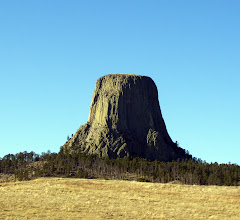
Devils Tower to open interpretive site, unveil world peace sculpture
Devils Tower to open interpretive site, unveil world peace sculpture
By Journal staff Saturday, August 23, 2008
Devils Tower, Wyoming's other-worldly landform, is the nation's first national monument. It is a sacred site for regional Native American tribes and a renowned attraction for international visitors.
On Saturday, Sept. 6, the National Park Service will tie those commonalities together in opening a new educational site at the monument.
Superintendent Dorothy FireCloud said the "Tribal Connections" area will provide a venue for programs discussing the tower's meaning and relationship for 20 affiliated tribes. It also will showcase "Wind Circle," the latest world peace sculpture by world known Japanese artist Junkyu Muto.
The public dedication program starts at 1 p.m. People interested in attending are urged to bring a picnic lunch and lawn chairs.
Performers will include Pine Ridge and Northern Cheyenne tribal drum groups, Japanese Taiko drummers and singers, tribal dancers from the Wind River reservation and local Western singers Lorrie Redfield and Shana Jahnig.
Spiritual leader Arvol Looking Horse, keeper of the sacred White Buffalo Calf Pipe of the Lakota, Dakota, and Nakota Nations, will discuss his World Peace and Prayer Day activities. The United Nations recently honored him for his humanitarian efforts.
Local Lakota artisan Sandy Swallow, who has designed a limited edition blanket for the event and worked on other projects for the monument, also is on the program.
The Wind Circle sculpture is the third of Muto's world peace projects. He placed the first at the Vatican in 2000 and the second near the Bodhi Tree in Bodhi Gaya, India, in 2005.
FireCloud said placing the donated peace sculpture has been an effort of the entire Black Hills community. Crazy Horse Memorial donated the base stones for the sculpture, and Black Hills National Forest workers delivered the stones to the monument. Boxelder Job Corps students will provide refreshments for the reception following the ceremony.
http://www.rapidcityjournal.com/articles/2008/08/23/news/top/doc48b0a7b455af1087893905.txt
By Journal staff Saturday, August 23, 2008
Devils Tower, Wyoming's other-worldly landform, is the nation's first national monument. It is a sacred site for regional Native American tribes and a renowned attraction for international visitors.
On Saturday, Sept. 6, the National Park Service will tie those commonalities together in opening a new educational site at the monument.
Superintendent Dorothy FireCloud said the "Tribal Connections" area will provide a venue for programs discussing the tower's meaning and relationship for 20 affiliated tribes. It also will showcase "Wind Circle," the latest world peace sculpture by world known Japanese artist Junkyu Muto.
The public dedication program starts at 1 p.m. People interested in attending are urged to bring a picnic lunch and lawn chairs.
Performers will include Pine Ridge and Northern Cheyenne tribal drum groups, Japanese Taiko drummers and singers, tribal dancers from the Wind River reservation and local Western singers Lorrie Redfield and Shana Jahnig.
Spiritual leader Arvol Looking Horse, keeper of the sacred White Buffalo Calf Pipe of the Lakota, Dakota, and Nakota Nations, will discuss his World Peace and Prayer Day activities. The United Nations recently honored him for his humanitarian efforts.
Local Lakota artisan Sandy Swallow, who has designed a limited edition blanket for the event and worked on other projects for the monument, also is on the program.
The Wind Circle sculpture is the third of Muto's world peace projects. He placed the first at the Vatican in 2000 and the second near the Bodhi Tree in Bodhi Gaya, India, in 2005.
FireCloud said placing the donated peace sculpture has been an effort of the entire Black Hills community. Crazy Horse Memorial donated the base stones for the sculpture, and Black Hills National Forest workers delivered the stones to the monument. Boxelder Job Corps students will provide refreshments for the reception following the ceremony.
http://www.rapidcityjournal.com/articles/2008/08/23/news/top/doc48b0a7b455af1087893905.txt
Native American remains laid to rest
Native American remains laid to rest
August 29, 2008
The remains of 27 Caddo Nation descendents were laid to rest for a second time this week at Edwards Cemetery, more than 30 years after the first remains were excavated during a Titus County highway expansion project.
Smoke from cedar leaves, used to bless each gravesite and those taking place in the ceremony, filled the air where more than a dozen Caddo Nation, Texas Department of Transportation, City of Mount Pleasant and Titus County representatives gathered to pay their respects.
The re-burial of Caddo Indians is not something the Nation is accustomed to, said LaRue Martin Parker, chairwoman of the Caddo Nation of Oklahoma.
"We don't have a set way to re-bury our people because they never had to do that in the olden days," Parker said. "This would not have been possible a few years ago, but because of new laws, we're able to reclaim our people and honor them."
The remains of the 27 individuals were recovered during archeological excavations conducted in 1975 and 2001 in association with the widening of State Highway 49. The remains had been stored in Austin until Tuesday's ceremony.
Caddo Native American Church Chairman Lyman Kionute conducted the sacred and private ceremony, first burning wood at the cemetery and then mixing those ashes with cedar leaves to create what he called a cleansing smoke.
Bobby Gonzalez, Native American burial coordinator for the Caddo Nation of Oklahoma, explained those blessing the new burial sites used cedar leaves to represent life and to ask for forgiveness.
"These ancestors were moved from one area and now put here. We are taught to not ever move the remains of our ancestors," Gonzalez said. "We use the cedar to bless ourselves, to bless the gravesite and to ask for forgiveness."
Kionute submerged a lone Eagle feather in the cedar smoke to bless the 27 sites.
Those participating in the ceremony blessed themselves with smoke from the burning cedar leaves before and after burying the 27 small wooden boxes, each filled with the remains and pottery found during excavations more than 30 years ago on land owned then by Alex Justiss. The boxes were later draped in Indian Pendleton blankets.
Gonzalez said the reinterment ceremony was much shorter than today's burials, which can last several days.
"This reburial is extremely important," he said. "Northeast Texas is our aboriginal home. As long as they're building roads, we're always going to be concerned about them hitting our people. And when they hit our ancestors, we're going to be concerned because even though we are in Oklahoma, our minds and our culture are still with our people here."
He thanked the City of Mount Pleasant, TxDOT and Titus County for their cooperation in the project.
Local relic collectors first identified the archeological site on Justiss' land in the 1950s. The site contains a Caddo cemetery, dating back to the period just prior to European contact.
In the late 1960s, the state's highway department began planning roadway improvements to SH 49 in Titus County. The National Historic Preservation Act had recently been enacted and required consideration of project impacts to archeological sites, explained Scott Pletka, supervisor of the Archeological Studies Program with the TxDOT.
Justiss' property, which extended into the existing and proposed right of way for the expansion project, was evaluated in 1973 and first excavated in 1975.
Planned road improvements did not take place and no additional excavations were made until 2001, when the site was evaluated again.
"These excavations recovered 27 sets of human remains or grave goods. While these burials were removed from harm's way, their final disposition remained to be determined," Pletka said.
Parker said she and the Caddo Nation of Oklahoma are thankful for recent laws, including the Native American Graves Protection and Repatriation Act, which requires institutions like TxDOT to consult with appropriate descendent groups regarding the disposition of any Native American burials and grave goods that they recovered.
"We would not be able to hold ceremonies like this if it weren't for these laws," Parker said. "We have so many more who are sitting on shelves in colleges and universities, in boxes, in the Smithsonian. People don't realize they're our people. They need to be in the ground. It's not right; it's not balanced."
http://www.dailytribune.net/articles/2008/08/29/news/01.txt
August 29, 2008
The remains of 27 Caddo Nation descendents were laid to rest for a second time this week at Edwards Cemetery, more than 30 years after the first remains were excavated during a Titus County highway expansion project.
Smoke from cedar leaves, used to bless each gravesite and those taking place in the ceremony, filled the air where more than a dozen Caddo Nation, Texas Department of Transportation, City of Mount Pleasant and Titus County representatives gathered to pay their respects.
The re-burial of Caddo Indians is not something the Nation is accustomed to, said LaRue Martin Parker, chairwoman of the Caddo Nation of Oklahoma.
"We don't have a set way to re-bury our people because they never had to do that in the olden days," Parker said. "This would not have been possible a few years ago, but because of new laws, we're able to reclaim our people and honor them."
The remains of the 27 individuals were recovered during archeological excavations conducted in 1975 and 2001 in association with the widening of State Highway 49. The remains had been stored in Austin until Tuesday's ceremony.
Caddo Native American Church Chairman Lyman Kionute conducted the sacred and private ceremony, first burning wood at the cemetery and then mixing those ashes with cedar leaves to create what he called a cleansing smoke.
Bobby Gonzalez, Native American burial coordinator for the Caddo Nation of Oklahoma, explained those blessing the new burial sites used cedar leaves to represent life and to ask for forgiveness.
"These ancestors were moved from one area and now put here. We are taught to not ever move the remains of our ancestors," Gonzalez said. "We use the cedar to bless ourselves, to bless the gravesite and to ask for forgiveness."
Kionute submerged a lone Eagle feather in the cedar smoke to bless the 27 sites.
Those participating in the ceremony blessed themselves with smoke from the burning cedar leaves before and after burying the 27 small wooden boxes, each filled with the remains and pottery found during excavations more than 30 years ago on land owned then by Alex Justiss. The boxes were later draped in Indian Pendleton blankets.
Gonzalez said the reinterment ceremony was much shorter than today's burials, which can last several days.
"This reburial is extremely important," he said. "Northeast Texas is our aboriginal home. As long as they're building roads, we're always going to be concerned about them hitting our people. And when they hit our ancestors, we're going to be concerned because even though we are in Oklahoma, our minds and our culture are still with our people here."
He thanked the City of Mount Pleasant, TxDOT and Titus County for their cooperation in the project.
Local relic collectors first identified the archeological site on Justiss' land in the 1950s. The site contains a Caddo cemetery, dating back to the period just prior to European contact.
In the late 1960s, the state's highway department began planning roadway improvements to SH 49 in Titus County. The National Historic Preservation Act had recently been enacted and required consideration of project impacts to archeological sites, explained Scott Pletka, supervisor of the Archeological Studies Program with the TxDOT.
Justiss' property, which extended into the existing and proposed right of way for the expansion project, was evaluated in 1973 and first excavated in 1975.
Planned road improvements did not take place and no additional excavations were made until 2001, when the site was evaluated again.
"These excavations recovered 27 sets of human remains or grave goods. While these burials were removed from harm's way, their final disposition remained to be determined," Pletka said.
Parker said she and the Caddo Nation of Oklahoma are thankful for recent laws, including the Native American Graves Protection and Repatriation Act, which requires institutions like TxDOT to consult with appropriate descendent groups regarding the disposition of any Native American burials and grave goods that they recovered.
"We would not be able to hold ceremonies like this if it weren't for these laws," Parker said. "We have so many more who are sitting on shelves in colleges and universities, in boxes, in the Smithsonian. People don't realize they're our people. They need to be in the ground. It's not right; it's not balanced."
http://www.dailytribune.net/articles/2008/08/29/news/01.txt
UC Berkeley Begins Destruction of Berkeley Oak Grove and Shell Mound Site
UC Berkeley Begins Destruction of Berkeley Oak Grove and Shell Mound Site
by Morning Star Gali ( mstargali [at] gmail.com )
Saturday Sep 6th, 2008 9:50 AM
UC Berkeley Begins Destruction of Native American Sacred Site
Indigenous Peoples Decry Human Rights Abuses. Tree Sitters Call for Support
September 5th, 2008
Contact:
Marcella Sadlowski (562) 472-5276
UC Berkeley Begins Destruction of Native American Sacred Site
Indigenous Peoples Decry Human Rights Abuses. Tree Sitters Call for Support
______________________________________________________________________
BERKELEY, CA- University of California police moved in yesterday morning and cut many limbs and branches of a Redwood tree and cut down twelve Oak trees that have been protected by tree-sitting protesters for the last 21 months. Five people were arrested as they peacefully pleaded with arborists not to destroying the trees of the Memorial Oak Grove deemed a sacred burial site to Ohlone Indians.
Twelve trees were cut today and the University says they will continue cutting 46 over the weekend. Four protesters remain in a single Redwood tree in the center of the grove. Arborists trimmed most of the branches from the Redwood tree occupied by the four remaining tree sitters. Cutting the branches made it virtually impossible for the tree sitters to move from tree to tree. A spokesman for the campus said that within three days, the University would no longer honor its agreement to ensure they had adequate nutrition and water. The tree sitters currently only have one liter of water to share between four people as they sit in 90 degree heat.
The Memorial Oak Grove is regarded as a sacred place to Native American people and is documented as such by UC Berkeley's own Anthropology Department. There is evidence of 2 shell mounds sites in the area, with 19 ancestral remains found within them. Along with UC Berkeley's attempt to develop on a sacred place, they are guilty of housing over 17,000 sacred remains and objects. UCB currently holds the largest human remains collection in the United States of which it is not in compliance with the Native American Graves Protection and Repatriation Act (NAGPRA)
"I brought my five year old daughter and two month old son out today to bear witness to the massacre of sacred life," said Morning Star Gali of the Pit River Tribe and co-chair of Advocates to Protect Sacred Sites. "The cops responded by yelling to move them behind the median. I asked if they would stand by as complacent if it was their grandmother's gravesites being desecrated. I want my children here to witness the destruction of sacred life and how important it is to protect it. I wanted them to witness the cops, arborists and UC Officials that participated and cheered as the trees came crashing down from bulldozers. This exhibits the ongoing Human Rights abuses committed by the University. They refuse to comply with NAGPRA by holding 13,000 of our ancestors remains hostage, they illegally reorganized NAGPRA with no tribal consultation and now they continue to desecrate sacred burial grounds."
The Memorial Grove is a native Coast Live Oak ecosystem. Native oaks support the most complex terrestrial ecosystems in California. The California Native Plant Society CNPS has stated that the Memorial Oak Grove is "an important gene bank for the Coast Live Oak." Every one of the oaks in the grove should be protect by law and the Berkeley Coast Live Oak moratorium forbids cutting mature Coast Live Oaks in Berkeley. UC refuses to recognize the law. The grove is also part of a National Historic Site. The Stadium and landscape is a memorial to Californians who died in World War I.
The tree sitters are urging people to come and show support for the trees and bear witness to the University of California's blatant disregard to sacred sites and native ecosystems.
--
Morning Star Gali
http://www.ifhurbanrez.org
http://www.indybay.org/newsitems/2008/09/06/18533607.php
by Morning Star Gali ( mstargali [at] gmail.com )
Saturday Sep 6th, 2008 9:50 AM
UC Berkeley Begins Destruction of Native American Sacred Site
Indigenous Peoples Decry Human Rights Abuses. Tree Sitters Call for Support
September 5th, 2008
Contact:
Marcella Sadlowski (562) 472-5276
UC Berkeley Begins Destruction of Native American Sacred Site
Indigenous Peoples Decry Human Rights Abuses. Tree Sitters Call for Support
______________________________________________________________________
BERKELEY, CA- University of California police moved in yesterday morning and cut many limbs and branches of a Redwood tree and cut down twelve Oak trees that have been protected by tree-sitting protesters for the last 21 months. Five people were arrested as they peacefully pleaded with arborists not to destroying the trees of the Memorial Oak Grove deemed a sacred burial site to Ohlone Indians.
Twelve trees were cut today and the University says they will continue cutting 46 over the weekend. Four protesters remain in a single Redwood tree in the center of the grove. Arborists trimmed most of the branches from the Redwood tree occupied by the four remaining tree sitters. Cutting the branches made it virtually impossible for the tree sitters to move from tree to tree. A spokesman for the campus said that within three days, the University would no longer honor its agreement to ensure they had adequate nutrition and water. The tree sitters currently only have one liter of water to share between four people as they sit in 90 degree heat.
The Memorial Oak Grove is regarded as a sacred place to Native American people and is documented as such by UC Berkeley's own Anthropology Department. There is evidence of 2 shell mounds sites in the area, with 19 ancestral remains found within them. Along with UC Berkeley's attempt to develop on a sacred place, they are guilty of housing over 17,000 sacred remains and objects. UCB currently holds the largest human remains collection in the United States of which it is not in compliance with the Native American Graves Protection and Repatriation Act (NAGPRA)
"I brought my five year old daughter and two month old son out today to bear witness to the massacre of sacred life," said Morning Star Gali of the Pit River Tribe and co-chair of Advocates to Protect Sacred Sites. "The cops responded by yelling to move them behind the median. I asked if they would stand by as complacent if it was their grandmother's gravesites being desecrated. I want my children here to witness the destruction of sacred life and how important it is to protect it. I wanted them to witness the cops, arborists and UC Officials that participated and cheered as the trees came crashing down from bulldozers. This exhibits the ongoing Human Rights abuses committed by the University. They refuse to comply with NAGPRA by holding 13,000 of our ancestors remains hostage, they illegally reorganized NAGPRA with no tribal consultation and now they continue to desecrate sacred burial grounds."
The Memorial Grove is a native Coast Live Oak ecosystem. Native oaks support the most complex terrestrial ecosystems in California. The California Native Plant Society CNPS has stated that the Memorial Oak Grove is "an important gene bank for the Coast Live Oak." Every one of the oaks in the grove should be protect by law and the Berkeley Coast Live Oak moratorium forbids cutting mature Coast Live Oaks in Berkeley. UC refuses to recognize the law. The grove is also part of a National Historic Site. The Stadium and landscape is a memorial to Californians who died in World War I.
The tree sitters are urging people to come and show support for the trees and bear witness to the University of California's blatant disregard to sacred sites and native ecosystems.
--
Morning Star Gali
http://www.ifhurbanrez.org
http://www.indybay.org/newsitems/2008/09/06/18533607.php
Wednesday, September 3, 2008
URGENT ACTION ALERT! Protection of Sacred Sites issue
Please forward to your contacts and lists, in it's entirety.
September 3, 2008
Hello everyone,
I received a phone call this morning from Shawn Mulford, from the organization The Indigenous Youth Experience (IYE) Council www.stopsnowbowl.com. Their organization has been working diligently on the efforts to protect the San Francisco Peaks, in Arizona. They are currently coordinating a formal meeting on October 9th, with the Forest Service and elders from many different Nations, to come together to discuss how the Forest Service can prevent their actions from adversely affecting the Indigenous People’s access to, ceremonial use of, or the physical integrity of sacred sites. The Regional Forester Corbin Newman, had previously committed to working with the IYE Council and agreed to attend a meeting outdoors with the elders on behalf of the Forest Service, he is now stating he will not be attending this meeting. The Forest Service should be held accountable, Mr. Newman needs to be at this meeting. Arrangements have been in motion for this meeting for quite some time now, elders have already made travel arrangements and are planning on being in attendance.
We would like to encourage everyone, to please send the sample letter below to all of the contacts listed. We need to put pressure on the Forest Service for Mr. Newman, to personally fulfill his commitment by attending this meeting.
If you have any questions, please direct them to Shawn Mulford at 630.963.7341 smulford@comcast.net
We need to flood their emails, faxes and phones supporting the efforts of IYE, holding Forest Service accountable to follow through with their obligation, to be in attendance as previously agreed on March 20, 2008
Time is of the essence here folks, we need to get these letters emailed and/or make these calls immediately. Please send them ASAP. This is a important issue, we need everyone's assistance on this. ALL of your efforts are greatly appreciated! Please send this to all of your contacts and lists, help spread the word!
A critical part of protecting these sacred sites, is working together on these issues and standing up for the cause.
In peace & solidarity,
Tamra Brennan
Founder/Director
Protect Sacred Sites Indigenous People, One Nation
www.protectsacredsites.org
www.protectbearbutte.com
"Our sacred lands are all that remain keeping us connected to our place on Mother Earth, to our spirituality, our heritage and our lands; what’s left of them. If they take it all away, what will remain except a vague memory of a past so forgotten?"
Please take a moment to send the email to the following people. Please make sure to send the letter to all of these contacts in the "to" box of your email. We want them to see each of the department heads this is sent to. This way, they know we mean business!
Senate Committee on Agriculture, Nutrition & Forestry
328A Senate Russell Office Building
Washington, DC 20510
Attn: Senator Tom Harkin, Chairman
(202) 224-2035
U.S. Department of Agriculture
1400 Independence Ave., S.W.
Washington, D.C. 20250
Attn: Ed Schafer, Secretary of Agriculture
AgSec@usda.gov
USDA Forest Service
1400 Independence Ave., SW
Washington, D.C. 20250-0003
Attn: Abigail R. Kimbell, Chief of Forest Service
(202) 205-8333
akimbell@fs.fed.us
Corbin Newman
Regional Forester
Southwest Region
333 Broadway Blvd. SE
Albuquerque, NM 87102
(505) 842-3300 (505) 842-3110 fax
cnewman02@fs.fed.us
Dan Meza, Tribal Relations
Southwest Region
3rd Floor, Room 320
333 Broadway Blvd., SE
Albuquerque, NM 87102
(505) 842-3424
(505) 842-3165 fax
dmeza@fs.fed.us
Fred P. Clark
Director, Office of Tribal Relations
201 14th Street SW
Yates - 2nd Floor, Central West Wing
Washington, DC 20250 – 1138
202.205.1548
fclark@fs.fed.us
SAMPLE LETTER
September 3, 2008
To: (please insert all of the names and email addresses listed above in the "to" box of your email)
RE: Request to U.S. Forest Service Regional Forester of the Southwest Region to attend The Indigenous Youth Experience (IYE) Council’s meeting “Indigenous Consultation on Sacred Sites” on October 9, 2008.
Corbin Newman, Regional Forester
We respectfully request your presence as the Regional Forester of the Southwest Region of the US Forest Service at an indigenous consultation meeting on sacred sites. To fulfill your verbal commitment to the Indigenous Youth Experience Council, that you gave on March 20, 2008. This meeting is scheduled to take place on October 9, 2008, in Bapchule, Arizona. We believe as a Regional Forester of the Forest Service you are a vital part of the decision making process that affects the Indigenous People of North America.
The purpose of the meeting is to provide the USDA Forest Service Chief and department heads with direct face-to-face consultation with Indigenous Leaders from across North America on the cultural, moral and ethical considerations as it pertains to Indigenous sacred sites. The principle objective of the Indigenous Youth Experience (IYE) Council’s meeting “Indigenous Consultation on Sacred Sites” is to acknowledge the special relationship that exists between the USDA Forest Service and Indigenous communities. The IYE Council expects to provide the USDA Forest Service with an opportunity for a meaningful consultation regarding Forest Service decisions that may diminish cultural resources and how this may adversely affect the Indigenous People’s access to, ceremonial use of, or the physical integrity of sacred sites.
Respectfully,
CC: Abigail Kimbell, Chief of Forest Service
Ed Schafer, Secretary of Agriculture
Tom Harkin, Chairman Senate Committee on Agriculture
September 3, 2008
Hello everyone,
I received a phone call this morning from Shawn Mulford, from the organization The Indigenous Youth Experience (IYE) Council www.stopsnowbowl.com. Their organization has been working diligently on the efforts to protect the San Francisco Peaks, in Arizona. They are currently coordinating a formal meeting on October 9th, with the Forest Service and elders from many different Nations, to come together to discuss how the Forest Service can prevent their actions from adversely affecting the Indigenous People’s access to, ceremonial use of, or the physical integrity of sacred sites. The Regional Forester Corbin Newman, had previously committed to working with the IYE Council and agreed to attend a meeting outdoors with the elders on behalf of the Forest Service, he is now stating he will not be attending this meeting. The Forest Service should be held accountable, Mr. Newman needs to be at this meeting. Arrangements have been in motion for this meeting for quite some time now, elders have already made travel arrangements and are planning on being in attendance.
We would like to encourage everyone, to please send the sample letter below to all of the contacts listed. We need to put pressure on the Forest Service for Mr. Newman, to personally fulfill his commitment by attending this meeting.
If you have any questions, please direct them to Shawn Mulford at 630.963.7341 smulford@comcast.net
We need to flood their emails, faxes and phones supporting the efforts of IYE, holding Forest Service accountable to follow through with their obligation, to be in attendance as previously agreed on March 20, 2008
Time is of the essence here folks, we need to get these letters emailed and/or make these calls immediately. Please send them ASAP. This is a important issue, we need everyone's assistance on this. ALL of your efforts are greatly appreciated! Please send this to all of your contacts and lists, help spread the word!
A critical part of protecting these sacred sites, is working together on these issues and standing up for the cause.
In peace & solidarity,
Tamra Brennan
Founder/Director
Protect Sacred Sites Indigenous People, One Nation
www.protectsacredsites.org
www.protectbearbutte.com
"Our sacred lands are all that remain keeping us connected to our place on Mother Earth, to our spirituality, our heritage and our lands; what’s left of them. If they take it all away, what will remain except a vague memory of a past so forgotten?"
Please take a moment to send the email to the following people. Please make sure to send the letter to all of these contacts in the "to" box of your email. We want them to see each of the department heads this is sent to. This way, they know we mean business!
Senate Committee on Agriculture, Nutrition & Forestry
328A Senate Russell Office Building
Washington, DC 20510
Attn: Senator Tom Harkin, Chairman
(202) 224-2035
U.S. Department of Agriculture
1400 Independence Ave., S.W.
Washington, D.C. 20250
Attn: Ed Schafer, Secretary of Agriculture
AgSec@usda.gov
USDA Forest Service
1400 Independence Ave., SW
Washington, D.C. 20250-0003
Attn: Abigail R. Kimbell, Chief of Forest Service
(202) 205-8333
akimbell@fs.fed.us
Corbin Newman
Regional Forester
Southwest Region
333 Broadway Blvd. SE
Albuquerque, NM 87102
(505) 842-3300 (505) 842-3110 fax
cnewman02@fs.fed.us
Dan Meza, Tribal Relations
Southwest Region
3rd Floor, Room 320
333 Broadway Blvd., SE
Albuquerque, NM 87102
(505) 842-3424
(505) 842-3165 fax
dmeza@fs.fed.us
Fred P. Clark
Director, Office of Tribal Relations
201 14th Street SW
Yates - 2nd Floor, Central West Wing
Washington, DC 20250 – 1138
202.205.1548
fclark@fs.fed.us
SAMPLE LETTER
September 3, 2008
To: (please insert all of the names and email addresses listed above in the "to" box of your email)
RE: Request to U.S. Forest Service Regional Forester of the Southwest Region to attend The Indigenous Youth Experience (IYE) Council’s meeting “Indigenous Consultation on Sacred Sites” on October 9, 2008.
Corbin Newman, Regional Forester
We respectfully request your presence as the Regional Forester of the Southwest Region of the US Forest Service at an indigenous consultation meeting on sacred sites. To fulfill your verbal commitment to the Indigenous Youth Experience Council, that you gave on March 20, 2008. This meeting is scheduled to take place on October 9, 2008, in Bapchule, Arizona. We believe as a Regional Forester of the Forest Service you are a vital part of the decision making process that affects the Indigenous People of North America.
The purpose of the meeting is to provide the USDA Forest Service Chief and department heads with direct face-to-face consultation with Indigenous Leaders from across North America on the cultural, moral and ethical considerations as it pertains to Indigenous sacred sites. The principle objective of the Indigenous Youth Experience (IYE) Council’s meeting “Indigenous Consultation on Sacred Sites” is to acknowledge the special relationship that exists between the USDA Forest Service and Indigenous communities. The IYE Council expects to provide the USDA Forest Service with an opportunity for a meaningful consultation regarding Forest Service decisions that may diminish cultural resources and how this may adversely affect the Indigenous People’s access to, ceremonial use of, or the physical integrity of sacred sites.
Respectfully,
CC: Abigail Kimbell, Chief of Forest Service
Ed Schafer, Secretary of Agriculture
Tom Harkin, Chairman Senate Committee on Agriculture
Native tribe lays claim to Wal-Mart skull
Native tribe lays claim to Wal-Mart skull
By DAVID J. COEHRS | Wednesday September 03 2008, 1:02am
PERKINS TWP.
Regional members of the Wyandot Indian tribe want the final say in where a recently discovered Native American skull is laid to rest.
Tri-state Grand Chief Steve Gronda plans to contact Erie County Coroner Brian Baxter about gaining custody of the 200-year-old remains, found Aug. 19 behind the Perkins Township Wal-Mart.
He plans to have them interred at a Native American burial site in Danbury.
Gronda said he intends to lay the skull to rest in sacred ground.
"To not acknowledge that there are Native American burials at hand, that would be bad if they didn't work with us," Gronda said. "We can work together to make sure she gets into a good place with other Indians."
Baxter did not return calls for comment.
Three re-burials have already taken place at the Danbury site, which federal and state governments recognize as Native American ground. Gronda said if the county didn't agree to turn over the remains, he is certain there would be "a very, very loud voice" protesting the decision.
The remains would receive a traditional Indian burial with an offering of prayers and the "three sisters" of the earth -- corn, beans and squash. The food sustains native people in life and will sustain them in death, Piqua-Shawnee Nation Elder Barbara Layman said.
Known by her native name, "Red Heart," Layman said it's important to bury the skull at the Danbury site, rather than in a pauper's grave.
"This would be a very respectful way to re-inter the remains," she said.
"They would be safe in perpetuity because that ground is designated as sacred. The spirit will not be at rest until it's interred in sacred ground."
Sandusky resident Ken Tuttle, a one-third Cherokee Indian given the name "Thunder Child," said it's only fitting to bury the skull in sacred ground.
"It's all about honor and human respect," he said. "I would have loved to have met that girl and learned even half of what she knew."
Two weeks ago, Lucas County forensic anthropologist Julie Saul determined the skull probably belonged to a Native American woman. She estimated the remains were two or more centuries old.
The skull was found under a tree in an auxiliary parking lot behind Wal-Mart's garden center. The store maintenance man who found it at first mistook it for a Halloween prop.
The Criminal Bureau of Investigation sent it to Lucas County Coroner James R. Patrick for forensic examination.
A spokesperson for the Ohio Historic Preservation Office said the skull could have been abandoned by someone who was keeping it as a souvenir. He said it did not necessarily come from the area where it was found.
The young woman may have belonged to the Erie, Shawnee or Wyandot tribe, all of which frequented Erie County.
http://www.sanduskyregister.com/articles/2008/09/03/front/880118.txt
By DAVID J. COEHRS | Wednesday September 03 2008, 1:02am
PERKINS TWP.
Regional members of the Wyandot Indian tribe want the final say in where a recently discovered Native American skull is laid to rest.
Tri-state Grand Chief Steve Gronda plans to contact Erie County Coroner Brian Baxter about gaining custody of the 200-year-old remains, found Aug. 19 behind the Perkins Township Wal-Mart.
He plans to have them interred at a Native American burial site in Danbury.
Gronda said he intends to lay the skull to rest in sacred ground.
"To not acknowledge that there are Native American burials at hand, that would be bad if they didn't work with us," Gronda said. "We can work together to make sure she gets into a good place with other Indians."
Baxter did not return calls for comment.
Three re-burials have already taken place at the Danbury site, which federal and state governments recognize as Native American ground. Gronda said if the county didn't agree to turn over the remains, he is certain there would be "a very, very loud voice" protesting the decision.
The remains would receive a traditional Indian burial with an offering of prayers and the "three sisters" of the earth -- corn, beans and squash. The food sustains native people in life and will sustain them in death, Piqua-Shawnee Nation Elder Barbara Layman said.
Known by her native name, "Red Heart," Layman said it's important to bury the skull at the Danbury site, rather than in a pauper's grave.
"This would be a very respectful way to re-inter the remains," she said.
"They would be safe in perpetuity because that ground is designated as sacred. The spirit will not be at rest until it's interred in sacred ground."
Sandusky resident Ken Tuttle, a one-third Cherokee Indian given the name "Thunder Child," said it's only fitting to bury the skull in sacred ground.
"It's all about honor and human respect," he said. "I would have loved to have met that girl and learned even half of what she knew."
Two weeks ago, Lucas County forensic anthropologist Julie Saul determined the skull probably belonged to a Native American woman. She estimated the remains were two or more centuries old.
The skull was found under a tree in an auxiliary parking lot behind Wal-Mart's garden center. The store maintenance man who found it at first mistook it for a Halloween prop.
The Criminal Bureau of Investigation sent it to Lucas County Coroner James R. Patrick for forensic examination.
A spokesperson for the Ohio Historic Preservation Office said the skull could have been abandoned by someone who was keeping it as a souvenir. He said it did not necessarily come from the area where it was found.
The young woman may have belonged to the Erie, Shawnee or Wyandot tribe, all of which frequented Erie County.
http://www.sanduskyregister.com/articles/2008/09/03/front/880118.txt
Monday, September 1, 2008
Natives opposed to trails through sacred sites
Natives opposed to trails through sacred sites
Posted: September 01, 2008
by: Vincent Schilling
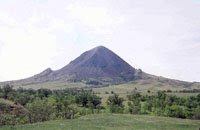
LIVERMORE, Calif. - The East Bay Regional Park District and the Livermore Area Recreation and Parks District have considered a trail that would run across the top of Brushy Peak, a landmark and a sacred site to local Native people.
Brushy Peak is a 1,702-foot landmark which links the San Francisco Bay Area, the California Delta, and the Central Valley. This area was home to the Ohlones, Miwoks and Northern Valley Yokuts, who traded, socialized and held sacred ceremonies in the area.
The infamous Mexican bandit Joaquin Murietta often retreated to the outcrops of Brushy Peak. In the 1890s and early 1900s, the area was also a place of celebration for local ranch families and San Francisco Bohemian club members.
According to the East Bay Regional Park District, Brushy Peak was first identified as a potential park by the LARPD in the 1970s, and that agency acquired 507 acres as parkland in 1994. In 1997, an agreement between LARPD and the East Bay Regional Park District pledged cooperation in the further acquisition, planning, and protection of Brushy Peak Regional Preserve.
In 2002, Park officials considered a land-use plan that would serve to construct a trail straight to the top of Brushy Peak. The plan would complete a variety of different multi-use trails and footpaths.
The measure met with immediate disapproval from the Native community, who feared desecration of sacred lands. Local Native people do not feel as though the lands are going to be protected with the introduction of these trails.
The proposal of the paths has never sat well with Don Hankins, Plains Miwok, assistant professor at California State University - Chico's department of geography and planning.
''They shouldn't put the trails in because Brushy Peak is part of our creation story. It is a place our healers have gone for generations to help in healing ceremonies. There is also a solstice site complex that is associated with these areas.''
In 2002, Hankins and other tribal members offered comments against the initially proposed land-use plan. The tribes soon thereafter received word that the parks received the comments but were proceeding forward as originally planned.
In 2003, tribal members met again with park officials in hopes of obtaining a compromise. The officials said they would instead run a lower trail between the upper and lower peaks of Brushy Peak. Hankins was not completely satisfied.
''It wasn't ideal, but if they run group-led tours through the saddle, maybe we could live with that.''
Hankins sent follow-up letters to re-inquire about the trails, but received no response. He was hopeful that the entire project was abandoned and become a dead issue.
In 2008, Hankins learned that the park services were still planning to proceed as originally planned. Park officials had obtained permits from the Fish and Wildlife Service to build the trails.
Billie Blue Elliston, Ione Miwok, is a local Native who is opposed to a trail to the top of Brushy Peak.
''There should not be a trail there. It should remain scared. Tribal people still want to use it for their ceremonies. I think it will cause a lot of destruction to the site. A tribal person may be doing their ceremonies and a tour would walk right through it. Ceremony is important, not only for yourself, but for the history of your tribe, for your family and for future generations to come.''
In July, tribal members were asked to meet with park officials to further discuss the paths. The issue was discussed and a seven-member board has agreed not to build the last leg of the trail to the top of the peak.
The only technicality of the issue is that the trail still exists in the master plan.
Park officials have mentioned that it is more of a formality than anything else. Officials also noted that many items in master plans exist that are never completed.
But the uncertainty of the matter still doesn't sit well with Hankins.
''They decided no trail to the top, but they are still going to have the loop trail. We would ideally like the trails located south of the lower peak which would be out of the areas we are most concerned with.
''We do not even have the legal status to change anything. We are looking to see if there is anything under preservation of historic sites that may have been overlooked. I basically told them that they are acting no different than the early Spanish colonists or Americans that were perpetuating genocidal acts against our culture. This is the last nail in our coffin.''
http://www.indiancountry.com/content.cfm?id=1096418082
Posted: September 01, 2008
by: Vincent Schilling
LIVERMORE, Calif. - The East Bay Regional Park District and the Livermore Area Recreation and Parks District have considered a trail that would run across the top of Brushy Peak, a landmark and a sacred site to local Native people.
Brushy Peak is a 1,702-foot landmark which links the San Francisco Bay Area, the California Delta, and the Central Valley. This area was home to the Ohlones, Miwoks and Northern Valley Yokuts, who traded, socialized and held sacred ceremonies in the area.
The infamous Mexican bandit Joaquin Murietta often retreated to the outcrops of Brushy Peak. In the 1890s and early 1900s, the area was also a place of celebration for local ranch families and San Francisco Bohemian club members.
According to the East Bay Regional Park District, Brushy Peak was first identified as a potential park by the LARPD in the 1970s, and that agency acquired 507 acres as parkland in 1994. In 1997, an agreement between LARPD and the East Bay Regional Park District pledged cooperation in the further acquisition, planning, and protection of Brushy Peak Regional Preserve.
In 2002, Park officials considered a land-use plan that would serve to construct a trail straight to the top of Brushy Peak. The plan would complete a variety of different multi-use trails and footpaths.
The measure met with immediate disapproval from the Native community, who feared desecration of sacred lands. Local Native people do not feel as though the lands are going to be protected with the introduction of these trails.
The proposal of the paths has never sat well with Don Hankins, Plains Miwok, assistant professor at California State University - Chico's department of geography and planning.
''They shouldn't put the trails in because Brushy Peak is part of our creation story. It is a place our healers have gone for generations to help in healing ceremonies. There is also a solstice site complex that is associated with these areas.''
In 2002, Hankins and other tribal members offered comments against the initially proposed land-use plan. The tribes soon thereafter received word that the parks received the comments but were proceeding forward as originally planned.
In 2003, tribal members met again with park officials in hopes of obtaining a compromise. The officials said they would instead run a lower trail between the upper and lower peaks of Brushy Peak. Hankins was not completely satisfied.
''It wasn't ideal, but if they run group-led tours through the saddle, maybe we could live with that.''
Hankins sent follow-up letters to re-inquire about the trails, but received no response. He was hopeful that the entire project was abandoned and become a dead issue.
In 2008, Hankins learned that the park services were still planning to proceed as originally planned. Park officials had obtained permits from the Fish and Wildlife Service to build the trails.
Billie Blue Elliston, Ione Miwok, is a local Native who is opposed to a trail to the top of Brushy Peak.
''There should not be a trail there. It should remain scared. Tribal people still want to use it for their ceremonies. I think it will cause a lot of destruction to the site. A tribal person may be doing their ceremonies and a tour would walk right through it. Ceremony is important, not only for yourself, but for the history of your tribe, for your family and for future generations to come.''
In July, tribal members were asked to meet with park officials to further discuss the paths. The issue was discussed and a seven-member board has agreed not to build the last leg of the trail to the top of the peak.
The only technicality of the issue is that the trail still exists in the master plan.
Park officials have mentioned that it is more of a formality than anything else. Officials also noted that many items in master plans exist that are never completed.
But the uncertainty of the matter still doesn't sit well with Hankins.
''They decided no trail to the top, but they are still going to have the loop trail. We would ideally like the trails located south of the lower peak which would be out of the areas we are most concerned with.
''We do not even have the legal status to change anything. We are looking to see if there is anything under preservation of historic sites that may have been overlooked. I basically told them that they are acting no different than the early Spanish colonists or Americans that were perpetuating genocidal acts against our culture. This is the last nail in our coffin.''
http://www.indiancountry.com/content.cfm?id=1096418082
Native American site being excavated in Colchester
Native American site being excavated in Colchester
September 1, 2008
Volunteers from the Vermont Archaeological Society are helping study a Colchester site that is believed to have been used by Native Americans thousands of years ago.
University of Vermont Archaeologist Charles Knight says the original inhabitants chose the spot on the hills about Indian Brook near Severance Corners for the same reason people want to live in the area today.
And that's why the site is being excavated this summer.
The site is being studied as part of Vermont's Act 250 land use permit process, which requires an archaeological review be a site can be developed.
Knight says the evidence from the current study suggests a temporary hunting camp from the early woodlands period, about 2,000 years ago.
------
Information from: The Burlington Free Press,
http://www.boston.com/news/local/vermont/articles/2008/09/01/native_american_site_being_excavated_in_colchester/
September 1, 2008
Volunteers from the Vermont Archaeological Society are helping study a Colchester site that is believed to have been used by Native Americans thousands of years ago.
University of Vermont Archaeologist Charles Knight says the original inhabitants chose the spot on the hills about Indian Brook near Severance Corners for the same reason people want to live in the area today.
And that's why the site is being excavated this summer.
The site is being studied as part of Vermont's Act 250 land use permit process, which requires an archaeological review be a site can be developed.
Knight says the evidence from the current study suggests a temporary hunting camp from the early woodlands period, about 2,000 years ago.
------
Information from: The Burlington Free Press,
http://www.boston.com/news/local/vermont/articles/2008/09/01/native_american_site_being_excavated_in_colchester/
Subscribe to:
Posts (Atom)


 Posts
Posts