Steps in the right direction
Posted: June 27, 2008
by: Carol Berry
NARF, University of Colorado join National Days of Prayer events
BOULDER, Colo. - The sun's rays were already warm just after 7 a.m. June 20 as cedar was burned and ceremonial words offered in this college town at the foot of the Rocky Mountains during the National Days of Prayer to Protect Native American Sacred Places.
''The Native American Rights Fund has joined with tribes and national Native organizations around the country in honoring sacred places today,'' said Walter Echo-Hawk, Pawnee and NARF senior staff attorney.
Echo-Hawk and others talked about progress made in protecting sacred sites at the summer solstice ceremony, where attendees were seated in lawn chairs under shade trees at NARF headquarters on the University of Colorado campus.
The Declaration on the Rights of Indigenous Peoples, adopted in 2007 in the U.N. General Assembly; a ruling in the 9th Circuit Court of Appeals favoring tribes seeking to preserve the sanctity of the San Francisco Peaks in Arizona; and a bill in Congress protecting Native worship on Forest Service lands constitute ''incremental steps'' by government to protect Native sites, he said.
Andy Cozad, Kiowa, and Fred Standing, Wichita, both offered prayers for the protection and preservation of holy places and practices. Cozad said that in 1890, the federal government took away the Kiowa Sun Dance and has ''taken away our sacred sites.''
Ben Sherman, Lakota and president of the Western American Indian Chamber in Denver, said he recently visited the Black Hills in South Dakota where he found a previously unknown cultural site in a pasture that may soon be under development.
Ancestral sites are ''all over this land, and sacred places exist everywhere,'' he said. ''We will continue to lose these places as developers take over our lands.''
Sherman cited concerns about environmental and other issues at Valmont Butte, near Boulder, where Sweatlodge and other ceremonies have been performed. ''We have a lot of work to do about that,'' he said.
Steven Moore, a NARF staff attorney, said the organization is ''standing in solidarity'' with indigenous people in the Americas who feel a special connection to the Earth.
''There is a fundamental difference in the ways in which Native peoples worship, because Native religions are often fundamentally land-based and rely on the protection and preservation of the places for the sanctity of the religions themselves.''
He and others work to preserve sacred sites through both Congress and the courts, he said, but the former has been less helpful because there are ''moneyed interests in Congress that would prefer to protect their own access.''
Mining, timber, and oil and gas exploration interests ''have more money and better access to members of Congress,'' he said.
Although the courts may have generally been more sensitive to Native issues, a 1988 Supreme Court decision overturned lower courts' rulings that would have protected sacred areas from Forest Service intrusion. The high court's decision ''began to mark a trend against Native American rights and interests,'' he said.
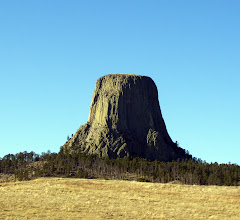
Echo-Hawk and Moore are active in issues concerning the Medicine Wheel National Historic Monument, Devil's Tower (also known by various tribal names) in Wyoming, and the Spirit Cave and Kennewick Man cases, both involving ancient human remains.
NARF is also involved with the Sacred Lands Protection Coalition and the Working Group on Culturally Unidentified Human Remains, and implementation of the Native American Graves Protection and Repatriation Act
http://www.indiancountry.com/content.cfm?id=1096417594
Friday, June 27, 2008

'I'm not afraid to speak on behalf of the mountain'
If you have not had a chance to sign our online petition to Protect Bear Butte, please take a moment to sign! The petition is to oppose the liquor licenses for Broken Spoke Campground. Deadline is Monday June 30th. Hearing is Tuesday, July 1st at 3:30 Meade County Commissoners Building.
http://www.petitiononline.com/BBappeal/petition.html
Thank you for your continued support to Protect Bear Butte!
Tamra
'I'm not afraid to speak on behalf of the mountain'
Posted: June 27, 2008
by: Rob Capriccioso
Click to Enlarge
Photo courtesy Tamra Brennan -- The two-story bar at the Broken Spoke Campground is one of many developments that have popped up around sacred Bear Butte over the last two years.
PIERRE, S.D. - A group of impassioned Indians gathered at South Dakota's Bear Butte State Park June 21 to pray for healing and to highlight what they call ''horrifying'' commercial developments around their revered mountain.
The gathering was attended by more than 40 Natives, with some traveling from as far away as Canada to pray and honor the lands. Bear Butte is considered sacred to dozens of Native nations, including the Cheyenne, Lakota and Arapaho tribes, some of which own small sections of land near the mountain.
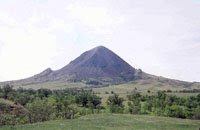
The 4,422-foot peak has been used for thousands of years as a religious and commemorative place for vision quests, ceremonies of passage and renewal, spiritual offerings and medicine gatherings.
In recent years, economic development in the form of bars, concert venues and campgrounds has become increasingly upsetting to Indians who have long made religious pilgrimages to the site. About a dozen developments currently operate in close proximity to the mountain, many of which have been built since 2006 in an attempt to lure bikers and tourists to the area.
Tamra Brennan, founder of the grass-roots organization Protect Sacred Sites Indigenous People, One Nation, lives near the base of the mountain. She said that noise from motorcycle rallies and drunken partiers, as well as fireworks and flashing strobe lights that are sometimes shone onto the mountain, have disrupted the sacred lands.
''The struggle has gotten difficult over the last few months,'' Brennan, Eastern Cherokee, said. ''It's been hard to keep people informed on new developments. The issue is a lot more critical now than even a few years ago.''
Brennan and others are urging the Meade County Commission to deny alcohol licenses for the Broken Spoke Campground, which they say is one of the most disruptive developments in the area.
Originally called Sturgis County Line Bar, the two-story, 25,000-square-foot venue is in transition to be operated by Boston-based Target Logistics, an international company that provides housing, transportation, life support and hospitality services. The property was previously under the sole management of developer Jay Allen, who lost his alcohol license last year due to character issues.
Developers with Broken Spoke recently expressed interest in offering helicopter rides over the mountain, which further angered Natives in the area. The Native American Rights Fund has consulted with local Indians on helping to legally stop the rides under the American Indian Religious Freedom Act.
Developers have also pursued plans to build a concert stadium and an RV park in addition to the bar already on the grounds.
''It's going to make it practically impossible to pray in peace,'' Brennan said.
Target Logistics President Joe Murphy has said in the past that he is ''happy to sit down and listen to our critics'' and that he is ''respectful'' of his critics' religious views. He could not be reached by press time for further comment.
The commission's meeting to determine whether the campground will get its alcohol license is scheduled for July 1. Brennan's organization is encouraging tribal members from throughout the region to make their voices heard prior to meeting day. Organizers believe that visitors will be discouraged from frequenting the venue, if liquor cannot be served.
The National Congress of American Indians is opposed to the alcohol license application submitted by Broken Spoke.
''Both the location and the character of the applicant are unsuitable for any alcohol licenses,'' according to a letter sent by NCAI to the Meade County Commission.
The organization also recommended that county commissioners ''use their broad discretion over alcohol licenses to begin government-to-government consultation with affected local Indian tribes to establish notification and consultation procedures for decisions that affect religious practice at Bear Butte and all American Indian sacred sites.''
Republican Gov. Mike Rounds and some state legislators have also tried to conserve and protect lands around Bear Butte, but have been unsuccessful to date.
Alberta Fischer, a Montana-based Northern Cheyenne elder, said she is hopeful that the damages she's seen as a result of the developments will one day end. She first started making treks to the mountain as a young girl when she watched her grandparents and parents pray and perform religious ceremonies there.
''I grew up with it. I know the true significance of that mountain. It's been a part of my life, which is why I'm opposed to any development. I'm not afraid to speak on behalf of the mountain.
''There's going to be somebody who will listen to us one of these days. And that's what I pray for.''
Bear Butte was listed as a National Natural Landmark in 1965, as a National Historical Place in 1973 and as a National Historic Landmark in 1981. It has been on the National Historic Landmarks threat level watch list since 2004.
http://www.indiancountry.com:80/content.cfm?id=1096417592
For more information, visit www.ProtectBearButte.com.
In peace & solidarity,
Tamra Brennan
Founder/Director
Protect Sacred Sites Indigenous People, One Nation
www.protectsacredsites.org
www.protectbearbutte.com
"Our sacred lands are all that remain keeping us connected to our place on Mother Earth, to our spirituality, our heritage and our lands; what’s left of them. If they take it all away, what will remain except a vague memory of a past so forgotten?"
http://www.petitiononline.com/BBappeal/petition.html
Thank you for your continued support to Protect Bear Butte!
Tamra
'I'm not afraid to speak on behalf of the mountain'
Posted: June 27, 2008
by: Rob Capriccioso
Click to Enlarge
Photo courtesy Tamra Brennan -- The two-story bar at the Broken Spoke Campground is one of many developments that have popped up around sacred Bear Butte over the last two years.
PIERRE, S.D. - A group of impassioned Indians gathered at South Dakota's Bear Butte State Park June 21 to pray for healing and to highlight what they call ''horrifying'' commercial developments around their revered mountain.
The gathering was attended by more than 40 Natives, with some traveling from as far away as Canada to pray and honor the lands. Bear Butte is considered sacred to dozens of Native nations, including the Cheyenne, Lakota and Arapaho tribes, some of which own small sections of land near the mountain.
The 4,422-foot peak has been used for thousands of years as a religious and commemorative place for vision quests, ceremonies of passage and renewal, spiritual offerings and medicine gatherings.
In recent years, economic development in the form of bars, concert venues and campgrounds has become increasingly upsetting to Indians who have long made religious pilgrimages to the site. About a dozen developments currently operate in close proximity to the mountain, many of which have been built since 2006 in an attempt to lure bikers and tourists to the area.
Tamra Brennan, founder of the grass-roots organization Protect Sacred Sites Indigenous People, One Nation, lives near the base of the mountain. She said that noise from motorcycle rallies and drunken partiers, as well as fireworks and flashing strobe lights that are sometimes shone onto the mountain, have disrupted the sacred lands.
''The struggle has gotten difficult over the last few months,'' Brennan, Eastern Cherokee, said. ''It's been hard to keep people informed on new developments. The issue is a lot more critical now than even a few years ago.''
Brennan and others are urging the Meade County Commission to deny alcohol licenses for the Broken Spoke Campground, which they say is one of the most disruptive developments in the area.
Originally called Sturgis County Line Bar, the two-story, 25,000-square-foot venue is in transition to be operated by Boston-based Target Logistics, an international company that provides housing, transportation, life support and hospitality services. The property was previously under the sole management of developer Jay Allen, who lost his alcohol license last year due to character issues.
Developers with Broken Spoke recently expressed interest in offering helicopter rides over the mountain, which further angered Natives in the area. The Native American Rights Fund has consulted with local Indians on helping to legally stop the rides under the American Indian Religious Freedom Act.
Developers have also pursued plans to build a concert stadium and an RV park in addition to the bar already on the grounds.
''It's going to make it practically impossible to pray in peace,'' Brennan said.
Target Logistics President Joe Murphy has said in the past that he is ''happy to sit down and listen to our critics'' and that he is ''respectful'' of his critics' religious views. He could not be reached by press time for further comment.
The commission's meeting to determine whether the campground will get its alcohol license is scheduled for July 1. Brennan's organization is encouraging tribal members from throughout the region to make their voices heard prior to meeting day. Organizers believe that visitors will be discouraged from frequenting the venue, if liquor cannot be served.
The National Congress of American Indians is opposed to the alcohol license application submitted by Broken Spoke.
''Both the location and the character of the applicant are unsuitable for any alcohol licenses,'' according to a letter sent by NCAI to the Meade County Commission.
The organization also recommended that county commissioners ''use their broad discretion over alcohol licenses to begin government-to-government consultation with affected local Indian tribes to establish notification and consultation procedures for decisions that affect religious practice at Bear Butte and all American Indian sacred sites.''
Republican Gov. Mike Rounds and some state legislators have also tried to conserve and protect lands around Bear Butte, but have been unsuccessful to date.
Alberta Fischer, a Montana-based Northern Cheyenne elder, said she is hopeful that the damages she's seen as a result of the developments will one day end. She first started making treks to the mountain as a young girl when she watched her grandparents and parents pray and perform religious ceremonies there.
''I grew up with it. I know the true significance of that mountain. It's been a part of my life, which is why I'm opposed to any development. I'm not afraid to speak on behalf of the mountain.
''There's going to be somebody who will listen to us one of these days. And that's what I pray for.''
Bear Butte was listed as a National Natural Landmark in 1965, as a National Historical Place in 1973 and as a National Historic Landmark in 1981. It has been on the National Historic Landmarks threat level watch list since 2004.
http://www.indiancountry.com:80/content.cfm?id=1096417592
For more information, visit www.ProtectBearButte.com.
In peace & solidarity,
Tamra Brennan
Founder/Director
Protect Sacred Sites Indigenous People, One Nation
www.protectsacredsites.org
www.protectbearbutte.com
"Our sacred lands are all that remain keeping us connected to our place on Mother Earth, to our spirituality, our heritage and our lands; what’s left of them. If they take it all away, what will remain except a vague memory of a past so forgotten?"
Sunday, June 22, 2008
Man claims cabin owners 'desecrating burial grounds'
Man claims cabin owners 'desecrating burial grounds'
"I'm the last descendant (of the Stoney Lake Cree). I'm the caretaker": Nanatakapo
Lana Haight, TheStarPhoenix.com
Published: Friday, June 20, 2008
DELARONDE LAKE - Victor Nanatakapo's ties to a piece of land in northern Saskatchewan run long and deep.
"I'm related to the first chief that's buried in the graveyard," said the 55-year-old Nanatakapo.
The Rabbitskin or Nanatakapo family has lived at the Stoney Creek settlement "since time immemorial," says Nanatakapo. He traces his roots on both his mother's and his father's side to the settlement: His mom's mom and his dad's dad were both born on the land, claimed by the provincial government as Crown land.
View Larger Image
Victor Nanatakapo was charged with careless use of a firearm after he allegedly fired shots near fishermen he considered were polluting his lake. Victor says he is the caretaker for sacred burial ground near his village. The cloth tied onto the tree in the background is an offering to the spirits.
Richard Marjan/The StarPhoenix
In 1957, the last person to be buried here was his great-grandfather. As he makes his way over fallen trees and through the bush, Nanatakapo talks about his role as caretaker of the ancient burial ground located a few metres from the southeastern shore of Delaronde Lake.
He is bothered by what he sees as the disrespect of local cabin owners who drive their all-terrain vehicles near the site and also of those who boat close to the shore.
"It's very rude for them to be that close. They're desecrating the burial grounds."
There are no grave markers. No headstones. Only colourful cloth tied to tall poplars and more cloth tucked under fallen logs. Nanatakapo doesn't know how long these particular cloths have been wrapped around the trees. They have been placed here by relatives as an offering to the spirits, he says.
Nanatakapo's own offering of food is made every fall.
"I'm the last descendant (of the Stoney Lake Cree). I'm the caretaker. I feed the spirits of the departed ones," he said as raven squawked overhead.
"They're caretakers of the spirits like myself."
Some distance away in a clearing sits the frame of a sundance lodge. That, too, is sacred for Nanatakapo and others who travel here to participate in the sundance ritual of thanking the Creator and asking for rain.
ATV tracks run right past the lodge, far too close for Nanatakapo who has also built a sweat lodge in the area.
*****
Norma Morrison has seen an explosion of cottage development in the 15 or so years since she first started coming to Pickerel Point.
"There's been a big loss of nature," said Morrison, who works at Pickerel Point General Store.
She recalls a time when it wasn't uncommon to have bears coming within feet of the store. With more than 100 cottages being built at Pickerel Point subdivision in the last few years, there's less nature and more people.
"A lot of the people coming in now don't have any sensitivity," said Morrison, referring to the Nanatakapos' traditional lifestyle.
She thinks the family members should be left alone to live their traditional lifestyle and she empathizes with their concerns about cottagers encroaching on their land.
Don Meikle, who lives in Saskatoon and owns a cabin at Pickerel Point, thinks the problem is ignorance, not disrespect.
"I know where to stay away. I was told by another cabin owner. We were told, 'That's sacred burial ground. Stay away from there,' " said Meikle, president of the Pickerel Point community association.
While Meikle says he can't speak for everybody at the subdivision, he believes most cottagers head to Pickerel Point for the same reasons he does.
"There's a ton of great people out there. They come to relax and have fun, enjoy the lake and just be there because it's beautiful, absolutely beautiful out there."
But even among the cottagers, there are different expectations of life at the lake.
Some want gravel roads to be treated to keep the dust down. Others want street lights.
"A lot of people don't want street lights because they're out at the lake, but there's the odd person who says when they walk their dog at night, they want lights. This has been an issue for years," said Meikle.
There is no easy solution when people have different expectations, but Meikle believes communication can help. Just as dust control and street lights make it on the agenda of the community association meetings, Meikle says he plans to add the concerns raised by Nanatakapo when the association meets next in the fall.
*****
Nanatakapo and his wife, along with their seven children ranging in age from four years to 24 years and their two grandchildren, live in a log cabin plastered on the outside with tan-coloured mud for insulation. The younger ones attend school in nearby Big River; an older daughter works at Pickerel Point.
Born on the Whitefish reserve, about 45 minutes from his present home, Nanatakapo was in his mid-30s when moved to the Stoney Lake settlement after the death of his grandfather. He decided it was time to move to the land of his ancestors and raise his children according to a traditional lifestyle.
"I teach them my language and the right way to conduct themselves and I teach them my culture."
That means hunting moose and deer, growing vegetables and scouring the bush for food. They do buy groceries at nearby Big River with welfare money.
His family hauls water in pails year-round from Straight Bay for drinking and other household uses, and the family burns wood for cooking and heat. The only "modern" convenience is a generator that provides power for lights in their home.
There's no running water or electricity.
"It's part of the lazy way of living," said Nanatakapo with a smile.
Some of Nanatakapo's extended family - his mother, a niece, nephews and two brothers - also strive to live a traditional lifestyle at the Stoney Lake settlement.
"We like to be self-sufficient."
They believe they are the last of the Stoney Lake Cree, not part of the Big River First Nation, which has land south of Big River.
*****
Nanatakapo stands on a rise where his mother's cabin is located and gazes across Straight Bay to the shoreline about 500 metres away. Concealed behind dense bush is Pickerel Point, a rapidly developing cottage community.
"They're being intrusive. They're being disrespectful of the land. And my water supply is being polluted," said Nanatakapo.
Nanatakapo's family depends on that water, winter and summer. Straight Bay is also the spawning ground for walleye that populate Delaronde Lake.
"I believe I need to protect my water."
It's that belief that has landed Nanatakapo in court.
On May 18 around 11 a.m., Nanatakapo saw a family in a motorized boat fishing in Straight Bay. He became angry with them. A shot was fired. Nanatakapo was charged with careless use of a firearm. His next appearance in Big River provincial court is set for Oct. 6.
Nanatakapo says he wishes everyone could live their lives, keeping to themselves.
"I wouldn't be in trouble right now. I would be living peacefully without bothering anyone."
*****
The May long weekend shooting has changed the mood at Pickerel Point.
"I'm upset about the gun thing. Violence is no way to handle the issues," said Meikle.
He worries about the tension that is developing among his neighbours. People are angry and fearful of how the summer will turn out. They're wondering if the shooting was an isolated incident or an indication of things to come.
"You don't know what's going to happen next. The thing is nobody owns that water," said Meikle.
"The cabin owners think it is there for everyone to use as long as you're being respectful."
Meikle didn't realize the Nanatakapos used the water for drinking year-round, but he questions how much pollution is being added to Straight Bay by boaters. The water doesn't appear clean and it often has a sulfur-like smell.
He says if the Nanatakapos don't want motorized boats on Straight Bay, they should tell the cottagers.
"We're all ignorant of things we don't understand or don't know," said Meikle.
"But people will listen. There's a lot of people out there who are very respectful of the culture."
*****
RCMP Sgt. Carmela Schneider sees a clash of cultures.
"It's two different worlds that are living 500 metres across the water from one another," she said in an interview at the Big River detachment.
"On the one side you have the First Nations who live very traditional, very basic lives. And on the other side of the water, you have the cabin owners and the development and the progress we're seeing in Saskatchewan with lake country."
She knows Nanatakapo that takes exception to cabin owners running all-terrain vehicles and boats too close to sacred land and that he's doesn't want motorized boats on Straight Bay. She also realizes that cabin owners want to be able to explore the natural beauty of the area after paying for "their patch of paradise." She says both sides need to see the other's point of view.
"I honestly don't know that there is a lot of understanding from the sides or even if there's a willingness to make an effort to understand."
In the meantime, police officers continue to make their regular rounds at Pickerel Point.
"We're trying to make a point of making sure we're seen out there," said Schneider, the officer-in-command at Big River.
*****
The startled grouse squawks and struts about in the middle of the dirt road. She ruffles her brown and white mottled wings and puffs up her body, trying to look larger than life.
Taking a cue from mom, several tiny chicks scurry into the bush. Now you see them, now you don't. And before you know it, the female is gone too - hidden by the new growth on the forest floor while poplar and spruce trees tower overhead.
"She's trying to protect her young," said Victor Nanatakapo.
"That's for me, a lesson," said the proud Cree man as he smiles and pats his chest.
http://www.canada.com/saskatoonstarphoenix/news/story.html?id=5ca68240-5a27-40e3-808f-5dbbdc6d2332
In peace & solidarity,
Tamra
www.NDNnews.com
www.protectsacredsites.org
www.protectbearbutte.com
PROTECT BEAR BUTTE!
"Providing news and information about Native American Issues & Causes"
"Helping to make a difference for our people in Indian Country, one day at a time. What will you do today to help make a difference?"
"Our sacred lands are all that remain keeping us connected to our place on Mother Earth, to our spirituality, our heritage and our lands; what’s left of them. If they take it all away, what will remain except a vague memory of a past so forgotten?"
"I'm the last descendant (of the Stoney Lake Cree). I'm the caretaker": Nanatakapo
Lana Haight, TheStarPhoenix.com
Published: Friday, June 20, 2008
DELARONDE LAKE - Victor Nanatakapo's ties to a piece of land in northern Saskatchewan run long and deep.
"I'm related to the first chief that's buried in the graveyard," said the 55-year-old Nanatakapo.
The Rabbitskin or Nanatakapo family has lived at the Stoney Creek settlement "since time immemorial," says Nanatakapo. He traces his roots on both his mother's and his father's side to the settlement: His mom's mom and his dad's dad were both born on the land, claimed by the provincial government as Crown land.
View Larger Image
Victor Nanatakapo was charged with careless use of a firearm after he allegedly fired shots near fishermen he considered were polluting his lake. Victor says he is the caretaker for sacred burial ground near his village. The cloth tied onto the tree in the background is an offering to the spirits.
Richard Marjan/The StarPhoenix
In 1957, the last person to be buried here was his great-grandfather. As he makes his way over fallen trees and through the bush, Nanatakapo talks about his role as caretaker of the ancient burial ground located a few metres from the southeastern shore of Delaronde Lake.
He is bothered by what he sees as the disrespect of local cabin owners who drive their all-terrain vehicles near the site and also of those who boat close to the shore.
"It's very rude for them to be that close. They're desecrating the burial grounds."
There are no grave markers. No headstones. Only colourful cloth tied to tall poplars and more cloth tucked under fallen logs. Nanatakapo doesn't know how long these particular cloths have been wrapped around the trees. They have been placed here by relatives as an offering to the spirits, he says.
Nanatakapo's own offering of food is made every fall.
"I'm the last descendant (of the Stoney Lake Cree). I'm the caretaker. I feed the spirits of the departed ones," he said as raven squawked overhead.
"They're caretakers of the spirits like myself."
Some distance away in a clearing sits the frame of a sundance lodge. That, too, is sacred for Nanatakapo and others who travel here to participate in the sundance ritual of thanking the Creator and asking for rain.
ATV tracks run right past the lodge, far too close for Nanatakapo who has also built a sweat lodge in the area.
*****
Norma Morrison has seen an explosion of cottage development in the 15 or so years since she first started coming to Pickerel Point.
"There's been a big loss of nature," said Morrison, who works at Pickerel Point General Store.
She recalls a time when it wasn't uncommon to have bears coming within feet of the store. With more than 100 cottages being built at Pickerel Point subdivision in the last few years, there's less nature and more people.
"A lot of the people coming in now don't have any sensitivity," said Morrison, referring to the Nanatakapos' traditional lifestyle.
She thinks the family members should be left alone to live their traditional lifestyle and she empathizes with their concerns about cottagers encroaching on their land.
Don Meikle, who lives in Saskatoon and owns a cabin at Pickerel Point, thinks the problem is ignorance, not disrespect.
"I know where to stay away. I was told by another cabin owner. We were told, 'That's sacred burial ground. Stay away from there,' " said Meikle, president of the Pickerel Point community association.
While Meikle says he can't speak for everybody at the subdivision, he believes most cottagers head to Pickerel Point for the same reasons he does.
"There's a ton of great people out there. They come to relax and have fun, enjoy the lake and just be there because it's beautiful, absolutely beautiful out there."
But even among the cottagers, there are different expectations of life at the lake.
Some want gravel roads to be treated to keep the dust down. Others want street lights.
"A lot of people don't want street lights because they're out at the lake, but there's the odd person who says when they walk their dog at night, they want lights. This has been an issue for years," said Meikle.
There is no easy solution when people have different expectations, but Meikle believes communication can help. Just as dust control and street lights make it on the agenda of the community association meetings, Meikle says he plans to add the concerns raised by Nanatakapo when the association meets next in the fall.
*****
Nanatakapo and his wife, along with their seven children ranging in age from four years to 24 years and their two grandchildren, live in a log cabin plastered on the outside with tan-coloured mud for insulation. The younger ones attend school in nearby Big River; an older daughter works at Pickerel Point.
Born on the Whitefish reserve, about 45 minutes from his present home, Nanatakapo was in his mid-30s when moved to the Stoney Lake settlement after the death of his grandfather. He decided it was time to move to the land of his ancestors and raise his children according to a traditional lifestyle.
"I teach them my language and the right way to conduct themselves and I teach them my culture."
That means hunting moose and deer, growing vegetables and scouring the bush for food. They do buy groceries at nearby Big River with welfare money.
His family hauls water in pails year-round from Straight Bay for drinking and other household uses, and the family burns wood for cooking and heat. The only "modern" convenience is a generator that provides power for lights in their home.
There's no running water or electricity.
"It's part of the lazy way of living," said Nanatakapo with a smile.
Some of Nanatakapo's extended family - his mother, a niece, nephews and two brothers - also strive to live a traditional lifestyle at the Stoney Lake settlement.
"We like to be self-sufficient."
They believe they are the last of the Stoney Lake Cree, not part of the Big River First Nation, which has land south of Big River.
*****
Nanatakapo stands on a rise where his mother's cabin is located and gazes across Straight Bay to the shoreline about 500 metres away. Concealed behind dense bush is Pickerel Point, a rapidly developing cottage community.
"They're being intrusive. They're being disrespectful of the land. And my water supply is being polluted," said Nanatakapo.
Nanatakapo's family depends on that water, winter and summer. Straight Bay is also the spawning ground for walleye that populate Delaronde Lake.
"I believe I need to protect my water."
It's that belief that has landed Nanatakapo in court.
On May 18 around 11 a.m., Nanatakapo saw a family in a motorized boat fishing in Straight Bay. He became angry with them. A shot was fired. Nanatakapo was charged with careless use of a firearm. His next appearance in Big River provincial court is set for Oct. 6.
Nanatakapo says he wishes everyone could live their lives, keeping to themselves.
"I wouldn't be in trouble right now. I would be living peacefully without bothering anyone."
*****
The May long weekend shooting has changed the mood at Pickerel Point.
"I'm upset about the gun thing. Violence is no way to handle the issues," said Meikle.
He worries about the tension that is developing among his neighbours. People are angry and fearful of how the summer will turn out. They're wondering if the shooting was an isolated incident or an indication of things to come.
"You don't know what's going to happen next. The thing is nobody owns that water," said Meikle.
"The cabin owners think it is there for everyone to use as long as you're being respectful."
Meikle didn't realize the Nanatakapos used the water for drinking year-round, but he questions how much pollution is being added to Straight Bay by boaters. The water doesn't appear clean and it often has a sulfur-like smell.
He says if the Nanatakapos don't want motorized boats on Straight Bay, they should tell the cottagers.
"We're all ignorant of things we don't understand or don't know," said Meikle.
"But people will listen. There's a lot of people out there who are very respectful of the culture."
*****
RCMP Sgt. Carmela Schneider sees a clash of cultures.
"It's two different worlds that are living 500 metres across the water from one another," she said in an interview at the Big River detachment.
"On the one side you have the First Nations who live very traditional, very basic lives. And on the other side of the water, you have the cabin owners and the development and the progress we're seeing in Saskatchewan with lake country."
She knows Nanatakapo that takes exception to cabin owners running all-terrain vehicles and boats too close to sacred land and that he's doesn't want motorized boats on Straight Bay. She also realizes that cabin owners want to be able to explore the natural beauty of the area after paying for "their patch of paradise." She says both sides need to see the other's point of view.
"I honestly don't know that there is a lot of understanding from the sides or even if there's a willingness to make an effort to understand."
In the meantime, police officers continue to make their regular rounds at Pickerel Point.
"We're trying to make a point of making sure we're seen out there," said Schneider, the officer-in-command at Big River.
*****
The startled grouse squawks and struts about in the middle of the dirt road. She ruffles her brown and white mottled wings and puffs up her body, trying to look larger than life.
Taking a cue from mom, several tiny chicks scurry into the bush. Now you see them, now you don't. And before you know it, the female is gone too - hidden by the new growth on the forest floor while poplar and spruce trees tower overhead.
"She's trying to protect her young," said Victor Nanatakapo.
"That's for me, a lesson," said the proud Cree man as he smiles and pats his chest.
http://www.canada.com/saskatoonstarphoenix/news/story.html?id=5ca68240-5a27-40e3-808f-5dbbdc6d2332
In peace & solidarity,
Tamra
www.NDNnews.com
www.protectsacredsites.org
www.protectbearbutte.com
PROTECT BEAR BUTTE!
"Providing news and information about Native American Issues & Causes"
"Helping to make a difference for our people in Indian Country, one day at a time. What will you do today to help make a difference?"
"Our sacred lands are all that remain keeping us connected to our place on Mother Earth, to our spirituality, our heritage and our lands; what’s left of them. If they take it all away, what will remain except a vague memory of a past so forgotten?"
Driving tour encompasses ancient mounds of Ohio
Rising to the occasion
Driving tour encompasses ancient mounds of Ohio
Sunday, June 22, 2008 3:49 AM
By Steve Stephens
THE COLUMBUS DISPATCH
Ohio Historical Society
Serpent Mound, the largest ancient serpent effigy in the world, has been nominated as a UNESCO World Heritage Site.
Click here to enlarge
An effigy pipe from Tremper Mound is displayed at the Ohio Historical Society.
When travelers dream of visiting ancient wonders, they often think of the Parthenon, Stonehenge, Chichen Itza or some other far-off landmark.
But Ohio has its own ancient wonders, as fascinating as any to be found anywhere in the world. And a new driving tour -- available on compact disc, as a computer download or on DVD -- offers travelers a great introduction to 10 of the most impressive or important earthworks remaining in the southern part of the state.
Four of the sites -- Serpent Mound and the Hopewell Earthworks sites Mound City, Hopewell Mound Group and Seip Mound -- have been nominated for inclusion on the UNESCO World Heritage List of the most outstanding cultural and natural sites across the globe.
"We have sites that can stand beside the great pyramids of Egypt in terms of historical significance," said Brad Lepper, an archaeologist with the Ohio Historical Society. "If you're living among the earthworks in Newark or Chillicothe, it's kind of like living in Cairo in that regard."
The CD or audio tour Earthworks of Ohio: Ancient Monuments of the Eastern Woodlands probably is best used as a driving and walking guide starting at Hopewell Culture National Historical Park visitors center at Mound City, near Chillicothe.
I found it convenient to download my copy of the CD onto an MP3 player and listen as I visited the various sites.
At Mound City, I put on my headphones and started my tour as I left the site's visitors center. I found myself pushing on through the 90-degree heat, spurred by the stories I was hearing.
Mound City contains one of the largest concentrations of Hopewell burial mounds ever discovered at one site. More than two dozen mounds are enclosed by more than 2,000 feet of earthen walls.
Even though I was aware that most of the site is a restoration -- almost every mound was removed when Mound City became Camp Sherman, a World War I-era training ground -- I still found myself moved by the power of the place and spectacular collection of mounds.
And something about the site, located on a short rise just above the Scioto River, apparently stirred the Hopewells, too. The audio narrative directed me through the opening in the earthen wall, following a path the Hopewells once took on ceremonial processions about which we still know very little.
The narrative led me from one interpretive panel to the next, explaining the significance of each stop along the way. One stop marked the site of one of the greatest finds of Hopewell artifacts: a collection of hundreds of effigy pipes uncovered in 1846.
Although I had seen pictures of the clay effigy pipes, I hadn't realized how delicately and elaborately carved they were until I saw several on display at the visitors center. (The Ohio Historical Center in Columbus also has a large display of relics found in Ohio mounds.)
From Mound City, the tour loops over some 75 miles of scenic roads through Ross, Pike, Highland, Adams and Scioto counties. Along the way, the tour leads travelers to mounds made in different times by three civilizations: the Hopewell, Adena and Fort Ancient peoples.
I stopped at several sites, but my goal was Serpent Mound in Adams County.
Although I've been fascinated by Ohio's ancient earthworks my entire life, I had never visited what might be the most famous, and perhaps most impressive.The 1,300-foot representation of a snake is thought to have been crafted 1,000 years ago by the Fort Ancient people.
At the urging of the narration, I first visited the site's small museum, then climbed the observation tower, which itself celebrates its centennial this year.
The tower is relatively short, but it still gives a nice perspective that visitors can't get from the ground.
Serpent Mound is not a burial mound; it is simply a giant earthen sculpture. Did some ancient civilization here have the desire, time and knowledge to undertake such a massive project strictly for aesthetic reasons?
Archaeologists still are pondering such questions, as will most anyone who visits the alluring site. Only recently did scientists discover that the mound wasn't built by the Adena people, but probably by the Fort Ancient people, 1,000 years later than once thought.
The snake also has been shown to line up with important astronomical points. For instance, the head points toward sunset at the summer solstice, while the three coils are aligned with sunrise at the summer solstice, the winter solstice, and the spring and fall equinoxes. I wondered what I might have seen had I been standing here a millennium ago.
Because the mound-building cultures had no written language, learning about them has been a slow process with many missteps and misconceptions, Lepper said.
"Some people have dismissed their achievements as being primitive," he said. "But only now are archaeologists really figuring out what these ancient people really knew.
"We now know they had a knowledge of astronomy and geometry that was anything but primitive."
The Adena people, although nomadic, also were probably Ohio's first farmers. The Adena, who lived from about 800 B.C. to the first century A.D., are known for their many earthen burial mounds.
The Hopewell people, who lived about 100 B.C. to A.D. 500 , built elaborate geometric earthworks that might have served as cultural or religious sites and as a kind of observatory.
The Fort Ancient people built burial mounds and might have built effigy mounds such as Serpent Mound. They lived from about A.D. 900 to A.D. 1500.
The tour project was underwritten by the Ohio Valley Regional Development Commission, the Ohio Historical Society and the counties' visitors bureaus.
"The partners knew we had something really special at the sites, but a lot of Ohioans don't even realize the earthworks are here," said Jackie Barton, special projects manager for the Ohio Historical Society.
Some sites, such as Mound City and Serpent Mound, are impressive even to visitors who know nothing of their history. But a few tour stops today appear as no more than bumps in the ground to casual passers-by, Barton said.
"But once you hear their story, they become so much more exciting. These are really mystic landscapes."
Many of the elaborate earthworks are now thought to have been places of great spiritual import to the cultures that built them, Lepper said.
"They were pilgrim centers, drawing people from hundreds of miles away as some kind of special holy place, like Mecca or the Vatican or Jerusalem."
And today's travelers should find them still worthy of a visit.
sstephens@dispatch.com
http://www.columbusdispatch.com:80/live/content/travel/stories/2008/06/22/8_ANCIENTS_ART_06-22-08_F1_9KAGQH8.html?sid=101
In peace & solidarity,
Tamra
www.NDNnews.com
www.protectsacredsites.org
www.protectbearbutte.com
PROTECT BEAR BUTTE!
"Providing news and information about Native American Issues & Causes"
"Helping to make a difference for our people in Indian Country, one day at a time. What will you do today to help make a difference?"
"Our sacred lands are all that remain keeping us connected to our place on Mother Earth, to our spirituality, our heritage and our lands; what’s left of them. If they take it all away, what will remain except a vague memory of a past so forgotten?"
Driving tour encompasses ancient mounds of Ohio
Sunday, June 22, 2008 3:49 AM
By Steve Stephens
THE COLUMBUS DISPATCH
Ohio Historical Society
Serpent Mound, the largest ancient serpent effigy in the world, has been nominated as a UNESCO World Heritage Site.
Click here to enlarge
An effigy pipe from Tremper Mound is displayed at the Ohio Historical Society.
When travelers dream of visiting ancient wonders, they often think of the Parthenon, Stonehenge, Chichen Itza or some other far-off landmark.
But Ohio has its own ancient wonders, as fascinating as any to be found anywhere in the world. And a new driving tour -- available on compact disc, as a computer download or on DVD -- offers travelers a great introduction to 10 of the most impressive or important earthworks remaining in the southern part of the state.
Four of the sites -- Serpent Mound and the Hopewell Earthworks sites Mound City, Hopewell Mound Group and Seip Mound -- have been nominated for inclusion on the UNESCO World Heritage List of the most outstanding cultural and natural sites across the globe.
"We have sites that can stand beside the great pyramids of Egypt in terms of historical significance," said Brad Lepper, an archaeologist with the Ohio Historical Society. "If you're living among the earthworks in Newark or Chillicothe, it's kind of like living in Cairo in that regard."
The CD or audio tour Earthworks of Ohio: Ancient Monuments of the Eastern Woodlands probably is best used as a driving and walking guide starting at Hopewell Culture National Historical Park visitors center at Mound City, near Chillicothe.
I found it convenient to download my copy of the CD onto an MP3 player and listen as I visited the various sites.
At Mound City, I put on my headphones and started my tour as I left the site's visitors center. I found myself pushing on through the 90-degree heat, spurred by the stories I was hearing.
Mound City contains one of the largest concentrations of Hopewell burial mounds ever discovered at one site. More than two dozen mounds are enclosed by more than 2,000 feet of earthen walls.
Even though I was aware that most of the site is a restoration -- almost every mound was removed when Mound City became Camp Sherman, a World War I-era training ground -- I still found myself moved by the power of the place and spectacular collection of mounds.
And something about the site, located on a short rise just above the Scioto River, apparently stirred the Hopewells, too. The audio narrative directed me through the opening in the earthen wall, following a path the Hopewells once took on ceremonial processions about which we still know very little.
The narrative led me from one interpretive panel to the next, explaining the significance of each stop along the way. One stop marked the site of one of the greatest finds of Hopewell artifacts: a collection of hundreds of effigy pipes uncovered in 1846.
Although I had seen pictures of the clay effigy pipes, I hadn't realized how delicately and elaborately carved they were until I saw several on display at the visitors center. (The Ohio Historical Center in Columbus also has a large display of relics found in Ohio mounds.)
From Mound City, the tour loops over some 75 miles of scenic roads through Ross, Pike, Highland, Adams and Scioto counties. Along the way, the tour leads travelers to mounds made in different times by three civilizations: the Hopewell, Adena and Fort Ancient peoples.
I stopped at several sites, but my goal was Serpent Mound in Adams County.
Although I've been fascinated by Ohio's ancient earthworks my entire life, I had never visited what might be the most famous, and perhaps most impressive.The 1,300-foot representation of a snake is thought to have been crafted 1,000 years ago by the Fort Ancient people.
At the urging of the narration, I first visited the site's small museum, then climbed the observation tower, which itself celebrates its centennial this year.
The tower is relatively short, but it still gives a nice perspective that visitors can't get from the ground.
Serpent Mound is not a burial mound; it is simply a giant earthen sculpture. Did some ancient civilization here have the desire, time and knowledge to undertake such a massive project strictly for aesthetic reasons?
Archaeologists still are pondering such questions, as will most anyone who visits the alluring site. Only recently did scientists discover that the mound wasn't built by the Adena people, but probably by the Fort Ancient people, 1,000 years later than once thought.
The snake also has been shown to line up with important astronomical points. For instance, the head points toward sunset at the summer solstice, while the three coils are aligned with sunrise at the summer solstice, the winter solstice, and the spring and fall equinoxes. I wondered what I might have seen had I been standing here a millennium ago.
Because the mound-building cultures had no written language, learning about them has been a slow process with many missteps and misconceptions, Lepper said.
"Some people have dismissed their achievements as being primitive," he said. "But only now are archaeologists really figuring out what these ancient people really knew.
"We now know they had a knowledge of astronomy and geometry that was anything but primitive."
The Adena people, although nomadic, also were probably Ohio's first farmers. The Adena, who lived from about 800 B.C. to the first century A.D., are known for their many earthen burial mounds.
The Hopewell people, who lived about 100 B.C. to A.D. 500 , built elaborate geometric earthworks that might have served as cultural or religious sites and as a kind of observatory.
The Fort Ancient people built burial mounds and might have built effigy mounds such as Serpent Mound. They lived from about A.D. 900 to A.D. 1500.
The tour project was underwritten by the Ohio Valley Regional Development Commission, the Ohio Historical Society and the counties' visitors bureaus.
"The partners knew we had something really special at the sites, but a lot of Ohioans don't even realize the earthworks are here," said Jackie Barton, special projects manager for the Ohio Historical Society.
Some sites, such as Mound City and Serpent Mound, are impressive even to visitors who know nothing of their history. But a few tour stops today appear as no more than bumps in the ground to casual passers-by, Barton said.
"But once you hear their story, they become so much more exciting. These are really mystic landscapes."
Many of the elaborate earthworks are now thought to have been places of great spiritual import to the cultures that built them, Lepper said.
"They were pilgrim centers, drawing people from hundreds of miles away as some kind of special holy place, like Mecca or the Vatican or Jerusalem."
And today's travelers should find them still worthy of a visit.
sstephens@dispatch.com
http://www.columbusdispatch.com:80/live/content/travel/stories/2008/06/22/8_ANCIENTS_ART_06-22-08_F1_9KAGQH8.html?sid=101
In peace & solidarity,
Tamra
www.NDNnews.com
www.protectsacredsites.org
www.protectbearbutte.com
PROTECT BEAR BUTTE!
"Providing news and information about Native American Issues & Causes"
"Helping to make a difference for our people in Indian Country, one day at a time. What will you do today to help make a difference?"
"Our sacred lands are all that remain keeping us connected to our place on Mother Earth, to our spirituality, our heritage and our lands; what’s left of them. If they take it all away, what will remain except a vague memory of a past so forgotten?"
Subscribe to:
Posts (Atom)


 Posts
Posts