**** SUPPORT URGENTLY NEEDED! *****
*Navajo and Hopi communities under threat for more coal mining on Black Mesa, Arizona*
The U.S.Office of Surface Mining (OSM) will soon release a "Record of
Decision" on the "Black Mesa Project" Final Environmental Impact Statement (EIS). This decision will determine if the now closed Black Mesa Mine will re-open more lands for coal strip mining, potentially relocate more families from Black Mesa and give Peabody Coal Company a Life-of-Mine permit to mine on Black Mesa.
A "Record of Decision" in favor of Peabody Coal Company's "Black Mesa Project" would also allow the company the use of the Navajo Aquifer, which has been a center of controversy for the past 30 years and give Peabody Coal Company the right to mine untouched coal reserves indefinitely.
For more information on the OSM process & the FEIS at: *
http://www.wrcc.osmre.gov/wrBlackMesaEIS.htm*
Black Mesa is the ancestral homelands to thousands of Navajo and Hopi
families.
Black Mesa is regarded as a sacred mountain to the Navajo people
and plays an integral role in the cultural survival for the future
generations of both the Navajo and Hopi people.
The "Black Mesa Project" will negatively impact all life that exists
on Black Mesa. Coal equals pollution, water depletion, and global warming! O.S.M.
has failed to let the people who will most be impacted know what is at stake and has failed to hear the concerns of residents of Black Mesa.
*Support Navajo & Hopi People Going to DENVER!!*
The fact that this federal agency has rushed the EIS process over
the summer has alarmed Black Mesa residents to take action.
If OSM doesn't want to come to our homes, answer our questions and
hear our concerns, then we will go to their offices! Please, support
Navajo and Hopi people as they travel to OSM's regional
headquarters in Denver, Colorado.
*YOU can Support by Taking Action:*
1.
*Join us in Denver! *If you can make it to Denver or are already in
Denver, please join us Monday December 8th at 10 am in front of the
Office of Surface Mining building--Downtown Denver: 1999 Broadway Denver,
CO 80202
2.
*Help us get to Denver!* Many of the Navajo and Hopi people going to
Denver are farmers, ranchers, elders, and grassroots people without
a lot of financial resources. Any donation you can make will go a long way.
An anonymous donor has graciously offered to match any donations
made to get us to Denver.
Visit our website: *www. blackmesawatercoalition.org*
to donate -any amount is greatly appreciated!
Funds will go to:
* Helping Navajo & Hopi Elders & young people rent vans & pay for
gas to Denver and back to Black Mesa.
* Lodging for elders or others who are in need of lodging.
* Providing food for elders and those who are in need.
3. PLEASE e-mail, mail, or fax a letter to the U.S.
Office of Surface Mining
and/or the U.S. Secretary of Interior.
*Tell OSM NOT to issue a "Life-of-Mine" permit for Peabody's "Black Mesa Project"! *
Below is sample letter you can use and send to the U.S.
Office of Surface Mining and/or the U.S. Secretary of the Interior.
Addresses to send letters to:
*Dennis Winterringer*
Western Regional Office
Office of Surface Mining, Reclamation and Enforcement
P.O. Box 46667
Denver, CO 80201-6667
Phone: 303-844-1400, ext 1440
email: *bmkeis@osmre.gov*
OR
*Dirk Kempthorne*
Secretary
Department of Interior
1849 C Street, N.W.
Washington, D.C.
20240
e-mail: *webteam@ios.doi.gov*
*
For more information please call (928) 213-5909, cell# (928) 380-
6296, cell
# (928) 637-5281 or email: blackmesawc@gmail.com
Thursday, December 4, 2008

Stop Toxic Dumping at the Historic Cataldo Mission
Stop Toxic Dumping at the Historic Cataldo Mission
To: Environmental and Congressional resources
Mission Repository Petition Information
"Who is going to be accountable if my children and grandchildren become lead poisoned?" Carla Madsen Bassemier, Cataldo, Idaho resident, upon finding out about the Old Mission Repository, Nov. 2007
Early on the morning of April 21, 2007 the families living near and in the nations largest lead Superfund site picked up the Spokesman Review and read for the first time that a toxic waste dump was going to be established by Environmental Protection Agency (EPA) and Idaho Department of Environmental Quality (IDEQ) at the Old Mission at Cataldo. These same families, citizens and groups could not believe what they were reading. For the next several weeks The Silver Valley Community Resource Center (SVCRC) did their best to find out what was happening. Ed Moreen, EPA official for the Bunker Hill/CDA Basin site, was telling anyone who asked that the site was supported by "everyone", including the Coeur d'Alene Tribe whose ancestors built the Sacred Heart Mission with Jesuit priests and established a reservation on the proposed toxic repository in the late 1800's.
Today the Mission is one of the few designated National Historic Landmarks in the State of Idaho. It sits on a hill purposely so to avoid the flooding that has gone on in the area every year since 1848 when construction of the old church began. It is also where EPA and IDEQ want to build a 60 ft., 600,000 cubic yard, and 19 acre (to begin with) toxic waste repository. In information acquired by a Freedom of Information Act (FOIA) request, many now know these two agencies deceived certain individuals in the downstream areas, including the towns of Coeur d'Alene, Idaho and Spokane, Washington, by telling them the site would only be 16 ft. tall and would be located at least 3 miles from the Mission. EPA and IDEQ continue to deceive certain individuals that there is a moratorium of the site when all the while they continue to develop the site in preparation for years and years of dumping. In the same information request both agencies acknowledge the existence of annual flooding and have no provided no evidence that the repository will have a lining. The agencies claim that a liner would not be any improvement for health and safety because "the liner will float", leading to greater leaching of deadly lead and other toxic mine waste, to be washed out and travel downstream to area rivers and Coeur d'Alene Lake.
READ MORE and SIGN at............
To: Environmental and Congressional resources
Mission Repository Petition Information
"Who is going to be accountable if my children and grandchildren become lead poisoned?" Carla Madsen Bassemier, Cataldo, Idaho resident, upon finding out about the Old Mission Repository, Nov. 2007
Early on the morning of April 21, 2007 the families living near and in the nations largest lead Superfund site picked up the Spokesman Review and read for the first time that a toxic waste dump was going to be established by Environmental Protection Agency (EPA) and Idaho Department of Environmental Quality (IDEQ) at the Old Mission at Cataldo. These same families, citizens and groups could not believe what they were reading. For the next several weeks The Silver Valley Community Resource Center (SVCRC) did their best to find out what was happening. Ed Moreen, EPA official for the Bunker Hill/CDA Basin site, was telling anyone who asked that the site was supported by "everyone", including the Coeur d'Alene Tribe whose ancestors built the Sacred Heart Mission with Jesuit priests and established a reservation on the proposed toxic repository in the late 1800's.
Today the Mission is one of the few designated National Historic Landmarks in the State of Idaho. It sits on a hill purposely so to avoid the flooding that has gone on in the area every year since 1848 when construction of the old church began. It is also where EPA and IDEQ want to build a 60 ft., 600,000 cubic yard, and 19 acre (to begin with) toxic waste repository. In information acquired by a Freedom of Information Act (FOIA) request, many now know these two agencies deceived certain individuals in the downstream areas, including the towns of Coeur d'Alene, Idaho and Spokane, Washington, by telling them the site would only be 16 ft. tall and would be located at least 3 miles from the Mission. EPA and IDEQ continue to deceive certain individuals that there is a moratorium of the site when all the while they continue to develop the site in preparation for years and years of dumping. In the same information request both agencies acknowledge the existence of annual flooding and have no provided no evidence that the repository will have a lining. The agencies claim that a liner would not be any improvement for health and safety because "the liner will float", leading to greater leaching of deadly lead and other toxic mine waste, to be washed out and travel downstream to area rivers and Coeur d'Alene Lake.
READ MORE and SIGN at............
Native American gravesite found in Fairfax
Native American gravesite found in Fairfax
Gary Klien
Posted: 12/02/2008 07:39:45 PM PST
A Native American burial site was discovered in Fairfax on Tuesday when a work crew dug up skeletal remains, authorities said.
The bones were unearthed around 9 a.m. by sewer workers excavating in the 300 block of Bolinas Road.
"There were two skulls and assorted other bones," said Fairfax police Sgt. Chris Morin.
Coroner's investigator Darrell Harris said the site is a previously undocumented Native American gravesite, although there is a documented burial ground in the area. Harris said the site included crushed seashells, which are consistent with a native burial site.
A private archeologist was called to the scene and confirmed the remains as Native American.
Work was halted immediately pending further action from the California Native American Heritage Commission in Sacramento, which notifies likely tribal descendants to arrange for the disposition of remains.
Approximately 400,000 Native Americans live in California, including nearly 1,500 in Marin, according to U.S. Census estimates.
Contact Gary Klien via e-mail at gklien@marinij.com
http://www.marinij.com/fairfax/ci_11123568
Gary Klien
Posted: 12/02/2008 07:39:45 PM PST
A Native American burial site was discovered in Fairfax on Tuesday when a work crew dug up skeletal remains, authorities said.
The bones were unearthed around 9 a.m. by sewer workers excavating in the 300 block of Bolinas Road.
"There were two skulls and assorted other bones," said Fairfax police Sgt. Chris Morin.
Coroner's investigator Darrell Harris said the site is a previously undocumented Native American gravesite, although there is a documented burial ground in the area. Harris said the site included crushed seashells, which are consistent with a native burial site.
A private archeologist was called to the scene and confirmed the remains as Native American.
Work was halted immediately pending further action from the California Native American Heritage Commission in Sacramento, which notifies likely tribal descendants to arrange for the disposition of remains.
Approximately 400,000 Native Americans live in California, including nearly 1,500 in Marin, according to U.S. Census estimates.
Contact Gary Klien via e-mail at gklien@marinij.com
http://www.marinij.com/fairfax/ci_11123568
Bridge replacement delayed by dig
Bridge replacement delayed by dig
Associated Press - December 3, 2008 10:15 AM ET
COLCORD, Okla. (AP) - An archaeological dig for American Indian artifacts has finally begun after causing a 5-year delay in replacing an old bridge in far eastern Oklahoma.
Work to replace the nearly 80-year-old bridge over Spavinaw Creek near Colcord has been held up since a grinding basin and several arrowheads were found during design work in 2003.
Delaware County Commissioner Dave Kendrick says officials have tried "for five stinkin' years" to build a new bridge.
So far stone tools estimated at between 2,000 and 8,000 years old have been found which Kendrick says doesn't justify the delay.
The current excavation is being paid for with $150,000 from the Oklahoma Department of Transportation and $50,000 from the Bureau of Indian Affairs.
The projects have been performed in compliance with the National Historic Preservation Act that manages the historic resources of the country and cultural integrity of Indian tribes.
http://www.kswo.com/Global/story.asp?S=9450424
Associated Press - December 3, 2008 10:15 AM ET
COLCORD, Okla. (AP) - An archaeological dig for American Indian artifacts has finally begun after causing a 5-year delay in replacing an old bridge in far eastern Oklahoma.
Work to replace the nearly 80-year-old bridge over Spavinaw Creek near Colcord has been held up since a grinding basin and several arrowheads were found during design work in 2003.
Delaware County Commissioner Dave Kendrick says officials have tried "for five stinkin' years" to build a new bridge.
So far stone tools estimated at between 2,000 and 8,000 years old have been found which Kendrick says doesn't justify the delay.
The current excavation is being paid for with $150,000 from the Oklahoma Department of Transportation and $50,000 from the Bureau of Indian Affairs.
The projects have been performed in compliance with the National Historic Preservation Act that manages the historic resources of the country and cultural integrity of Indian tribes.
http://www.kswo.com/Global/story.asp?S=9450424
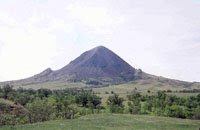
Update regarding Bear Butte, Meade County Commissioners Hearing today.
December 3, 2008
Update regarding Bear Butte, Meade County Commissioners Hearing today.
from: Tamra Brennan - Protect Sacred Sites, Indigenous People One Nation
www.protectsacredsites.org
First of all, I would like to thank everyone that took a moment to send in their opposition letters to the Meade County Commissioners, opposing these venues surrounding Bear Butte.
Well, it comes as no surprise, the Meade County Commissioners unanimously approved all of the liquor license renewals at today's hearing. Seven people provided oppositions against the venues surrounding Bear Butte. Testimonies requested for the Commissioners and Rally venues to respect Bear Butte as a sacred place, as our church. Requesting a buffer zone around Bear Butte to protect the mountain, as a sacred place. Requesting that these venues take responsibility for their actions, as what they really are, "adult entertainment venues."
During my opposition testimony, I specifically requested for the Meade County Commissioners to explain in detail the criteria they use, to determine "location" and "character," as these are the only two issues that could potentially deny or revoke a liquor license. As many of you may remember, Jay Allen had his liquor license revoked twice in 2007, due to "lack of character" issue. This was based upon the fact, that he failed to pay the local contractors for work completed on Broken Spoke Campground bar. On repeated occasions, Commissioner Wink publicly stated that he felt that these venues were far enough away, that location was not a issue. When I questioned if this was the case, why were venues directly at the base of Bear Butte also approved for liquor licenses. What was the distance criteria? The Commissions response was, "if the location was near homes, a apartment building with small children, or if it was across from a church." My immediate response was these venues ARE across from a church, Bear Butte is our church and has been for thousands of years. The Commission's response was, we will not get into a discussion about religion, so they completely disregarded the question.
Jim Seward, the attorney for Broken Spoke Campground made some appalling and extremely disrespectful statements in regards to all seven testimonies and oppositions. His comments completely disregarded all of our testimonies, as if they were irrelevant or absurd. He stated "that there is no evidence in the record today, there has been no evidence offered or admitted into the record to support the denial of any of these licenses. If there was a one mile buffer zone around Bear Butte, I would expect that the sheriff would have to also remove Ms. Brennan from that one mile protection zone, as she lives inside the church. I think with that comment, she should understand the ridiculous nature of someone taking away someone's private property rights, that is what we would be doing if we were so rude to say that she should move from the base of the mountain, because I want a one mile buffer zone around Bear Butte"
The irony in this statement is apparently Mr. Seward is not familiar with the history of the Black Hills, the broken treaties and the fact to this day, it is still STOLEN LAND! The reality is, they have no property rights, the Fort Laramie Treaty still applies today. They are trespassing. Besides the fact, "in their ridiculous nature" taking away property rights, is exactly what they did to the Indigenous People of Turtle Island.
In addition to the liquor license hearing today, the Commissioners held a special meeting for public comments at 3pm, regarding the four applicants that are candidates to replace Commissioner Dean Wink. Tomorrow they will be officially interviewing the applicants and making a decision after the interviews. One of the applicants, Fred McPherson is a life long well respected local resident, of the Bear Butte district and has stood beside us supporting the cause from the beginning. Several of us, gave our supportive comments to the Commissioners on his behalf. If he is selected tomorrow, this will be a huge step forward for the cause! Keep praying that he is selected at tomorrow's meeting!
Here is a article from KEVN, they were in attendance today
The battle to keep Bear Butte a sacred place, free of alcohol, continues. The Meade County Commission Wednesday voted to renew several liquor licenses for businesses near Bear Butte. But not without a fight from some residents who strongly oppose bars doing business in that area. Many Native Americans consider Bear Butte a sacred site and people who don't want bars located in that area turned out in force again at Wednesday's hearing to voice their opposition. The commissioners said they had no choice but to renew the licenses. They say they could deny a license renewal only in a case in which the business is in poor standing with the county. At Wednesday's hearing, one opponent suggested putting a one-mile barrier around Bear Butte. Commission chair Robert Mallow said - as long as the current group of commissioners is on the board - that won't happen. Robert Mallow says, "I think that whenever you put a barrier around something, you're taking the livelihood away from some of the occupants. And I think you're taking their right away." Opponent Tamara Brennan says she was not surprised by Wednesday's ruling because the commissioners vote this way every time. What upset her most, she says, were comments from an attorney for the Broken Spoke - one of the businesses near Bear Butte. Tamara Brennan says, "He said that I would have to move as well because that would be in the one mile buffer. I'm not the one who is having wild parties and doing strobe lights and helicopters over the mountain. I pray there everyday so there's a big difference between them and myself." Meade County Commissioner Dean Wink resigned from the board Wednesday after winning a seat in the state legislature last month. The commissioners will interview and pick a candidate to fill Wink's position Thursday. Opponents at Wednesday's hearing hope the new commissioner will be more sensitive to their requests. http://www.kevn.com/NewsStories.aspx?StoryID=14340
I am attaching two audio files from Jim Seward's statement above.
Thank you for your continued support for the protection of Bear Butte! For additional information about the ongoing efforts to Protect Bear Butte, please visit our website at www.protectbearbutte.com
Protect Sacred Sites Indigenous People, One Nation is a grass roots organization, working towards the protection of sacred sites across the country. Our organization has been actively involved with the ongoing struggle to Protect Bear Butte for several years. We are continuing these efforts, our organization is currently leading the campaign regarding the new developments and further expansions at Bear Butte. Please visit our main website at www.ProtectSacredSites.org and our dedicated website for Bear Butte at www.protectbearbutte.com
If you have any questions, please feel free to contact me directly at Tamra@protectsacredsites.org
Update regarding Bear Butte, Meade County Commissioners Hearing today.
from: Tamra Brennan - Protect Sacred Sites, Indigenous People One Nation
www.protectsacredsites.org
First of all, I would like to thank everyone that took a moment to send in their opposition letters to the Meade County Commissioners, opposing these venues surrounding Bear Butte.
Well, it comes as no surprise, the Meade County Commissioners unanimously approved all of the liquor license renewals at today's hearing. Seven people provided oppositions against the venues surrounding Bear Butte. Testimonies requested for the Commissioners and Rally venues to respect Bear Butte as a sacred place, as our church. Requesting a buffer zone around Bear Butte to protect the mountain, as a sacred place. Requesting that these venues take responsibility for their actions, as what they really are, "adult entertainment venues."
During my opposition testimony, I specifically requested for the Meade County Commissioners to explain in detail the criteria they use, to determine "location" and "character," as these are the only two issues that could potentially deny or revoke a liquor license. As many of you may remember, Jay Allen had his liquor license revoked twice in 2007, due to "lack of character" issue. This was based upon the fact, that he failed to pay the local contractors for work completed on Broken Spoke Campground bar. On repeated occasions, Commissioner Wink publicly stated that he felt that these venues were far enough away, that location was not a issue. When I questioned if this was the case, why were venues directly at the base of Bear Butte also approved for liquor licenses. What was the distance criteria? The Commissions response was, "if the location was near homes, a apartment building with small children, or if it was across from a church." My immediate response was these venues ARE across from a church, Bear Butte is our church and has been for thousands of years. The Commission's response was, we will not get into a discussion about religion, so they completely disregarded the question.
Jim Seward, the attorney for Broken Spoke Campground made some appalling and extremely disrespectful statements in regards to all seven testimonies and oppositions. His comments completely disregarded all of our testimonies, as if they were irrelevant or absurd. He stated "that there is no evidence in the record today, there has been no evidence offered or admitted into the record to support the denial of any of these licenses. If there was a one mile buffer zone around Bear Butte, I would expect that the sheriff would have to also remove Ms. Brennan from that one mile protection zone, as she lives inside the church. I think with that comment, she should understand the ridiculous nature of someone taking away someone's private property rights, that is what we would be doing if we were so rude to say that she should move from the base of the mountain, because I want a one mile buffer zone around Bear Butte"
The irony in this statement is apparently Mr. Seward is not familiar with the history of the Black Hills, the broken treaties and the fact to this day, it is still STOLEN LAND! The reality is, they have no property rights, the Fort Laramie Treaty still applies today. They are trespassing. Besides the fact, "in their ridiculous nature" taking away property rights, is exactly what they did to the Indigenous People of Turtle Island.
In addition to the liquor license hearing today, the Commissioners held a special meeting for public comments at 3pm, regarding the four applicants that are candidates to replace Commissioner Dean Wink. Tomorrow they will be officially interviewing the applicants and making a decision after the interviews. One of the applicants, Fred McPherson is a life long well respected local resident, of the Bear Butte district and has stood beside us supporting the cause from the beginning. Several of us, gave our supportive comments to the Commissioners on his behalf. If he is selected tomorrow, this will be a huge step forward for the cause! Keep praying that he is selected at tomorrow's meeting!
Here is a article from KEVN, they were in attendance today
The battle to keep Bear Butte a sacred place, free of alcohol, continues. The Meade County Commission Wednesday voted to renew several liquor licenses for businesses near Bear Butte. But not without a fight from some residents who strongly oppose bars doing business in that area. Many Native Americans consider Bear Butte a sacred site and people who don't want bars located in that area turned out in force again at Wednesday's hearing to voice their opposition. The commissioners said they had no choice but to renew the licenses. They say they could deny a license renewal only in a case in which the business is in poor standing with the county. At Wednesday's hearing, one opponent suggested putting a one-mile barrier around Bear Butte. Commission chair Robert Mallow said - as long as the current group of commissioners is on the board - that won't happen. Robert Mallow says, "I think that whenever you put a barrier around something, you're taking the livelihood away from some of the occupants. And I think you're taking their right away." Opponent Tamara Brennan says she was not surprised by Wednesday's ruling because the commissioners vote this way every time. What upset her most, she says, were comments from an attorney for the Broken Spoke - one of the businesses near Bear Butte. Tamara Brennan says, "He said that I would have to move as well because that would be in the one mile buffer. I'm not the one who is having wild parties and doing strobe lights and helicopters over the mountain. I pray there everyday so there's a big difference between them and myself." Meade County Commissioner Dean Wink resigned from the board Wednesday after winning a seat in the state legislature last month. The commissioners will interview and pick a candidate to fill Wink's position Thursday. Opponents at Wednesday's hearing hope the new commissioner will be more sensitive to their requests. http://www.kevn.com/NewsStories.aspx?StoryID=14340
I am attaching two audio files from Jim Seward's statement above.
Thank you for your continued support for the protection of Bear Butte! For additional information about the ongoing efforts to Protect Bear Butte, please visit our website at www.protectbearbutte.com
Protect Sacred Sites Indigenous People, One Nation is a grass roots organization, working towards the protection of sacred sites across the country. Our organization has been actively involved with the ongoing struggle to Protect Bear Butte for several years. We are continuing these efforts, our organization is currently leading the campaign regarding the new developments and further expansions at Bear Butte. Please visit our main website at www.ProtectSacredSites.org and our dedicated website for Bear Butte at www.protectbearbutte.com
If you have any questions, please feel free to contact me directly at Tamra@protectsacredsites.org
Tuesday, December 2, 2008
Arrowhead hunter dies in dig collapse
Arrowhead hunter dies in dig collapse
By Alan Reed, New Era Staff Writer
Published: Tuesday, December 2, 2008 1:26 PM CST
A Clarksville man died while digging Monday for Native American artifacts in a cave between Pembroke and Oak Grove.
Christian County Coroner Dorris Lamb identified the victim as Devin William Peters, 42, of Clarksville, Tenn.
Randy Graham, director of the Christian County Rescue Team, said that Peters was in the cave with another Clarksville man when the walls of an excavation trench collapsed.
The second man was above ground and telephoned for help at 4 p.m.
Rescue and recovery personnel representing 13 agencies located Peters’ body at 8:15 p.m. and were able to extract the body 90 minutes later.
He said that Peters was found 8 feet below the floor of the cave, buried under 4 feet of earth.
“It was dry inside the cave, so rain and moisture didn’t have anything to do with it,” said Graham. “They had been digging in that area by hand for years. We’ve heard that from the property owner. A trench like that could collapse for a variety of reasons. There’s no telling what happened.
“The top of the trench was beginning to collapse before we got our shoring in place to dig, and that dumped more dirt into the trench,” he said.
The remoteness of the cave hampered rescue and recovery efforts. Graham said that rescue trailers had to be parked 300 yards from the cave, because of terrain and vegetation.
Rescuers unloaded their equipment, carrying it in by hand and with off-road vehicles. Graham added that Oak Grove Utility Service transported some shoring wood and equipment with one of their dump trucks.
At the field command post, Christian County Rescue Team Spokesman Rodney Boyce said that the team had to shore the trench walls before continuing to excavate the area to recover the victim.
Boyce said that the team is the only agency in Christian County trained and certified to perform a trenching rescue.
“We can’t use a backhoe or other equipment because it is too heavy. In cases like this, we have to shore the trench walls with wood and use air tools, just like we would with a building collapse,” said Boyce.
The small cave is located in the wall of a cliff, and is about a “mile or two” off of Howard Dickerson Road, according to Boyce.
Erosion in one cave wall showed rescuers digging in the trench, while the main opening filled with relief workers and assistants.
Graham said that despite cold temperatures, sleet and snow, rescuers stayed warm with the shelter of the cave with the warmth of portable lighting and through manual labor.
“We didn’t start to get cold until we were done,” he said.
Capt. Chris Miller of the Christian County Sheriff’s Office said that the accident was not under any criminal investigation.
Lamb said that his office ruled the death accidental and had no ongoing investigation.
“It was a collaborative effort with a lot of dedicated and highly trained professionals, and it showed in how this operation was carried out,” said Graham.
More than 70 workers and 13 agencies responded to the accident.
With the Christian County Rescue Team, Oak Grove Utility Service and Christian County Sheriff’s Office, Graham thanked the Oak Grove Police Department, Christian County Ambulance Service, Todd County Rescue Team, Pembroke Volunteer Fire Department, Highland Volunteer Fire Department, Hopkinsville Fire Department, Oak Grove Fire Department, United States Army, Salvation Army, American Red Cross and civilians who gave their time to the effort.
ALAN REED can be reached at 270-887-3240 or areed@kentuckynewera.com.
http://www.kentuckynewera.com/articles/2008/12/02/news/free/doc49348ea2b0417100378808.txt
By Alan Reed, New Era Staff Writer
Published: Tuesday, December 2, 2008 1:26 PM CST
A Clarksville man died while digging Monday for Native American artifacts in a cave between Pembroke and Oak Grove.
Christian County Coroner Dorris Lamb identified the victim as Devin William Peters, 42, of Clarksville, Tenn.
Randy Graham, director of the Christian County Rescue Team, said that Peters was in the cave with another Clarksville man when the walls of an excavation trench collapsed.
The second man was above ground and telephoned for help at 4 p.m.
Rescue and recovery personnel representing 13 agencies located Peters’ body at 8:15 p.m. and were able to extract the body 90 minutes later.
He said that Peters was found 8 feet below the floor of the cave, buried under 4 feet of earth.
“It was dry inside the cave, so rain and moisture didn’t have anything to do with it,” said Graham. “They had been digging in that area by hand for years. We’ve heard that from the property owner. A trench like that could collapse for a variety of reasons. There’s no telling what happened.
“The top of the trench was beginning to collapse before we got our shoring in place to dig, and that dumped more dirt into the trench,” he said.
The remoteness of the cave hampered rescue and recovery efforts. Graham said that rescue trailers had to be parked 300 yards from the cave, because of terrain and vegetation.
Rescuers unloaded their equipment, carrying it in by hand and with off-road vehicles. Graham added that Oak Grove Utility Service transported some shoring wood and equipment with one of their dump trucks.
At the field command post, Christian County Rescue Team Spokesman Rodney Boyce said that the team had to shore the trench walls before continuing to excavate the area to recover the victim.
Boyce said that the team is the only agency in Christian County trained and certified to perform a trenching rescue.
“We can’t use a backhoe or other equipment because it is too heavy. In cases like this, we have to shore the trench walls with wood and use air tools, just like we would with a building collapse,” said Boyce.
The small cave is located in the wall of a cliff, and is about a “mile or two” off of Howard Dickerson Road, according to Boyce.
Erosion in one cave wall showed rescuers digging in the trench, while the main opening filled with relief workers and assistants.
Graham said that despite cold temperatures, sleet and snow, rescuers stayed warm with the shelter of the cave with the warmth of portable lighting and through manual labor.
“We didn’t start to get cold until we were done,” he said.
Capt. Chris Miller of the Christian County Sheriff’s Office said that the accident was not under any criminal investigation.
Lamb said that his office ruled the death accidental and had no ongoing investigation.
“It was a collaborative effort with a lot of dedicated and highly trained professionals, and it showed in how this operation was carried out,” said Graham.
More than 70 workers and 13 agencies responded to the accident.
With the Christian County Rescue Team, Oak Grove Utility Service and Christian County Sheriff’s Office, Graham thanked the Oak Grove Police Department, Christian County Ambulance Service, Todd County Rescue Team, Pembroke Volunteer Fire Department, Highland Volunteer Fire Department, Hopkinsville Fire Department, Oak Grove Fire Department, United States Army, Salvation Army, American Red Cross and civilians who gave their time to the effort.
ALAN REED can be reached at 270-887-3240 or areed@kentuckynewera.com.
http://www.kentuckynewera.com/articles/2008/12/02/news/free/doc49348ea2b0417100378808.txt
Tribe gets go-ahead to rebury ancestors' remains
Tribe gets go-ahead to rebury ancestors' remains
By Joe Nelson, Staff Writer
Posted: 11/27/2008 10:04:36 PM PST
Thanks to a gesture of neighborliness from the San Manuel Band of Mission Indians, a San Gabriel Indian tribe will be able to rebury the remains of some of its ancestors after more than 50 years.
In the mid 1950s, the remains of about three Gabrielino Indians were unearthed at the Chilao Campground in the San Gabriel Mountains during a construction project. Those remains eventually wound up at the Southwest Museum in Los Angeles, where they remained in storage until one week ago, when they were repatriated to the Gabrielino/Tongva San Gabriel Band of Mission Indians.
"We're going to put them back in the general vicinity of where they came from. That's always the tradition," said Anthony Morales, chairman of the Gabrielino/Tongva tribe.
The private reburial ceremony will occur sometime next week. The remains are being housed in a U.S. Forest Service office in the Angeles National Forest, Morales said.
In 1990, Congress enacted the Native American Graves Protection and Repatriation Act (NAGPRA). It enabled federally recognized Indian tribes to claim ancestral remains and cultural items in the possession of museums and private parties through the repatriation process.
San Manuel, a federally recognized tribe, was able to serve as an intermediary to the Gabrielino/Tongva tribe, which is not a federally recognized tribe, after the Angeles National Forest determined the two tribes shared a cultural affiliation and group identity.
"It
--------------------------------------------------------------------------------
Advertisement
--------------------------------------------------------------------------------
was essential that we take steps to return these remains to the rightful descendants," San Manuel Chairman James Ramos said.
The Forest Service informed the Gabrielino/Tongva tribe a couple of years ago of the remains that were stored in the Southwest Museum. Passage of NAGPRA in 1990 mandated that Indian tribes be informed of such circumstances, Morales said.
It is a commonly held belief among Indian tribes that the remains of those that are disturbed should be returned to the earth as quickly as possible.
Though the remains are to be buried in the vicinity of the Chilao campground, Morales said the burial site will be in an area of the forest that sees little public use, away from any trails and designated campsites.
joe.nelson@inlandnewspapers.com
(909) 386-3874
http://www.whittierdailynews.com/news/ci_11091569
By Joe Nelson, Staff Writer
Posted: 11/27/2008 10:04:36 PM PST
Thanks to a gesture of neighborliness from the San Manuel Band of Mission Indians, a San Gabriel Indian tribe will be able to rebury the remains of some of its ancestors after more than 50 years.
In the mid 1950s, the remains of about three Gabrielino Indians were unearthed at the Chilao Campground in the San Gabriel Mountains during a construction project. Those remains eventually wound up at the Southwest Museum in Los Angeles, where they remained in storage until one week ago, when they were repatriated to the Gabrielino/Tongva San Gabriel Band of Mission Indians.
"We're going to put them back in the general vicinity of where they came from. That's always the tradition," said Anthony Morales, chairman of the Gabrielino/Tongva tribe.
The private reburial ceremony will occur sometime next week. The remains are being housed in a U.S. Forest Service office in the Angeles National Forest, Morales said.
In 1990, Congress enacted the Native American Graves Protection and Repatriation Act (NAGPRA). It enabled federally recognized Indian tribes to claim ancestral remains and cultural items in the possession of museums and private parties through the repatriation process.
San Manuel, a federally recognized tribe, was able to serve as an intermediary to the Gabrielino/Tongva tribe, which is not a federally recognized tribe, after the Angeles National Forest determined the two tribes shared a cultural affiliation and group identity.
"It
--------------------------------------------------------------------------------
Advertisement
--------------------------------------------------------------------------------
was essential that we take steps to return these remains to the rightful descendants," San Manuel Chairman James Ramos said.
The Forest Service informed the Gabrielino/Tongva tribe a couple of years ago of the remains that were stored in the Southwest Museum. Passage of NAGPRA in 1990 mandated that Indian tribes be informed of such circumstances, Morales said.
It is a commonly held belief among Indian tribes that the remains of those that are disturbed should be returned to the earth as quickly as possible.
Though the remains are to be buried in the vicinity of the Chilao campground, Morales said the burial site will be in an area of the forest that sees little public use, away from any trails and designated campsites.
joe.nelson@inlandnewspapers.com
(909) 386-3874
http://www.whittierdailynews.com/news/ci_11091569
Feds not complying with act passed 18 years ago
Feds not complying with act passed 18 years ago
By Jodi Rave - Lee Enterprises - 11/28/08
MISSOULA — Bones? What bones?
I recently asked a spokesperson for the nation’s largest public power company about thousands of American Indian bones and funeral objects in the federal corporation’s possession. The Tennessee Valley Authority spokesperson seemed to think I was pulling his leg when I told him the TVA had bones belonging to more than 8,000 individual Indians and nearly 21,000 funeral objects. The bones and items were removed from Native archeological and burial sites as part of the TVA’s economic development project spanning seven states.
“Where do we keep them?” said John Moulton, TVA’s senior news bureau manager. “Do we have them buried somewhere?” He said he’s worked with the TVA for 22 years and never heard such a story.
The TVA’s bone collection is part of a recently released report that outlines enforcement and oversight problems among federal agencies charged to abide by the Native American Graves Protection and Repatriation Act of 1990, a law passed 18 years ago in November.
The “Federal Agency Implementation of the Native American Graves Protection and Repatriation Act” report concludes government agencies have “no apparent enforcement mechanisms or incentives” to comply with NAGPRA.
Today, agencies like the Bureau of Land Management, National Park Service and TVA have more than 118,000 human remains in their possession. The bones are stockpiled on shelves at universities and museums across the country. After making an inquiry, the TVA spokesman learned the power company stores most Indian remains at the University of Tennessee and the University of Alabama.
The bones end up in museums after being unearthed in federal works projects in areas where Native people had inhabited the land and buried their dead for hundreds of generations. The TVA project spans a southeast territory once home to the former Muscogee Confederacy, a union of tribes like the present-day Choctaw, Chickasaw and Alabama Coushatta.
“The raiding of people’s graves in the southeast is rampant,” said Suzan Shown Harjo, a Cheyenne and Hodulgee Muscogee who helped write NAGPRA. “Even though there are laws to stop it, people in official positions ignore them.”
“It’s reflective of a hide-the-ball, hide-the-body game that’s going on all over the country with major universities, like the entire UC system in California,” Harjo said. “They are stockpiling these bodies to do tests when tests are allowable. I believe they are doing testing now and that’s what they want all these bodies for. They are looking for remains that will prove this crazy theory that Europeans are the first people in the Western Hemisphere. It’s white supremacists looking for their roots.”
Scientific testing and the looting of Indian graves forced Congress to pass NAGPRA to assure Native people “the proper respect in death that they enjoyed in life,” wrote Sen. Daniel Inouye, D-Hawaii, in the NAGPRA report. While the act sets the stage for repatriation, more work needs to be done “to ensure Native Americans are accorded the same respect and dignity that other Americans have rightly come to take for granted once their loved ones are laid to rest,” said Inouye.
Meanwhile, federal agencies aren’t rushing forward to return or identify bones in their collection.
“So far, none of the 18 tribes who have a cultural interest in this region have made any kind of formal request for repatriation,” said Moulton of the TVA. Less than 5 percent of the TVA’s bone collection has been labeled as “culturally affiliated,” a NAGPRA requirement. “You can’t repatriate the remains until you know what culture they are from,” said Moulton.
The NAGPRA compliance report was researched by the Makah Indian Tribe and the National Association of Tribal Historic Preservation Officers. It is available at http://www.nathpo.org/nagpra.html. The group offered eight pages of recommendations to improve the process, ranging from statutory changes to compliance audits.
Tribes around the country have always felt federal agencies weren’t dealing with them in good faith, said Bambi Krauss, executive director of NATHPO. “The report substantiated those feelings,” she said.
“Our people didn’t stand in line to deliver our ancestors in boxes to the Smithsonian,” said Krauss. “Most people in the United States don’t hand over their relatives. Most people in the world believe there is something sacred about the dead.”
Reporter Jodi Rave: 800-366-7186 or jodi.rave@lee.net
http://www.helenair.com/articles/2008/11/28/state/60st_081128_rave.txt
By Jodi Rave - Lee Enterprises - 11/28/08
MISSOULA — Bones? What bones?
I recently asked a spokesperson for the nation’s largest public power company about thousands of American Indian bones and funeral objects in the federal corporation’s possession. The Tennessee Valley Authority spokesperson seemed to think I was pulling his leg when I told him the TVA had bones belonging to more than 8,000 individual Indians and nearly 21,000 funeral objects. The bones and items were removed from Native archeological and burial sites as part of the TVA’s economic development project spanning seven states.
“Where do we keep them?” said John Moulton, TVA’s senior news bureau manager. “Do we have them buried somewhere?” He said he’s worked with the TVA for 22 years and never heard such a story.
The TVA’s bone collection is part of a recently released report that outlines enforcement and oversight problems among federal agencies charged to abide by the Native American Graves Protection and Repatriation Act of 1990, a law passed 18 years ago in November.
The “Federal Agency Implementation of the Native American Graves Protection and Repatriation Act” report concludes government agencies have “no apparent enforcement mechanisms or incentives” to comply with NAGPRA.
Today, agencies like the Bureau of Land Management, National Park Service and TVA have more than 118,000 human remains in their possession. The bones are stockpiled on shelves at universities and museums across the country. After making an inquiry, the TVA spokesman learned the power company stores most Indian remains at the University of Tennessee and the University of Alabama.
The bones end up in museums after being unearthed in federal works projects in areas where Native people had inhabited the land and buried their dead for hundreds of generations. The TVA project spans a southeast territory once home to the former Muscogee Confederacy, a union of tribes like the present-day Choctaw, Chickasaw and Alabama Coushatta.
“The raiding of people’s graves in the southeast is rampant,” said Suzan Shown Harjo, a Cheyenne and Hodulgee Muscogee who helped write NAGPRA. “Even though there are laws to stop it, people in official positions ignore them.”
“It’s reflective of a hide-the-ball, hide-the-body game that’s going on all over the country with major universities, like the entire UC system in California,” Harjo said. “They are stockpiling these bodies to do tests when tests are allowable. I believe they are doing testing now and that’s what they want all these bodies for. They are looking for remains that will prove this crazy theory that Europeans are the first people in the Western Hemisphere. It’s white supremacists looking for their roots.”
Scientific testing and the looting of Indian graves forced Congress to pass NAGPRA to assure Native people “the proper respect in death that they enjoyed in life,” wrote Sen. Daniel Inouye, D-Hawaii, in the NAGPRA report. While the act sets the stage for repatriation, more work needs to be done “to ensure Native Americans are accorded the same respect and dignity that other Americans have rightly come to take for granted once their loved ones are laid to rest,” said Inouye.
Meanwhile, federal agencies aren’t rushing forward to return or identify bones in their collection.
“So far, none of the 18 tribes who have a cultural interest in this region have made any kind of formal request for repatriation,” said Moulton of the TVA. Less than 5 percent of the TVA’s bone collection has been labeled as “culturally affiliated,” a NAGPRA requirement. “You can’t repatriate the remains until you know what culture they are from,” said Moulton.
The NAGPRA compliance report was researched by the Makah Indian Tribe and the National Association of Tribal Historic Preservation Officers. It is available at http://www.nathpo.org/nagpra.html. The group offered eight pages of recommendations to improve the process, ranging from statutory changes to compliance audits.
Tribes around the country have always felt federal agencies weren’t dealing with them in good faith, said Bambi Krauss, executive director of NATHPO. “The report substantiated those feelings,” she said.
“Our people didn’t stand in line to deliver our ancestors in boxes to the Smithsonian,” said Krauss. “Most people in the United States don’t hand over their relatives. Most people in the world believe there is something sacred about the dead.”
Reporter Jodi Rave: 800-366-7186 or jodi.rave@lee.net
http://www.helenair.com/articles/2008/11/28/state/60st_081128_rave.txt
Subscribe to:
Posts (Atom)


 Posts
Posts