How to protect native sites?
Long an issue out West, awareness of problem is growing in Hudson Valley
By JIMMY VIELKIND, Staff writer
Click byline for more stories by writer.
First published: Sunday, June 15, 2008
ALBANY -- To some Native Americans, certain natural sites are as sacred as any church, temple or mosque, and a panel Saturday sought to raise awareness on how to protect them.
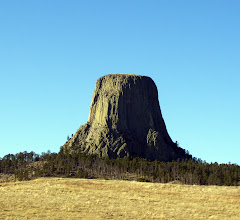
In a State Museum auditorium, members of the Hudson Valley Native American Institute screened part of a documentary exploring the issue titled "In the Light of Reverence" that focused mostly on Devil's Tower in Wyoming.
But according to Tom Lake, an archaeologist who has explored many Native American sites in the Hudson Valley, similar issues and conflicts have arisen locally. "The Hudson Valley is a tough place," he said. "Most of the sacred sites are under pavement."
There are two main reasons: first, Native Americans are not as visible a presence as in some Western states; second, the region is generally more developed. Lake said that many sites that would have seen rituals and ceremonies were at the confluence of the Hudson and various tributaries -- the same places European settlers built cities.
But Lake said he still finds sites, but it is hard to determine their significance for want of clear historical records. "When we excavate a site, though, and find that a place has been inhabited continuously for 5,000 to 6,000 years, it tells us that that is a special place."In Wyoming, the conflict is clearer. Devil's Tower, a soaring 1,267-foot platform of volcanic rock, is sacred to members of the Lakota tribe, who call it Bear Lodge. They consider mountaineers putting climbing bolts into the steep rock to be desecration.
"This is my church," one woman proclaimed in the movie. At Devil's Tower, the National Parks Service strongly discourages climbers from attempting the peak during June, when Native American ceremonial activity is at its peak. But an outright ban was ruled illegal because it imposes the religious beliefs of one group on all."There is a tremendous dichotomy between cultures," said Chief Dwaine Perry of the Ramapough tribe, which straddles Rockland County, N.Y. and Bergen County, N.J., because Native Americans see land as something to be watched as stewards, not developed as property.
http://www.timesunion.com/AspStories/story.asp?storyID=696242&category=REGION&newsdate=6/15/2008
Thursday, June 19, 2008

Sunday, June 15, 2008
Tribes get New Mexico mountain summit listed as protected

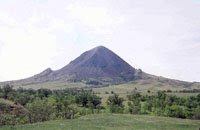
Mount Taylor
(Original Ceremonial Name: Tsoodzil - meaning is obscure)
(Sacred Name: Dootl’izhiidziil - Turquoise Mountain)
Mount Taylor is the "Turquoise Mountain" and "Sacred Mountain of the South" to the Navajos. It is a high mountain peak with an elevation of 11,389 feet, located on the southwestern part of the San Mateo Mountains, midway between Albuquerque and Gallup, New Mexico, and about 15 miles northeast of Grants, New Mexico from interstate highway 40.
Mount Taylor was originally called "San Mateo", to be renamed after General Zachary Taylor of Mexican War fame (and later 12th President of the United States of America). It is visible from points in the Navajo country as far as Chuska Peak, 100 miles west. Projecting to the south and north-east are large lava flows which sheer off from their forested tops in irregular and ragged escarpments. The peaks retain their snows until late in the spring.
Mt. Taylor has a couple of Navajo mythology and ceremonies associated with it. Navajos refer to Mount Taylor as their "Sacred Mountain of the South", and to indicate their legal southern boundary of their old country. Mt. Taylor, is in Navajo legend, the "Turquoise Mountain" fastened from the sky to the earth with a great flint knife and decorated with turquoise, dark mist, female rain and all species of animals and birds. Here is the home of Dootl’izhii ‘Ashkii (Turquoise Boy), Naadá’áltsoii ‘Át’ééd (Yellow Corn Girl), and Hashch’éghaan (meaning unknown). It is also important in the Blessing Side ceremonies and the ‘Anaa’jí (Enemy Side) Ceremony. Mount Taylor was once the home of Yé’iitsoh (Chief of the Enemy Gods). Mt. Taylor does not have the sacred significance of the other sacred mountains of the cardinal directions: San Francisco Peaks (Dook’o’oslííd), Mt. Hesperus (Dibé Ntsaa) of the La Plata Mountains, and Sierra Blanca Peak (Tsisnaasjini').
http://www.lapahie.com/Mount_Taylor.cfm
Tribes get New Mexico mountain summit listed as protected
Mount Taylor is temporarily listed as a cultural property so it won't be touched in an expected uranium mining boom.
From the Associated Press
June 15, 2008
ALBUQUERQUE -- A state committee has approved a proposal from five American Indian tribes to give central New Mexico's Mount Taylor temporary protection as a cultural property at a contentious meeting.
The state Cultural Properties Review Committee voted 4-2 Saturday in Grants for an emergency listing of more than 422,000 acres surrounding the mountain's summit on the state Register of Cultural Properties.
The Navajo Nation, the Acoma, Laguna and Zuni pueblos, and the Hopi tribe of Arizona asked the state to approve the listing for a mountain they consider sacred to protect it from an anticipated uranium mining boom, according to the nomination report.
The listing lasts for a year, after which the committee is to determine if it should be listed permanently.
Opponents of the temporary listing say it will open the door to more government control of natural areas across the country.
http://www.latimes.com:80/news/nationworld/nation/la-na-mountain15-2008jun15,0,3953051.story
In peace & solidarity,
Tamra
www.NDNnews.com
www.protectsacredsites.org
www.protectbearbutte.com
PROTECT BEAR BUTTE!
"Providing news and information about Native American Issues & Causes"
"Helping to make a difference for our people in Indian Country, one day at a time. What will you do today to help make a difference?"
"Our sacred lands are all that remain keeping us connected to our place on Mother Earth, to our spirituality, our heritage and our lands; what’s left of them. If they take it all away, what will remain except a vague memory of a past so forgotten?"
Saturday, June 14, 2008
Tribal bloc about-faces on proposed O.C. toll road
Tribal bloc about-faces on proposed O.C. toll road
One faction of Juaneño band OKs deal with transportation agency for $350,000.
By David Reyes, Los Angeles Times Staff Writer
June 14, 2008
A faction of a Native American tribe against a proposed toll road through south Orange County has agreed to drop its opposition -- and stands to make $350,000 because of it.
David Belardes, who heads one of four Juaneño groups, said he signed a letter of intent with the Transportation Corridor Agencies by which the toll road operator would help pay for a tribal museum and genealogy studies to further the tribe's efforts to gain federal recognition.
In return, the Belardes' group requested that the state's Native American Heritage Commission dismiss the commission's lawsuit against the TCA seeking to halt the toll road through San Onofre State Beach.
The state attorney general filed the suit on behalf of the commission to prevent the tollway from destroying Panhe, the Juaneños' ancestral home near San Mateo Creek.
The TCA is in similar negotiations with the other three Juaneño factions. If successful, the deals could strike a serious blow to efforts to stop the toll road.
"It was a tough decision," Belardes said. "But we felt the handwriting was on the wall."
Belardes, a prominent leader known statewide among Native Americans, was criticized by fellow Juaneños for his decision. But he justified his actions, saying that no matter where "you build that road, you're going to impact Native American sites."
"This doesn't mean I support development. But the agreement helps get us in the process and helps us gain access to land to continue our ceremonies and reburials," he said.
What effect the proposed agreement will have on the toll road operator's overall chances to build the turnpike is uncertain. But toll road opponents acknowledged the threat of losing such a powerful ally as the Juaneños would be a serious blow.
Joe Ocampo, who heads one of the factions, said his group was still against the toll road.
"Does it weaken the opposition? The TCA would like to convey the thought that it is weakening," Ocampo said. "But I still think we have the strongest support against the toll road."
Other toll road opponents took exception to the accord, saying it was similar to the TCA's $100-million offer to help state parks that it made before a California Coastal Commission hearing at which the toll road was vetoed.
That decision has been appealed to the U.S. Department of Commerce.
"The TCA has been trying to buy compliance since September," said Robert Garcia, executive director for the City Project in Los Angeles, which is helping the Juaneños still opposed to the road.
"If you tell me $350,000 is for Native Americans, why do they value Native American rights so cheaply?" he said. "The TCA has spent more money studying pocket mice than on Native Americans."
Last year, the Bureau of Indian Affairs informed Juaneño leaders that their 25-year quest to gain federal recognition as a tribe was coming up short. They failed to meet four of seven criteria required for federal acknowledgment, bureau officials said.
And, instead of a unified effort, one petition to the bureau seeking recognition was followed by a second and then a third from separate factions, while a fourth faction emerged in protest.
Larry Myers, the state heritage commission's executive secretary, said the panel received a letter last month from a law firm representing Belardes' group.
In part, the letter stated that after 18 months of negotiations, "this understanding with the TCA provides a safeguard to protect sacred sites to the best ability of the tribe."
According to the letter, the TCA recognizes the potential damage the proposed road may cause and is addressing it. "Further prosecution of the lawsuit is no longer necessary," the letter states.
The commission met recently in closed session but did not take any action regarding the lawsuit, said William Mungary of Bakersfield, commission chairman.
Before the meeting, two of the Juaneño factions which still oppose the toll road, along with dozens of other Native Americans, urged the commission to keep the lawsuit alive.
"No one on the commission has suggested that it be put on the agenda for a vote and no action was taken," Mungary said.
TCA officials said the accord with the Belardes group has not been approved by the TCA's board.
It is part of the agency's mitigation process to build a 16-mile turnpike from Oso Parkway in south Orange County to Interstate 5 near Basilone Road.
Steve Conklin, a TCA consultant, said the intent of the money was to fund ethnographic studies and other documents the Belardes group needs for the BIA. "It's part of the mitigation process," he said.
Similar consultation with the Juaneños occurred when the first leg of the 241 tollway in northern Orange County was built, he said.
According to the proposed agreement, the TCA would help pay for museum staff and for cultural resource programs.
In addition, the TCA may provide five acres of land to each of the four groups for reburials, planting, ceremonies and other cultural activities.
The TCA would hire a tribal monitor to oversee excavations before construction begins and hire a member of the Belardes group for similar monitoring during construction if significant prehistoric cultural resources are unearthed.
The accord calls for the Belardes group to receive $25,000 at the signing of the intent letter, and $50,000 in 90 days when the board approves the agreement.
The remainder of the money would come from construction financing for the highway.
Rebecca Robles, a Juaneño from San Clemente who helped found a coalition to save Panhe, was disappointed but reluctant to criticize Belardes publicly.
"It's not over yet," she said. "We just have to continue to build support to protect our sacred site."
david.reyes@latimes.com
http://www.latimes.com/news/local/la-me-payoff14-2008jun14,0,3144690,full.story
One faction of Juaneño band OKs deal with transportation agency for $350,000.
By David Reyes, Los Angeles Times Staff Writer
June 14, 2008
A faction of a Native American tribe against a proposed toll road through south Orange County has agreed to drop its opposition -- and stands to make $350,000 because of it.
David Belardes, who heads one of four Juaneño groups, said he signed a letter of intent with the Transportation Corridor Agencies by which the toll road operator would help pay for a tribal museum and genealogy studies to further the tribe's efforts to gain federal recognition.
In return, the Belardes' group requested that the state's Native American Heritage Commission dismiss the commission's lawsuit against the TCA seeking to halt the toll road through San Onofre State Beach.
The state attorney general filed the suit on behalf of the commission to prevent the tollway from destroying Panhe, the Juaneños' ancestral home near San Mateo Creek.
The TCA is in similar negotiations with the other three Juaneño factions. If successful, the deals could strike a serious blow to efforts to stop the toll road.
"It was a tough decision," Belardes said. "But we felt the handwriting was on the wall."
Belardes, a prominent leader known statewide among Native Americans, was criticized by fellow Juaneños for his decision. But he justified his actions, saying that no matter where "you build that road, you're going to impact Native American sites."
"This doesn't mean I support development. But the agreement helps get us in the process and helps us gain access to land to continue our ceremonies and reburials," he said.
What effect the proposed agreement will have on the toll road operator's overall chances to build the turnpike is uncertain. But toll road opponents acknowledged the threat of losing such a powerful ally as the Juaneños would be a serious blow.
Joe Ocampo, who heads one of the factions, said his group was still against the toll road.
"Does it weaken the opposition? The TCA would like to convey the thought that it is weakening," Ocampo said. "But I still think we have the strongest support against the toll road."
Other toll road opponents took exception to the accord, saying it was similar to the TCA's $100-million offer to help state parks that it made before a California Coastal Commission hearing at which the toll road was vetoed.
That decision has been appealed to the U.S. Department of Commerce.
"The TCA has been trying to buy compliance since September," said Robert Garcia, executive director for the City Project in Los Angeles, which is helping the Juaneños still opposed to the road.
"If you tell me $350,000 is for Native Americans, why do they value Native American rights so cheaply?" he said. "The TCA has spent more money studying pocket mice than on Native Americans."
Last year, the Bureau of Indian Affairs informed Juaneño leaders that their 25-year quest to gain federal recognition as a tribe was coming up short. They failed to meet four of seven criteria required for federal acknowledgment, bureau officials said.
And, instead of a unified effort, one petition to the bureau seeking recognition was followed by a second and then a third from separate factions, while a fourth faction emerged in protest.
Larry Myers, the state heritage commission's executive secretary, said the panel received a letter last month from a law firm representing Belardes' group.
In part, the letter stated that after 18 months of negotiations, "this understanding with the TCA provides a safeguard to protect sacred sites to the best ability of the tribe."
According to the letter, the TCA recognizes the potential damage the proposed road may cause and is addressing it. "Further prosecution of the lawsuit is no longer necessary," the letter states.
The commission met recently in closed session but did not take any action regarding the lawsuit, said William Mungary of Bakersfield, commission chairman.
Before the meeting, two of the Juaneño factions which still oppose the toll road, along with dozens of other Native Americans, urged the commission to keep the lawsuit alive.
"No one on the commission has suggested that it be put on the agenda for a vote and no action was taken," Mungary said.
TCA officials said the accord with the Belardes group has not been approved by the TCA's board.
It is part of the agency's mitigation process to build a 16-mile turnpike from Oso Parkway in south Orange County to Interstate 5 near Basilone Road.
Steve Conklin, a TCA consultant, said the intent of the money was to fund ethnographic studies and other documents the Belardes group needs for the BIA. "It's part of the mitigation process," he said.
Similar consultation with the Juaneños occurred when the first leg of the 241 tollway in northern Orange County was built, he said.
According to the proposed agreement, the TCA would help pay for museum staff and for cultural resource programs.
In addition, the TCA may provide five acres of land to each of the four groups for reburials, planting, ceremonies and other cultural activities.
The TCA would hire a tribal monitor to oversee excavations before construction begins and hire a member of the Belardes group for similar monitoring during construction if significant prehistoric cultural resources are unearthed.
The accord calls for the Belardes group to receive $25,000 at the signing of the intent letter, and $50,000 in 90 days when the board approves the agreement.
The remainder of the money would come from construction financing for the highway.
Rebecca Robles, a Juaneño from San Clemente who helped found a coalition to save Panhe, was disappointed but reluctant to criticize Belardes publicly.
"It's not over yet," she said. "We just have to continue to build support to protect our sacred site."
david.reyes@latimes.com
http://www.latimes.com/news/local/la-me-payoff14-2008jun14,0,3144690,full.story
Sacred Site Digs Rile Native Americans in No. Cal.
Sacred Site Digs Rile Native Americans in No. Cal.
chicoSol, News Feature, Jennifer MacDonald, Posted: Jun 13, 2008
OROVILLE, Calif. – The hike to the archeological dig site is long, dusty and steep. Scaling down the embankment on this winter afternoon, a dozen scientists are hard at work hundreds of feet below, digging at what was once a thriving Native American village. The site is usually under the water of Lake Oroville, but the water level drops at this time of year, helping to uncover artifacts from a civilization lost long ago.
Digs like this one are part of the federal re-licensing process for the Oroville Dam, a key part of the state's water system.
The Department of Water Resources's 1957 license to operate the Oroville Dam expired last year. Now, the dam is operating on a temporary annual license. DWR wants to re-license the dam for another 50 years. But by law, the agency must assess the impact on sites within a quarter-mile radius of the project area.
The Oroville Dam is the single most important component of the California State Water Project that provides water to 25 million Californians and 750,000 acres of farmland. So the state has an interest in meeting the mandates of the law.
But the digs have caused a rift between the Konkow Maidu, the Native Americans who live in the Oroville area, and the DWR.
Many Maidu say they feel violated by the digging and collection of their ancestors' bones and belongings. They are resentful the artifacts and even human remains end up in the possession of government agencies and universities. And they say they want the sites left alone for spiritual reasons.
But under state and federal law, the DWR must assess the "cultural impact" of the dam. That means locating and taking inventory of thousands of Native American village sites as well as ceremonial and burial grounds.
The artifacts tell a story about the indigenous societies that thrived for thousands of years without pollution, paved streets or poverty, societies that existed without drug abuse, jails or guns.
For some Maidu and the scientists, discovering the world of the hunter-gatherer tribes is really a search for identity.
Lawana Watson, 44, belongs to the Enterprise Rancheria, and grew up in Oroville, but didn't connect with her culture until about 15 years ago. Since learning how her ancestors lived, Watson feels her life has a purpose.
"Identity is most important," Watson said. "It makes me think about what I can do to better my kids' and grandkids' lives, how to use our environment to teach our kids our culture."
But for many Maidu alive today, the search for answers has gone too far.
Art Angle is a tall, stout 67-year-old Konkow Maidu man who grew up in Enerprise, one of the towns flooded by Lake Oroville with the construction of the dam in the 1960s. Angle's grey and black hair is just long enough to slick back. He's dressed in cowboy boots and Wrangler jeans and a pack of Pall Malls is visible through his shirt pocket.
"They've dug us up; they've examined us; they've turned us inside out," Angle said. "They've run us through carbon dating, DNA… whatever they can do to figure out what we looked like; what we ate; and how we survived all these years without European influence."
Angle, who grew up in Enterprise, one of the towns that was destroyed and flooded by Oroville dam in the 1960s, has spent much of his life fighting for the cultural and political rights of Native Americans.
Angle led the fight to locate and bury the brain of "Ishi," the name given the man who was believed to be the last surviving member of the Yahi tribe after he emerged near Oroville in the early 1900s. The story of the recovery of Ishi's brain from the Smithsonian – documented by many writers – may be one of the most well-known and wrenching stories of repatriation.
Today, Angle is among the many Maidu who view the excavation of their ancestors' bones and belongings as a new form of discrimination against a people that has already suffered too much.
The fight to stop the digging has persisted since the archeological digs began in 2004 with the beginning of the federal re-licensing process for the Oroville Dam. More than 1,000 sites have been located within the project area, and another 600 sites are expected to be surveyed, said Janis Offermann, cultural resources manager for DWR.
Under the Native American Graves and Protection and Repatriation Act (NAGPRA), if crews uncover human remains, the digging must stop and the tribes must be notified.
The federal law also requires that all human remains and items associated with burial or sacred ceremonies be returned to tribes. No human remains have been returned to tribes in Oroville, although 138 bodies were dug up in the early 1960s.
Artifacts like arrowheads and stone tools found within the state-owned project area become the property of the state, Offermann said. The artifacts are shipped to California State University, Sacramento, for research.
This infuriates Maidu leaders like Gary Archuleta, chairman of Mooretown Rancheria that operates Gold Country Casino in Oroville. Artifacts should be returned to the tribes, Archuleta said, "not just carted off in a box to end up sitting somewhere."
DWR can't give control to Maidu because the sites are on state property, Offermann says. And DWR is legally bound to figure out which sites need protection. Sites deemed culturally or historically significant are placed on national or state registers of Historic Places.
DWR officials say their relationship with Maidu tribes has grown closer. Monthly meetings of the Maidu Advisory Council, a group that consists of members of different tribes in Oroville and DWR officials, allow them to voice concerns.
Still, some Maidu don't feel like their voices are heard.
"We voiced our opinion on a lot of those issues and one of those issues was don't go digging," Angle said. "Did it work? No. They're still digging."
http://news.newamericamedia.org:80/news/view_article.html?article_id=31a11c56cb645448741cc855665b0cb1
In peace & solidarity,
Tamra
www.NDNnews.com
www.protectsacredsites.org
www.protectbearbutte.com
PROTECT BEAR BUTTE!
"Providing news and information about Native American Issues & Causes"
"Helping to make a difference for our people in Indian Country, one day at a time. What will you do today to help make a difference?"
"Our sacred lands are all that remain keeping us connected to our place on Mother Earth, to our spirituality, our heritage and our lands; what’s left of them. If they take it all away, what will remain except a vague memory of a past so forgotten?"
chicoSol, News Feature, Jennifer MacDonald, Posted: Jun 13, 2008
OROVILLE, Calif. – The hike to the archeological dig site is long, dusty and steep. Scaling down the embankment on this winter afternoon, a dozen scientists are hard at work hundreds of feet below, digging at what was once a thriving Native American village. The site is usually under the water of Lake Oroville, but the water level drops at this time of year, helping to uncover artifacts from a civilization lost long ago.
Digs like this one are part of the federal re-licensing process for the Oroville Dam, a key part of the state's water system.
The Department of Water Resources's 1957 license to operate the Oroville Dam expired last year. Now, the dam is operating on a temporary annual license. DWR wants to re-license the dam for another 50 years. But by law, the agency must assess the impact on sites within a quarter-mile radius of the project area.
The Oroville Dam is the single most important component of the California State Water Project that provides water to 25 million Californians and 750,000 acres of farmland. So the state has an interest in meeting the mandates of the law.
But the digs have caused a rift between the Konkow Maidu, the Native Americans who live in the Oroville area, and the DWR.
Many Maidu say they feel violated by the digging and collection of their ancestors' bones and belongings. They are resentful the artifacts and even human remains end up in the possession of government agencies and universities. And they say they want the sites left alone for spiritual reasons.
But under state and federal law, the DWR must assess the "cultural impact" of the dam. That means locating and taking inventory of thousands of Native American village sites as well as ceremonial and burial grounds.
The artifacts tell a story about the indigenous societies that thrived for thousands of years without pollution, paved streets or poverty, societies that existed without drug abuse, jails or guns.
For some Maidu and the scientists, discovering the world of the hunter-gatherer tribes is really a search for identity.
Lawana Watson, 44, belongs to the Enterprise Rancheria, and grew up in Oroville, but didn't connect with her culture until about 15 years ago. Since learning how her ancestors lived, Watson feels her life has a purpose.
"Identity is most important," Watson said. "It makes me think about what I can do to better my kids' and grandkids' lives, how to use our environment to teach our kids our culture."
But for many Maidu alive today, the search for answers has gone too far.
Art Angle is a tall, stout 67-year-old Konkow Maidu man who grew up in Enerprise, one of the towns flooded by Lake Oroville with the construction of the dam in the 1960s. Angle's grey and black hair is just long enough to slick back. He's dressed in cowboy boots and Wrangler jeans and a pack of Pall Malls is visible through his shirt pocket.
"They've dug us up; they've examined us; they've turned us inside out," Angle said. "They've run us through carbon dating, DNA… whatever they can do to figure out what we looked like; what we ate; and how we survived all these years without European influence."
Angle, who grew up in Enterprise, one of the towns that was destroyed and flooded by Oroville dam in the 1960s, has spent much of his life fighting for the cultural and political rights of Native Americans.
Angle led the fight to locate and bury the brain of "Ishi," the name given the man who was believed to be the last surviving member of the Yahi tribe after he emerged near Oroville in the early 1900s. The story of the recovery of Ishi's brain from the Smithsonian – documented by many writers – may be one of the most well-known and wrenching stories of repatriation.
Today, Angle is among the many Maidu who view the excavation of their ancestors' bones and belongings as a new form of discrimination against a people that has already suffered too much.
The fight to stop the digging has persisted since the archeological digs began in 2004 with the beginning of the federal re-licensing process for the Oroville Dam. More than 1,000 sites have been located within the project area, and another 600 sites are expected to be surveyed, said Janis Offermann, cultural resources manager for DWR.
Under the Native American Graves and Protection and Repatriation Act (NAGPRA), if crews uncover human remains, the digging must stop and the tribes must be notified.
The federal law also requires that all human remains and items associated with burial or sacred ceremonies be returned to tribes. No human remains have been returned to tribes in Oroville, although 138 bodies were dug up in the early 1960s.
Artifacts like arrowheads and stone tools found within the state-owned project area become the property of the state, Offermann said. The artifacts are shipped to California State University, Sacramento, for research.
This infuriates Maidu leaders like Gary Archuleta, chairman of Mooretown Rancheria that operates Gold Country Casino in Oroville. Artifacts should be returned to the tribes, Archuleta said, "not just carted off in a box to end up sitting somewhere."
DWR can't give control to Maidu because the sites are on state property, Offermann says. And DWR is legally bound to figure out which sites need protection. Sites deemed culturally or historically significant are placed on national or state registers of Historic Places.
DWR officials say their relationship with Maidu tribes has grown closer. Monthly meetings of the Maidu Advisory Council, a group that consists of members of different tribes in Oroville and DWR officials, allow them to voice concerns.
Still, some Maidu don't feel like their voices are heard.
"We voiced our opinion on a lot of those issues and one of those issues was don't go digging," Angle said. "Did it work? No. They're still digging."
http://news.newamericamedia.org:80/news/view_article.html?article_id=31a11c56cb645448741cc855665b0cb1
In peace & solidarity,
Tamra
www.NDNnews.com
www.protectsacredsites.org
www.protectbearbutte.com
PROTECT BEAR BUTTE!
"Providing news and information about Native American Issues & Causes"
"Helping to make a difference for our people in Indian Country, one day at a time. What will you do today to help make a difference?"
"Our sacred lands are all that remain keeping us connected to our place on Mother Earth, to our spirituality, our heritage and our lands; what’s left of them. If they take it all away, what will remain except a vague memory of a past so forgotten?"
Friday, June 13, 2008
Stolen Native American Artifacts Recovered
Posted: June 13, 2008 03:27 PM MDT
Updated: June 13, 2008 03:31 PM MDT
By KPSP Local 2 News
Native American artifacts stolen from a museum in Indio will soon be returned to their owners.
More than $140,000 worth of baskets, jewelry and pottery were taken from the Cabazon Band of Mission Indians Cultural Museum in Indio in 2005.
Steven Farmer, a Riverside County resident, pleaded guilty to receiving the stolen property and is now serving a 41 month sentence federal jail.
The FBI held a press conference Friday to discuss the recovery of the artifacts, some of which belonged to La Quinta resident, Jane Andade.
"They were always above the mantel, the fireplace, when I grew up. I always knew they came from my grandmother, my great-grandmother," Andade said.
The US district attorney says farmer stole the property to support his drug habit- he sold the artifacts for a mere $4,000.
http://www.deserttelevision.com:80/Global/story.asp?S=8489293&nav=menu412_2
In peace & solidarity,
Tamra
www.NDNnews.com
www.protectsacredsites.org
www.protectbearbutte.com
PROTECT BEAR BUTTE!
"Providing news and information about Native American Issues & Causes"
"Helping to make a difference for our people in Indian Country, one day at a time. What will you do today to help make a difference?"
"Our sacred lands are all that remain keeping us connected to our place on Mother Earth, to our spirituality, our heritage and our lands; what’s left of them. If they take it all away, what will remain except a vague memory of a past so forgotten?"
Updated: June 13, 2008 03:31 PM MDT
By KPSP Local 2 News
Native American artifacts stolen from a museum in Indio will soon be returned to their owners.
More than $140,000 worth of baskets, jewelry and pottery were taken from the Cabazon Band of Mission Indians Cultural Museum in Indio in 2005.
Steven Farmer, a Riverside County resident, pleaded guilty to receiving the stolen property and is now serving a 41 month sentence federal jail.
The FBI held a press conference Friday to discuss the recovery of the artifacts, some of which belonged to La Quinta resident, Jane Andade.
"They were always above the mantel, the fireplace, when I grew up. I always knew they came from my grandmother, my great-grandmother," Andade said.
The US district attorney says farmer stole the property to support his drug habit- he sold the artifacts for a mere $4,000.
http://www.deserttelevision.com:80/Global/story.asp?S=8489293&nav=menu412_2
In peace & solidarity,
Tamra
www.NDNnews.com
www.protectsacredsites.org
www.protectbearbutte.com
PROTECT BEAR BUTTE!
"Providing news and information about Native American Issues & Causes"
"Helping to make a difference for our people in Indian Country, one day at a time. What will you do today to help make a difference?"
"Our sacred lands are all that remain keeping us connected to our place on Mother Earth, to our spirituality, our heritage and our lands; what’s left of them. If they take it all away, what will remain except a vague memory of a past so forgotten?"
Five Tribes Seek to Protect Mount Taylor From Development
Five Tribes Seek to Protect Mount Taylor From Development
Posted on: Friday, 13 June 2008, 12:00 CDT
By Staci Matlock, The Santa Fe New Mexican
Jun. 13--The state Cultural Properties Review Committee will reconsider a decision to temporarily list Mount Taylor as a cultural resource at a public hearing Saturday in Grants.
In February, the committee approved a temporary listing of 422,840 acres including and around Mount Taylor at the request of five tribes -- Navajo, Hopi, Acoma, Laguna and Zuni.
"The tribes were concerned over the years with the unimpeded development" in the area, said Theresa Pasqual, director of the Acoma Pueblo Historic Preservation Office.
The temporary listing gives the tribes and the state Historic Preservation Division one year to gather evidence to get the mountain permanently listed.
The new public hearing was prompted by a recent state attorney general finding that the committee had failed to properly advertise the February meeting and some impacted landowners weren't notified.
The listing is a hot-button issue in the region right now, and the hearing is expected to draw an overflow crowd. The hearing will be held at the Grants Community Center at 1 p.m.
State Sen. David Ulibarri, D-Grants, said the listing was "another ploy to stop uranium mining." He said other sites listed as cultural resources, like El Malpais, have essentially been closed to traditional uses like grazing.
"This issue is dividing our community, and I don't like that," said Ulibarri, the Cibola County manager. "The decision was premature. They didn't think this out."
Mount Taylor is a sacred mountain to many tribes and pueblos along the Rio Grande, Pasqual said. It is one of the four sacred mountains of the Navajo Nation, which has banned uranium mining on its tribal lands.
In a 95-page application, the tribes said without the cultural properties listing, they would not be able to protect sacred sites from ongoing development.
"The tribes don't want to shut access to the mountain," said Pasqual. "They know many of our neighbors love to utilize the mountain, just as we do. They don't want to shut out development near the mountain because we understand the need for economic development. But they want to be consulted when projects are proposed."
Katherine Slick, the state's historic preservation officer, said listing Mount Taylor wouldn't stop mining, but opens up the mining permit process to broader public review. It also would require state agencies like the mining division to consult with her office.
Slick said she was surprised by the attorney general's opinion, "only in that we followed the same process we have used for years and not had a review. But we took the recommendations to heart."
Bill Brancard, director of the state's Mining and Minerals Division, said the agency notifies tribes when an energy company has applied for a drilling or exploratory permit and asks for comments. But with Mount Taylor, the division didn't know about all the tribes that have cultural and sacred ties to the area, he said.
If Mount Taylor was listed on the cultural properties list, mining companies wanting to drill within listed boundaries would be unable to seek a minimal impact permit, which has a speeded-up review process. They would have to apply for a regular permit, which requires a more extensive review.
While the federal government and some state agencies have a process in place for consulting with tribes regarding projects, the mining division is still developing one, Brancard said. "This is new for the state working with private landowners and tribes," he said.
Contact Staci Matlock at 470-9843 or smatlock@sfnewmexican.com.
http://www.redorbit.com:80/news/business/1431314/five_tribes_seek_to_protect_mount_taylor_from_development/
Posted on: Friday, 13 June 2008, 12:00 CDT
By Staci Matlock, The Santa Fe New Mexican
Jun. 13--The state Cultural Properties Review Committee will reconsider a decision to temporarily list Mount Taylor as a cultural resource at a public hearing Saturday in Grants.
In February, the committee approved a temporary listing of 422,840 acres including and around Mount Taylor at the request of five tribes -- Navajo, Hopi, Acoma, Laguna and Zuni.
"The tribes were concerned over the years with the unimpeded development" in the area, said Theresa Pasqual, director of the Acoma Pueblo Historic Preservation Office.
The temporary listing gives the tribes and the state Historic Preservation Division one year to gather evidence to get the mountain permanently listed.
The new public hearing was prompted by a recent state attorney general finding that the committee had failed to properly advertise the February meeting and some impacted landowners weren't notified.
The listing is a hot-button issue in the region right now, and the hearing is expected to draw an overflow crowd. The hearing will be held at the Grants Community Center at 1 p.m.
State Sen. David Ulibarri, D-Grants, said the listing was "another ploy to stop uranium mining." He said other sites listed as cultural resources, like El Malpais, have essentially been closed to traditional uses like grazing.
"This issue is dividing our community, and I don't like that," said Ulibarri, the Cibola County manager. "The decision was premature. They didn't think this out."
Mount Taylor is a sacred mountain to many tribes and pueblos along the Rio Grande, Pasqual said. It is one of the four sacred mountains of the Navajo Nation, which has banned uranium mining on its tribal lands.
In a 95-page application, the tribes said without the cultural properties listing, they would not be able to protect sacred sites from ongoing development.
"The tribes don't want to shut access to the mountain," said Pasqual. "They know many of our neighbors love to utilize the mountain, just as we do. They don't want to shut out development near the mountain because we understand the need for economic development. But they want to be consulted when projects are proposed."
Katherine Slick, the state's historic preservation officer, said listing Mount Taylor wouldn't stop mining, but opens up the mining permit process to broader public review. It also would require state agencies like the mining division to consult with her office.
Slick said she was surprised by the attorney general's opinion, "only in that we followed the same process we have used for years and not had a review. But we took the recommendations to heart."
Bill Brancard, director of the state's Mining and Minerals Division, said the agency notifies tribes when an energy company has applied for a drilling or exploratory permit and asks for comments. But with Mount Taylor, the division didn't know about all the tribes that have cultural and sacred ties to the area, he said.
If Mount Taylor was listed on the cultural properties list, mining companies wanting to drill within listed boundaries would be unable to seek a minimal impact permit, which has a speeded-up review process. They would have to apply for a regular permit, which requires a more extensive review.
While the federal government and some state agencies have a process in place for consulting with tribes regarding projects, the mining division is still developing one, Brancard said. "This is new for the state working with private landowners and tribes," he said.
Contact Staci Matlock at 470-9843 or smatlock@sfnewmexican.com.
http://www.redorbit.com:80/news/business/1431314/five_tribes_seek_to_protect_mount_taylor_from_development/
Five Tribes Seek to Protect Mount Taylor From Development
Posted on: Friday, 13 June 2008, 12:00 CDT
By Staci Matlock, The Santa Fe New Mexican
Jun. 13--The state Cultural Properties Review Committee will reconsider a decision to temporarily list Mount Taylor as a cultural resource at a public hearing Saturday in Grants.
In February, the committee approved a temporary listing of 422,840 acres including and around Mount Taylor at the request of five tribes -- Navajo, Hopi, Acoma, Laguna and Zuni.
"The tribes were concerned over the years with the unimpeded development" in the area, said Theresa Pasqual, director of the Acoma Pueblo Historic Preservation Office.
The temporary listing gives the tribes and the state Historic Preservation Division one year to gather evidence to get the mountain permanently listed.
The new public hearing was prompted by a recent state attorney general finding that the committee had failed to properly advertise the February meeting and some impacted landowners weren't notified.
The listing is a hot-button issue in the region right now, and the hearing is expected to draw an overflow crowd. The hearing will be held at the Grants Community Center at 1 p.m.
State Sen. David Ulibarri, D-Grants, said the listing was "another ploy to stop uranium mining." He said other sites listed as cultural resources, like El Malpais, have essentially been closed to traditional uses like grazing.
"This issue is dividing our community, and I don't like that," said Ulibarri, the Cibola County manager. "The decision was premature. They didn't think this out."
Mount Taylor is a sacred mountain to many tribes and pueblos along the Rio Grande, Pasqual said. It is one of the four sacred mountains of the Navajo Nation, which has banned uranium mining on its tribal lands.
In a 95-page application, the tribes said without the cultural properties listing, they would not be able to protect sacred sites from ongoing development.
"The tribes don't want to shut access to the mountain," said Pasqual. "They know many of our neighbors love to utilize the mountain, just as we do. They don't want to shut out development near the mountain because we understand the need for economic development. But they want to be consulted when projects are proposed."
Katherine Slick, the state's historic preservation officer, said listing Mount Taylor wouldn't stop mining, but opens up the mining permit process to broader public review. It also would require state agencies like the mining division to consult with her office.
Slick said she was surprised by the attorney general's opinion, "only in that we followed the same process we have used for years and not had a review. But we took the recommendations to heart."
Bill Brancard, director of the state's Mining and Minerals Division, said the agency notifies tribes when an energy company has applied for a drilling or exploratory permit and asks for comments. But with Mount Taylor, the division didn't know about all the tribes that have cultural and sacred ties to the area, he said.
If Mount Taylor was listed on the cultural properties list, mining companies wanting to drill within listed boundaries would be unable to seek a minimal impact permit, which has a speeded-up review process. They would have to apply for a regular permit, which requires a more extensive review.
While the federal government and some state agencies have a process in place for consulting with tribes regarding projects, the mining division is still developing one, Brancard said. "This is new for the state working with private landowners and tribes," he said.
Contact Staci Matlock at 470-9843 or smatlock@sfnewmexican.com.
http://www.redorbit.com/news/business/1431314/five_tribes_seek_to_protect_mount_taylor_from_development/
By Staci Matlock, The Santa Fe New Mexican
Jun. 13--The state Cultural Properties Review Committee will reconsider a decision to temporarily list Mount Taylor as a cultural resource at a public hearing Saturday in Grants.
In February, the committee approved a temporary listing of 422,840 acres including and around Mount Taylor at the request of five tribes -- Navajo, Hopi, Acoma, Laguna and Zuni.
"The tribes were concerned over the years with the unimpeded development" in the area, said Theresa Pasqual, director of the Acoma Pueblo Historic Preservation Office.
The temporary listing gives the tribes and the state Historic Preservation Division one year to gather evidence to get the mountain permanently listed.
The new public hearing was prompted by a recent state attorney general finding that the committee had failed to properly advertise the February meeting and some impacted landowners weren't notified.
The listing is a hot-button issue in the region right now, and the hearing is expected to draw an overflow crowd. The hearing will be held at the Grants Community Center at 1 p.m.
State Sen. David Ulibarri, D-Grants, said the listing was "another ploy to stop uranium mining." He said other sites listed as cultural resources, like El Malpais, have essentially been closed to traditional uses like grazing.
"This issue is dividing our community, and I don't like that," said Ulibarri, the Cibola County manager. "The decision was premature. They didn't think this out."
Mount Taylor is a sacred mountain to many tribes and pueblos along the Rio Grande, Pasqual said. It is one of the four sacred mountains of the Navajo Nation, which has banned uranium mining on its tribal lands.
In a 95-page application, the tribes said without the cultural properties listing, they would not be able to protect sacred sites from ongoing development.
"The tribes don't want to shut access to the mountain," said Pasqual. "They know many of our neighbors love to utilize the mountain, just as we do. They don't want to shut out development near the mountain because we understand the need for economic development. But they want to be consulted when projects are proposed."
Katherine Slick, the state's historic preservation officer, said listing Mount Taylor wouldn't stop mining, but opens up the mining permit process to broader public review. It also would require state agencies like the mining division to consult with her office.
Slick said she was surprised by the attorney general's opinion, "only in that we followed the same process we have used for years and not had a review. But we took the recommendations to heart."
Bill Brancard, director of the state's Mining and Minerals Division, said the agency notifies tribes when an energy company has applied for a drilling or exploratory permit and asks for comments. But with Mount Taylor, the division didn't know about all the tribes that have cultural and sacred ties to the area, he said.
If Mount Taylor was listed on the cultural properties list, mining companies wanting to drill within listed boundaries would be unable to seek a minimal impact permit, which has a speeded-up review process. They would have to apply for a regular permit, which requires a more extensive review.
While the federal government and some state agencies have a process in place for consulting with tribes regarding projects, the mining division is still developing one, Brancard said. "This is new for the state working with private landowners and tribes," he said.
Contact Staci Matlock at 470-9843 or smatlock@sfnewmexican.com.
http://www.redorbit.com/news/business/1431314/five_tribes_seek_to_protect_mount_taylor_from_development/
Subscribe to:
Posts (Atom)


 Posts
Posts