Preservation concerns at Colorado sacred site
By Carol Berry, Today correspondent
Story Published: Jan 13, 2009
Story Updated: Jan 13, 2009
BOULDER, Colo. – “What makes a sacred site sacred?” was the question posed to visiting scholars from South America and the U.S. in a workshop at Native American Rights Fund in Boulder.
The answers came from a number of participants in the event, which was part of a study of lands in the post-colonial North American West conducted Dec. 5 by colleges of law at the University of Denver and Georgia State University, and by nonprofit Latina & Latino Critical Legal Theory, Inc.
But none of the answers were definitive. The consensus was that sacred sites in North America were defined by the indigenous peoples living where they were located, and were often locations where vision quests or similar rituals were held, traditional healing or ceremonial plants were gathered, or certain other events had occurred.
“Sacred places are hard to generalize,” said Steve Moore, a NARF senior staff attorney who has worked for many years on the protection of sacred places. “It’s the land that speaks to the people and the power of the place speaks to the people.”
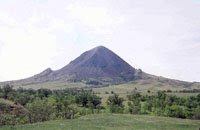
He told participants about Valmont Butte, a volcanic formation that juts upward from the plains east of Boulder to face the Rocky Mountains to the west.
Cheyenne and Arapaho people had large encampments there in the 1800s, and the butte was also familiar to Ute, Lakota, and other Native nations. During tribal consultation, the Valmont Butte Heritage Alliance was told the butte “has always been considered a sacred place, a place of prayer, contemplation and reverence for all life that surround it, and all that it provides for the people.” Until recently, sweat lodge ceremonies were held there.
But sacred sites are part of a history of dispossession that may come to increasingly include places in South America, as well as those found today in North America.
What occurred in North America over the last 400 years is “replaying itself in parts of South America,” Moore said, terming the workshop a focus on “indigenous issues – often a neglected voice.”
National historic preservation laws and the Religious Freedom Restoration Act have been used with some success in preserving sacred places, but it is difficult to protect places “that have meaning” because legal standards do not relate to indigenous concepts.
“‘Legacy’ just has no meaning,” he said. Indigenous history may go back 10,000 years but 100 years of western thought may not encompass ‘the meaning of the place.’ Or critics may say ‘the Indians just made up those claims (that sites are sacred).’”
When reservations were created in North America, “little thought was given to what was sacred,” he said. Treaties were a “series of sham transactions” to enable western expansion by ending aboriginal title to tribal homelands, including obligations to the Cheyenne and Arapaho that encompassed the Valmont Butte area.
Ties to off-reservation sacred land forms were sometimes severed years after reservations were established, because it was against the law for Indian people to leave those reservations, he said.
But in the last 30 to 40 years – and NARF has been part of that, Moore noted – there has been “a greater renaissance among Indian people to reconnect with their cultures and traditions.”
Valmont Butte preservation is a part of that, because it “still speaks to them (Native nations) very profoundly,” he said.
In discussions with Cheyenne and Arapaho people, elders remembered the butte but couldn’t recall its original place name, although Arapaho leader Niwot had a settlement nearby at the confluence of two forks of Boulder Creek, he said.
Valmont Butte Heritage Alliance formed ties to the Northern Arapaho Tribe in Wyoming and a pow wow was held at the University of Colorado as a welcoming-back ceremony to honor their connection to Boulder Valley.
Seminar participants were told that the future of the butte – contaminated in some areas by years of industrial use and radioactive mill tailings – is uncertain. The city of Boulder owns approximately one-third of the area as open space, and the alliance hopes for possible tribal or other beneficial ownership of the remainder, subject to environmental cleanup.
The alliance’s tribal consultation yielded a recommendation that Valmont Butte be allowed to “rest and heal.”
The non-profit alliance works in partnership with the Trust for Public Lands, Colorado Commission of Indian Affairs, NARF, and tribal nations, with support from the Native American Journalists Association.
The seminar at NARF included participants from university law faculties in Argentina, Brazil and Colombia, as well as from several North American states.
Brazil wants to develop the Amazon and there is growing pressure on indigenous tribes that are being marginalized, although there is also a growing indigenous movement, several conferees noted, adding that the best protection for indigenous peoples may be large reservations where development can be kept at bay.
“But when you start to put people on reservations, you’re going to have to place a culture of 20,000 years on a fraction of their land, and will it begin a process of tearing that culture apart?” Moore questioned. “You’re making a choice to protect them, but at what cost?”
One South American national forest law was ruled invalid because it failed to include the participation of indigenous peoples in forest planning in what was termed “a multicultural issue and a property issue,” pitting individual rights against cultural rights and, at times, individual versus collective rights.
http://www.indiancountrytoday.com/national/37348384.html
Showing posts with label Valmont Butte. Show all posts
Showing posts with label Valmont Butte. Show all posts
Saturday, January 17, 2009

Tuesday, January 13, 2009
Preservation concerns at Colorado sacred site
Preservation concerns at Colorado sacred site
By Carol Berry, Today correspondent
Story Published: Jan 13, 2009
BOULDER, Colo. – “What makes a sacred site sacred?” was the question posed to visiting scholars from South America and the U.S. in a workshop at Native American Rights Fund in Boulder.
The answers came from a number of participants in the event, which was part of a study of lands in the post-colonial North American West conducted Dec. 5 by colleges of law at the University of Denver and Georgia State University, and by nonprofit Latina & Latino Critical Legal Theory, Inc.
But none of the answers were definitive. The consensus was that sacred sites in North America were defined by the indigenous peoples living where they were located, and were often locations where vision quests or similar rituals were held, traditional healing or ceremonial plants were gathered, or certain other events had occurred.
“Sacred places are hard to generalize,” said Steve Moore, a NARF senior staff attorney who has worked for many years on the protection of sacred places. “It’s the land that speaks to the people and the power of the place speaks to the people.”
He told participants about Valmont Butte, a volcanic formation that juts upward from the plains east of Boulder to face the Rocky Mountains to the west.
Cheyenne and Arapaho people had large encampments there in the 1800s, and the butte was also familiar to Ute, Lakota, and other Native nations. During tribal consultation, the Valmont Butte Heritage Alliance was told the butte “has always been considered a sacred place, a place of prayer, contemplation and reverence for all life that surround it, and all that it provides for the people.” Until recently, sweat lodge ceremonies were held there.
But sacred sites are part of a history of dispossession that may come to increasingly include places in South America, as well as those found today in North America.
What occurred in North America over the last 400 years is “replaying itself in parts of South America,” Moore said, terming the workshop a focus on “indigenous issues – often a neglected voice.”
National historic preservation laws and the Religious Freedom Restoration Act have been used with some success in preserving sacred places, but it is difficult to protect places “that have meaning” because legal standards do not relate to indigenous concepts.
“‘Legacy’ just has no meaning,” he said. Indigenous history may go back 10,000 years but 100 years of western thought may not encompass ‘the meaning of the place.’ Or critics may say ‘the Indians just made up those claims (that sites are sacred).’”
When reservations were created in North America, “little thought was given to what was sacred,” he said. Treaties were a “series of sham transactions” to enable western expansion by ending aboriginal title to tribal homelands, including obligations to the Cheyenne and Arapaho that encompassed the Valmont Butte area.
Ties to off-reservation sacred land forms were sometimes severed years after reservations were established, because it was against the law for Indian people to leave those reservations, he said.
But in the last 30 to 40 years – and NARF has been part of that, Moore noted – there has been “a greater renaissance among Indian people to reconnect with their cultures and traditions.”
Valmont Butte preservation is a part of that, because it “still speaks to them (Native nations) very profoundly,” he said.
In discussions with Cheyenne and Arapaho people, elders remembered the butte but couldn’t recall its original place name, although Arapaho leader Niwot had a settlement nearby at the confluence of two forks of Boulder Creek, he said.
Valmont Butte Heritage Alliance formed ties to the Northern Arapaho Tribe in Wyoming and a pow wow was held at the University of Colorado as a welcoming-back ceremony to honor their connection to Boulder Valley.
Seminar participants were told that the future of the butte – contaminated in some areas by years of industrial use and radioactive mill tailings – is uncertain. The city of Boulder owns approximately one-third of the area as open space, and the alliance hopes for possible tribal or other beneficial ownership of the remainder, subject to environmental cleanup.
The alliance’s tribal consultation yielded a recommendation that Valmont Butte be allowed to “rest and heal.”
The non-profit alliance works in partnership with the Trust for Public Lands, Colorado Commission of Indian Affairs, NARF, and tribal nations, with support from the Native American Journalists Association.
The seminar at NARF included participants from university law faculties in Argentina, Brazil and Colombia, as well as from several North American states.
Brazil wants to develop the Amazon and there is growing pressure on indigenous tribes that are being marginalized, although there is also a growing indigenous movement, several conferees noted, adding that the best protection for indigenous peoples may be large reservations where development can be kept at bay.
“But when you start to put people on reservations, you’re going to have to place a culture of 20,000 years on a fraction of their land, and will it begin a process of tearing that culture apart?” Moore questioned. “You’re making a choice to protect them, but at what cost?”
One South American national forest law was ruled invalid because it failed to include the participation of indigenous peoples in forest planning in what was termed “a multicultural issue and a property issue,” pitting individual rights against cultural rights and, at times, individual versus collective rights.
http://www.indiancountrytoday.com/national/37348384.html
By Carol Berry, Today correspondent
Story Published: Jan 13, 2009
BOULDER, Colo. – “What makes a sacred site sacred?” was the question posed to visiting scholars from South America and the U.S. in a workshop at Native American Rights Fund in Boulder.
The answers came from a number of participants in the event, which was part of a study of lands in the post-colonial North American West conducted Dec. 5 by colleges of law at the University of Denver and Georgia State University, and by nonprofit Latina & Latino Critical Legal Theory, Inc.
But none of the answers were definitive. The consensus was that sacred sites in North America were defined by the indigenous peoples living where they were located, and were often locations where vision quests or similar rituals were held, traditional healing or ceremonial plants were gathered, or certain other events had occurred.
“Sacred places are hard to generalize,” said Steve Moore, a NARF senior staff attorney who has worked for many years on the protection of sacred places. “It’s the land that speaks to the people and the power of the place speaks to the people.”
He told participants about Valmont Butte, a volcanic formation that juts upward from the plains east of Boulder to face the Rocky Mountains to the west.
Cheyenne and Arapaho people had large encampments there in the 1800s, and the butte was also familiar to Ute, Lakota, and other Native nations. During tribal consultation, the Valmont Butte Heritage Alliance was told the butte “has always been considered a sacred place, a place of prayer, contemplation and reverence for all life that surround it, and all that it provides for the people.” Until recently, sweat lodge ceremonies were held there.
But sacred sites are part of a history of dispossession that may come to increasingly include places in South America, as well as those found today in North America.
What occurred in North America over the last 400 years is “replaying itself in parts of South America,” Moore said, terming the workshop a focus on “indigenous issues – often a neglected voice.”
National historic preservation laws and the Religious Freedom Restoration Act have been used with some success in preserving sacred places, but it is difficult to protect places “that have meaning” because legal standards do not relate to indigenous concepts.
“‘Legacy’ just has no meaning,” he said. Indigenous history may go back 10,000 years but 100 years of western thought may not encompass ‘the meaning of the place.’ Or critics may say ‘the Indians just made up those claims (that sites are sacred).’”
When reservations were created in North America, “little thought was given to what was sacred,” he said. Treaties were a “series of sham transactions” to enable western expansion by ending aboriginal title to tribal homelands, including obligations to the Cheyenne and Arapaho that encompassed the Valmont Butte area.
Ties to off-reservation sacred land forms were sometimes severed years after reservations were established, because it was against the law for Indian people to leave those reservations, he said.
But in the last 30 to 40 years – and NARF has been part of that, Moore noted – there has been “a greater renaissance among Indian people to reconnect with their cultures and traditions.”
Valmont Butte preservation is a part of that, because it “still speaks to them (Native nations) very profoundly,” he said.
In discussions with Cheyenne and Arapaho people, elders remembered the butte but couldn’t recall its original place name, although Arapaho leader Niwot had a settlement nearby at the confluence of two forks of Boulder Creek, he said.
Valmont Butte Heritage Alliance formed ties to the Northern Arapaho Tribe in Wyoming and a pow wow was held at the University of Colorado as a welcoming-back ceremony to honor their connection to Boulder Valley.
Seminar participants were told that the future of the butte – contaminated in some areas by years of industrial use and radioactive mill tailings – is uncertain. The city of Boulder owns approximately one-third of the area as open space, and the alliance hopes for possible tribal or other beneficial ownership of the remainder, subject to environmental cleanup.
The alliance’s tribal consultation yielded a recommendation that Valmont Butte be allowed to “rest and heal.”
The non-profit alliance works in partnership with the Trust for Public Lands, Colorado Commission of Indian Affairs, NARF, and tribal nations, with support from the Native American Journalists Association.
The seminar at NARF included participants from university law faculties in Argentina, Brazil and Colombia, as well as from several North American states.
Brazil wants to develop the Amazon and there is growing pressure on indigenous tribes that are being marginalized, although there is also a growing indigenous movement, several conferees noted, adding that the best protection for indigenous peoples may be large reservations where development can be kept at bay.
“But when you start to put people on reservations, you’re going to have to place a culture of 20,000 years on a fraction of their land, and will it begin a process of tearing that culture apart?” Moore questioned. “You’re making a choice to protect them, but at what cost?”
One South American national forest law was ruled invalid because it failed to include the participation of indigenous peoples in forest planning in what was termed “a multicultural issue and a property issue,” pitting individual rights against cultural rights and, at times, individual versus collective rights.
http://www.indiancountrytoday.com/national/37348384.html
Saturday, August 23, 2008
Solar farm proposed for Valmont Butte
Solar farm proposed for Valmont Butte
But controversial property’s future still unclear
By Ryan Morgan (Contact)
Friday, August 22, 2008
Someday soon, the sun may shine on Valmont Butte — and, under a new proposal for the troubled piece of property that city leaders are kicking around, it could actually produce as much as six megawatts of electricity by shining down on a solar farm.
That idea for Valmont Butte came up Friday at a panel discussion hosted by PLAN-Boulder County. Boulder City Councilman Matt Appelbaum, who raised the possibility, called the solar farm notion “a draft of a draft of an idea.”
“It’s a south-facing, sunny location,” he said. “It’s a great location for a demonstration solar project of some sort. It has the added advantage of being across the street from a very large parcel of land that Xcel (Energy) owns. Conceptually, it’s a great location for this kind of thing.”
But the solar farm idea won’t take off — if it ever happens at all — until some big questions about the butte get answered, including who should own it. Historic preservationists, neighbors, American Indian activists and others have different ideas about what its future should look like. The City Council will likely take up the issue in late summer or this fall, but a date hasn’t been set.
The butte, a northeastern Boulder landmark at Valmont Road and 61st Street, is home to a cemetery that holds the remains of some of the 19th century’s first settlers. American Indians consider it a sacred site, and tribes have used it for rites and rituals. The site also holds a historic fluorspar and gold mill built in the 1930s.
Boulder bought the property in 2000 for $2.57 million, intending to make it the home of a firefighter-training center and a biosolids treatment facility, along with a strip of open space. But the City Council canceled those plans in 2006 after an outcry from historic preservationists and American Indian tribes.
For the past 18 months, the city has been in talks with the nonprofit Trust for Public Lands about purchasing the site, but those discussions haven’t yet borne fruit. Appelbaum — who was speaking only for himself, and not for the City Council — said he’s doubtful the group can raise the necessary money.
Efforts to clean up the butte from years of milling operations are ongoing. But some activists — including members of the Valmont Butte Heritage Alliance, representatives of the Native American Rights Fund and others — think state and federal regulators are underestimating the potential for groundwater pollution and other environmental problems at the site.
Steve Moore, staff attorney for the Native American Rights Fund, said he wants the city’s help in pushing the federal Environmental Protection Agency to release records he says are being kept secret.
“We have been stopped in our efforts to get records from EPA,” he said. “I would like to see the city demand the 300 sets of records and files that they ... won’t reveal to us. They should make all the records available.”
Carol Affleck of Valmont Butte Heritage Alliance said she doesn’t want to see anybody buy the land. Instead, she said, the city should mount a more extensive cleanup effort.
“We do not feel this property should be sold to anybody right now,” she said. “Polluters should be helping pay for the cleanup. ... We want it preserved for all people and all people’s history.”
http://www.dailycamera.com:80/news/2008/aug/22/solar-farm-proposed-valmont-butte/
But controversial property’s future still unclear
By Ryan Morgan (Contact)
Friday, August 22, 2008
Someday soon, the sun may shine on Valmont Butte — and, under a new proposal for the troubled piece of property that city leaders are kicking around, it could actually produce as much as six megawatts of electricity by shining down on a solar farm.
That idea for Valmont Butte came up Friday at a panel discussion hosted by PLAN-Boulder County. Boulder City Councilman Matt Appelbaum, who raised the possibility, called the solar farm notion “a draft of a draft of an idea.”
“It’s a south-facing, sunny location,” he said. “It’s a great location for a demonstration solar project of some sort. It has the added advantage of being across the street from a very large parcel of land that Xcel (Energy) owns. Conceptually, it’s a great location for this kind of thing.”
But the solar farm idea won’t take off — if it ever happens at all — until some big questions about the butte get answered, including who should own it. Historic preservationists, neighbors, American Indian activists and others have different ideas about what its future should look like. The City Council will likely take up the issue in late summer or this fall, but a date hasn’t been set.
The butte, a northeastern Boulder landmark at Valmont Road and 61st Street, is home to a cemetery that holds the remains of some of the 19th century’s first settlers. American Indians consider it a sacred site, and tribes have used it for rites and rituals. The site also holds a historic fluorspar and gold mill built in the 1930s.
Boulder bought the property in 2000 for $2.57 million, intending to make it the home of a firefighter-training center and a biosolids treatment facility, along with a strip of open space. But the City Council canceled those plans in 2006 after an outcry from historic preservationists and American Indian tribes.
For the past 18 months, the city has been in talks with the nonprofit Trust for Public Lands about purchasing the site, but those discussions haven’t yet borne fruit. Appelbaum — who was speaking only for himself, and not for the City Council — said he’s doubtful the group can raise the necessary money.
Efforts to clean up the butte from years of milling operations are ongoing. But some activists — including members of the Valmont Butte Heritage Alliance, representatives of the Native American Rights Fund and others — think state and federal regulators are underestimating the potential for groundwater pollution and other environmental problems at the site.
Steve Moore, staff attorney for the Native American Rights Fund, said he wants the city’s help in pushing the federal Environmental Protection Agency to release records he says are being kept secret.
“We have been stopped in our efforts to get records from EPA,” he said. “I would like to see the city demand the 300 sets of records and files that they ... won’t reveal to us. They should make all the records available.”
Carol Affleck of Valmont Butte Heritage Alliance said she doesn’t want to see anybody buy the land. Instead, she said, the city should mount a more extensive cleanup effort.
“We do not feel this property should be sold to anybody right now,” she said. “Polluters should be helping pay for the cleanup. ... We want it preserved for all people and all people’s history.”
http://www.dailycamera.com:80/news/2008/aug/22/solar-farm-proposed-valmont-butte/
Subscribe to:
Posts (Atom)


 Posts
Posts