VOICES: Copper thieves at Coldwater
Coldwater Spring House and Reservoir by Susu Jeffrey
By Susu Jeffrey , TC Daily Planet
July 27, 2008
The abandoned Bureau of Mines buildings around Coldwater Spring have been a magnet for gang graffiti, homeless people seeking shelter, and after-hours adventurism since 1995. Homeless people get ushered out, unleashed dog walkers get tickets. So go the priorities at Hennepin County’s last natural spring, a mile south of Minnehaha Falls.
Since 1805 when Lt. Zebulon Pike signed a treaty for a fort on the Mississippi, Coldwater has been “federal.” Good thing, because our state allowed the powerful Department of Transportation (MnDOT) to carve up Fort Snelling’s river bluff with roads and freeways and the airport.
Of course the confluence of the Mississippi and Minnesota rivers, the “meeting of waters,” would traditionally be a place for the meeting of peoples—but the Mississippi is also the drinking water source for 18-million Americans.
MnDOT still plans to expand Highway 55 into a freeway from Interstate 94 south to the 62 Crosstown, further threatening the spring outflow. The other sacred spring in Hennepin County, the Great Medicine Spring (Theodore Wirth Park), was permanently dewatered with construction of Interstate 394 in the late 1980s.
Only federal level protection can force MnDOT to pay for protecting the spring’s source water because most freeway construction money is federal-with-strings.
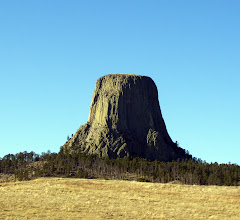
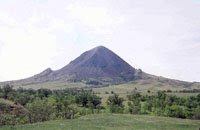
Native Americans are only recognized at the federal, nation-to-nation, level. Native Americans have legally recognized sacred site rights at majestic landscapes like Bear Butte, or Coldwater. Coldwater still flows at 90-thousand gallons a day above the only true river gorge on the entire Mississippi River.
Coldwater has been flowing at least 10,000 years.
False Economy
Since 1995, the amount of federal money for contract security exceeds the $1.1 million estimated (2001) cost of removing/recycling all 11 buildings and roads inside the 27-acre Coldwater campus.
Early Friday, June 27, a federal security contractor noticed open doors to Building 9—the small, northern-most building closest to the Coldwater entrance. It is the former library for the Bureau of Mines complex where taconite was developed after World War 2. The library was built atop a wetland and is so infected with black mold a respirator is required.
Whoever stripped the copper tubing out of the moldy building could develop respiratory distress—sinus, allergy and asthma complications. Coldwater’s wildlife is probably sensitive enough to toxic odors to keep out.
One hawk got trapped behind a window pane in the Crusher Building, across from Coldwater Reservoir where the pigeons roost. Luckily the hawk was freed by a staffer from the Minnehaha Creek Watershed District during a site tour. The Crusher Building is the old Bureau of Mines most popular break-in location. Guards routinely catch bored kids looking to test their manhood inside with the dead pigeons and guano.
What is Security at Coldwater?
Since Coldwater is the last natural spring of size in Hennepin County and has been used as an emergency drinking water supply, protecting and maintaining the 90-thousand-gallon-a-day water source should be the priority.
But in our upside-down economy, abandoned buildings are the focus of security efforts at Coldwater. The Minneapolis-Saint Paul airport directs about 10 percent of all flights over the Main Building and spring. The old buildings get checked daily, sometimes broken windows get boarded. Three months after a solar battery panel was swiped from atop the Crusher Building, the theft was noticed. The panel supplied electricity to MnDOT’s flow measuring box, which has since been removed.
After construction ended on the Highway 55/62 interchange site, MnDOT was court-ordered to monitor the Coldwater reservoir discharge for 30 months. MnDOT’s numbers recorded a 27,500-gallon-a-day drop in the flow. Despite a state law mandating no “loss of flow to or from the spring,” MnDOT sunk the 55/62 interchange 6.5-feet down into the water table. Thirty percent of Coldwater’s flow came through the interchange area according to dye tests.
The 55 reroute was sold to the public for “safety” and as a three-minute time-savings on a trip to the airport from downtown Minneapolis. That’s as corny as mushroom clouds and WMDs in Iraq but information overload shorts out public memory in America.
Nevertheless, flying citizens are protected by a prohibition on tree planting at Coldwater due to height restrictions. Of course, someone with a shoulder mortar could easily bring down a flight, but don’t dare plant a tree. Now that we are in our second airline crisis since 9/11, phantom minute-savings on unaffordable flights seem—well, nostalgic.
The security subcontract at Coldwater is handled by the U.S. Fish and Wildlife Service (FWS). Since 1995 there has been no landscape maintenance on the 27 acres, allowing invasive, exotic buckthorn and garlic mustard to shade out and overtake indigenous plants. Native plants that held the steep Mississippi bluff in place died back. The result has been massive erosion of the hillside behind the spring outflow, the west side of the reservoir.
Coldwater’s reservoir is silting up. Occasionally water cress grows in the shallows, which previously were five feet deep. Last fall, the National Park Service authorized FWS to destroy the labyrinth at Coldwater. FWS directed the destroyers to dump the rocks that outlined the labyrinth into the erosion gully behind and above the spring. Rocks, unlike plant roots, do not hold soil. Increased pressure on the west reservoir wall and freeze-and-thaw weather are toppling the old limestone.
In other words, neglect is causing the destruction of the historic 1880s Spring House and limestone reservoir that furnished water to Fort Snelling until 1920. Eric Evenson, of the Minnehaha Creek Watershed District, explained that stabilization of the hillside requires work at the bottom and the top of the incline and costs more as the damage wears on.
Bush’s Bureaucratic Do-Nothing Interior Department
Coldwater is a federal orphan left over from Congress’s 1995 dissolution of the US Bureau of Mines, part of the Department of the Interior (DOI). Under Bush-2 the DOI attempted to sell off millions of acres, about a quarter of all its land holdings, to profit from or to privatize America’s natural heritage.
For $6 million, the 27-acre Coldwater campus was scheduled to be sold to the Twin Cities airport for multi-level, off-site parking and storage. They almost “paved paradise and put up a parking lot.” But 9/11 happened and the financial collapse of the country’s airlines caused Northwest to pull out of the contract.
In 2003, former Congressman Martin Sabo won a $750,000 appropriation “to protect the Camp Coldwater Spring and restore the Bureau of Mines property to open green space.” This crashed the dreams of U.S. Fish and Wildlife to move its regional offices out of the Whipple Building to Coldwater’s park-like setting.
FWS handled the daily management of the property, a sort of yard work and handyman nuisance for staff in an office beside the airport in Fort Snelling’s Whipple Building. A hostile relationship developed between Coldwater supporters and the FWS, which landed in federal court with an 1805 Dakota treaty rights case. FWS blinked and the case was dismissed.
The process to determine “the future of former Bureau of Mines” was allotted to the National Park Service (NPS). This duty resulted in an 11-pound Environmental Impact Statement and thousands of hours and pieces of paper that came before and after. Coldwater is part of the Fort Snelling National Historic Landmark, the Fort Snelling National Register Historic District and is eligible for inclusion on the National Register of Historic Places. All the paperwork is in. It has been “in” for years.
Since Sabo’s retirement, no Minnesota champion has pushed for an urban wilderness, a Green Museum where the land is the museum.
While we wait, about 20 carp are circling in the Coldwater reservoir. Somebody dumped the carp last fall. Fish dumping is illegal. The carp didn’t die, they’re not indigenous, and who knows how many carp eggs flushed down the gorge into the Mississippi.
We are trying to figure out why Coldwater’s invisible status is a blessing. July is the time of the Blessing moon, probably an old agriculture reference to lush fruits and vegetables available in mid-summer. Are we waiting for a new federal administration to appoint a new secretary of Interior? Are we waiting for another spring melt to see how much hillside is left behind the spring outflow?
While the government vacillates, the landscape deteriorates.
Susu Jeffrey is the founder of Friends of Coldwater, which recommends National Park Service ownership of 50 acres of Mississippi bluffland from Minnehaha Park to Fort Snelling. Info: www.FriendsofColdwater.org.
http://www.tcdailyplanet.net/node/12934#
Showing posts with label MN. Show all posts
Showing posts with label MN. Show all posts
Thursday, July 31, 2008

Monday, July 21, 2008
Bluff protection supporters rally
Bluff protection supporters rally (07/20/2008)
By Sarah Elmquist
The first formal public hearing on the county’s new zoning ordinance drew over 100 people Thursday night, many sporting neon green stickers which reiterated what nearly all their comments demanded: protect our bluffs.
The County Planning Commission, which will review the comments and the draft ordinance next week, will make a recommendation on any changes to the County Board. The County Board will hold the final public hearing on the ordinance on August 26 at 7 p.m.
Thursday night’s testimony from the public was met with no reaction from the Planning Commission, which chose to hold off on discussions until its next meeting.
And although chair Garth Zenke urged those at the meeting to refrain from repeating one another, and that commissioners were looking for “quality, not quantity,” from the comments, organized bluff advocates didn’t hold back. “When this many people show up, they deserve to be heard, and counted,” said Todd Paddock.
Paddock said that the value of the bluffs was like that of the wetlands, the lakes and streams -- important to everybody. “That value is greater than the right of a single individual to ruin that value,” he said. Paddock suggested that the bluff protection ordinance require viewshed analysis for development, which can show whether a structure might be visible from the valley below. “That’s what we need in our ordinance. The technology is there,” he said. “I think it would help us a great deal.”
Don Evanson of Minnesota City spoke on behalf of property owners’ rights, one of few who spoke out at the meeting. “If you want to protect the bluffs, buy them,” he told the audience.
“I appreciate the beauty of Winona County, too,” Evanson continued. But, he said, there are others who’d like to live out in the rural parts of the county, and farmers who’d like to sell bits of their land for extra money or to retire.
Steven J. Frank, a junior at WSU, said that the bluffs were great. “When I look up there, I want to count my blessings,” he said. “I don’t want to count the developments.”
Sadie Newman, WSU student, told the commission that younger people, “really do care, too.” She shared an example of what can happen when a community isn’t engaged in future planning. In her hometown of Stillwater, Minn., the historic downtown jail burned down and was replaced by condos. She said that now, Stillwater’s skyline includes tall buildings with satellites. “It breaks our hearts to see it now,” she said, urging the commissioners to, “think about the consequences of building up there.”
Many who asked for stronger bluff protection measures had specifics in mind. Rather than the draft ordinance’s suggested 25 percent slope limit, they asked that the limit be set at 18 percent. And rather than the 100-foot setback from the top of the bluff, they asked for 300.
“Nobody’s saying you can’t build on the bluff,” said Joe Morse. They’d just like a stronger setback, he said.
Many of the stronger bluff protection measures that the audience was asking for were part of a previous draft of the ordinance. The ordinance was watered down after the Task Force reviewed all of the sensitive lands protection standards, and, very generally, questioned them as too restrictive.
Tom Harbinson offered another reason to strengthen the bluff protection standards. The draft version suggests that development could occur with a Conditional Use Permit in areas with an average slope between 18 and 25 percent. But Harbinson said that such nonspecific language would result in decisions that were less black and white, and could prompt lawsuits. Putting a firm limit at 18 percent, he said, could limit liability of the county and ultimately the taxpayers.
Steve Jacob brought up just that -- litigation against the county’s planning department, during the meeting. Although interrupted several times by Planning Director Brian Bender, Jacob told the audience that he’d obtained a ruling against the Planning Department in February, when he said Judge Jeffrey Thompson ruled that the department had failed to enforce the zoning ordinance and had inconsistently applied the ordinance, placing what Jacob called “arbitrary burden” on him.
Jacob said that there was other pending litigation against the department and questioned its competency in writing the zoning ordinance. He said that the department should be overseen in its ordinance update, and that the process should be delayed until the winter when farmers have more time to weigh in.
“The citizens of Winona County deserve better than this,” he said.
Native American burial sites
Many also urged the commission to consider measures to protect Native American burial sites, both those that have been recorded, and those undiscovered.
Ken McCullough, vice president of the Winona-Dakota Unity Alliance, told the commission how important it is to protect the burial mounds.
And those burial mounds are somewhat linked to bluff protection, with blufftops used as scenic burial sites.
Jon Borman, also of the Winona-Dakota Unity Alliance, showed the commission Minnesota law that suggests that archeological survey costs could be placed on the state, suggesting that archeological surveys should be done on developments to check for burial sites not recorded on state archeological maps, like northern Cass County requires.
http://www.winonapost.com/stock/functions/VDG_Pub/detail.php?choice=25829&home_page=1&archives=
By Sarah Elmquist
The first formal public hearing on the county’s new zoning ordinance drew over 100 people Thursday night, many sporting neon green stickers which reiterated what nearly all their comments demanded: protect our bluffs.
The County Planning Commission, which will review the comments and the draft ordinance next week, will make a recommendation on any changes to the County Board. The County Board will hold the final public hearing on the ordinance on August 26 at 7 p.m.
Thursday night’s testimony from the public was met with no reaction from the Planning Commission, which chose to hold off on discussions until its next meeting.
And although chair Garth Zenke urged those at the meeting to refrain from repeating one another, and that commissioners were looking for “quality, not quantity,” from the comments, organized bluff advocates didn’t hold back. “When this many people show up, they deserve to be heard, and counted,” said Todd Paddock.
Paddock said that the value of the bluffs was like that of the wetlands, the lakes and streams -- important to everybody. “That value is greater than the right of a single individual to ruin that value,” he said. Paddock suggested that the bluff protection ordinance require viewshed analysis for development, which can show whether a structure might be visible from the valley below. “That’s what we need in our ordinance. The technology is there,” he said. “I think it would help us a great deal.”
Don Evanson of Minnesota City spoke on behalf of property owners’ rights, one of few who spoke out at the meeting. “If you want to protect the bluffs, buy them,” he told the audience.
“I appreciate the beauty of Winona County, too,” Evanson continued. But, he said, there are others who’d like to live out in the rural parts of the county, and farmers who’d like to sell bits of their land for extra money or to retire.
Steven J. Frank, a junior at WSU, said that the bluffs were great. “When I look up there, I want to count my blessings,” he said. “I don’t want to count the developments.”
Sadie Newman, WSU student, told the commission that younger people, “really do care, too.” She shared an example of what can happen when a community isn’t engaged in future planning. In her hometown of Stillwater, Minn., the historic downtown jail burned down and was replaced by condos. She said that now, Stillwater’s skyline includes tall buildings with satellites. “It breaks our hearts to see it now,” she said, urging the commissioners to, “think about the consequences of building up there.”
Many who asked for stronger bluff protection measures had specifics in mind. Rather than the draft ordinance’s suggested 25 percent slope limit, they asked that the limit be set at 18 percent. And rather than the 100-foot setback from the top of the bluff, they asked for 300.
“Nobody’s saying you can’t build on the bluff,” said Joe Morse. They’d just like a stronger setback, he said.
Many of the stronger bluff protection measures that the audience was asking for were part of a previous draft of the ordinance. The ordinance was watered down after the Task Force reviewed all of the sensitive lands protection standards, and, very generally, questioned them as too restrictive.
Tom Harbinson offered another reason to strengthen the bluff protection standards. The draft version suggests that development could occur with a Conditional Use Permit in areas with an average slope between 18 and 25 percent. But Harbinson said that such nonspecific language would result in decisions that were less black and white, and could prompt lawsuits. Putting a firm limit at 18 percent, he said, could limit liability of the county and ultimately the taxpayers.
Steve Jacob brought up just that -- litigation against the county’s planning department, during the meeting. Although interrupted several times by Planning Director Brian Bender, Jacob told the audience that he’d obtained a ruling against the Planning Department in February, when he said Judge Jeffrey Thompson ruled that the department had failed to enforce the zoning ordinance and had inconsistently applied the ordinance, placing what Jacob called “arbitrary burden” on him.
Jacob said that there was other pending litigation against the department and questioned its competency in writing the zoning ordinance. He said that the department should be overseen in its ordinance update, and that the process should be delayed until the winter when farmers have more time to weigh in.
“The citizens of Winona County deserve better than this,” he said.
Native American burial sites
Many also urged the commission to consider measures to protect Native American burial sites, both those that have been recorded, and those undiscovered.
Ken McCullough, vice president of the Winona-Dakota Unity Alliance, told the commission how important it is to protect the burial mounds.
And those burial mounds are somewhat linked to bluff protection, with blufftops used as scenic burial sites.
Jon Borman, also of the Winona-Dakota Unity Alliance, showed the commission Minnesota law that suggests that archeological survey costs could be placed on the state, suggesting that archeological surveys should be done on developments to check for burial sites not recorded on state archeological maps, like northern Cass County requires.
http://www.winonapost.com/stock/functions/VDG_Pub/detail.php?choice=25829&home_page=1&archives=
Subscribe to:
Posts (Atom)


 Posts
Posts