Diné hope to include private land in Mount Taylor pact
Gallup Independent
By Kathy Helms
Diné Bureau
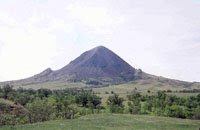
WINDOW ROCK — The Resources Committee has approved an amended cooperative agreement among the Navajo Nation and the pueblos of Acoma, Laguna and Zuni to pursue an application for the permanent classification of Mount Taylor as a Traditional Cultural Property.
A previous agreement approved by Resources was tabled by the Intergovernmental Relations Committee and sent back to Resources for modifications, which included removing the Hopi Tribe as a participant.
The New Mexico Cultural Properties Review Committee last year granted a one-year emergency listing of a portion of Mount Taylor which included the summit and mesa tops at an 8,000 foot elevation contour line, including Horace Mesa at 7,300 feet.
The current emergency designation boundary, as well as the proposed permanent nomination boundary, does not include privately held land, as provided by the New Mexico Cultural Properties Act.
The goal of the nominating tribes is to protect the unimpaired natural and cultural landscape of Mount Taylor by having it designated a Traditional Cultural Property on the New Mexico Register of Cultural Properties. One aspect of the process is determining a proposed boundary.
The Navajo Nation has agreed to produce all maps required for the application, at cost. According to the cooperative agreement, no tribe will bear an unreasonable portion of the costs incurred as part of the nomination.
The Navajo Nation approved the Diné Resources Protection Act in 2005, effectively banning uranium mining and milling on the Navajo Nation, however, the ban does not extend to sacred sites such as Mount Taylor, or Tsoodzil, the sacred mountain to the south.
“Mount Taylor is a cultural resource to us and we will do all we can to protect that area and prevent any development that encroaches on our culture,” Sherrick Roanhorse of Navajo Nation Vice President Ben Shelly’s office said last week.
“It’s our hope that we can get Mount Taylor and the surrounding area designated as a Traditional Cultural Property. It’s important to us, it’s important to the Navajo people. For the pueblos, it’s important to their people.
Mount Taylor is one of the sources of our prayers and our songs.”
The agreement spells out what each tribe is charged to do in the application process. A part of that is sharing resources to pay for some of the costs associated with the application, including GIS mapping.
“The pueblos don’t have the capacity to create maps, but our Natural Resource department has the capacity to create these maps with our technology. We’re trying to save as much money as we can on our part as the Navajo government,” Roanhorse said.
“The biggest hurdle before us right now is a lot of the tribes are facing budget shortfalls. Hopi was a partner with us, but Hopi also is having its own political challenges. We’re doing the best we can to work with what we have.”
The proposed cooperative agreement is expected to go back to the Intergovernmental Relations Committee this week for approval.
“I’m hoping they will move forward on it. Our goal is to have an application out by the end of next month. We’re really trying to push this forward. The cooperative agreement will help,” Roanhorse said.
The Pueblo of Acoma serves as project coordinator and has retained the Chestnut Law Firm to prepare the application for nomination.
http://www.gallupindependent.com/2009/02February/021709dinehope.html
Saturday, February 21, 2009

Floodwaters threaten Native American ruins at Homol’ovi Ruins State Park
Levee design to be studied for $5.7M
By Ryan Reinhold · February 18, 2009
Homol'ovi Ruins State Park (Courtesy: Arizona State Parks)
WINSLOW – A flood control levee that protects 2,700 residential and business parcels in northern Arizona from the Little Colorado River has diverted water in such a way that it is threatening 700-year-old ruins built by Native Americans, a state archaeologist warns.
The threatened ruins at Homol’ovi Ruins State Park are part of a 4,500-acre preserve located about one mile north of Winslow. The ruins, which include two- and three-story pueblos built of sandstone and adobe bricks, were home to ancestors of the Hopi people who farmed and traded for 500 years along the Little Colorado River.
Rich Lange, an archaeologist at the Arizona State Museum at the University of Arizona in Tucson, says that the 7-mile-long earthen flood control levee, built in 1989 to protect Winslow, has changed the natural flow of the river. In times of high water, the levee diverts the river away from Winslow and towards Homol’ovi, he says. The Little Colorado River has a history of flooding, but before the levee was built, the river jumped the east bank where Homol’ovi is located.
Recent rainstorms in Arizona’s high country have raised the issue again, but Navajo County Public Works Director Homero Vela disputed Lange’s claim that the levee is a threat to Homol’ovi. “The Little Colorado River, like other rivers in the Southwest, is classified as a meandering river and tends to randomly meander whether or not a levee is present,” he says. “It has been meandering for hundreds of years.”
Homol’ovi is a cluster of 300 archaeological sites. Lange said that among seven pueblo ruins at the park, the ruin known as Homol’ovi is the best example of adobe brick pueblo architecture in North America. The Little Colorado River runs by it on its 315-mile trek from the White Mountains in northeastern Arizona to Grand Canyon National Park in northwestern Arizona.
“It is this particular ruin that is most at risk from flood waters because the ruin is only 20 to 25 feet above the elevation of the river bed,” Lange says.
Homol’ovi was a trading center for different Native American groups, a migration route, and a sacred burial site for Hopis. It is a unique site because it features examples of both one-room pit houses and a multi-story, 1,200-room pueblo, says park manager Karen Berggren.
Pit houses built underground were the standard architecture in the period before 1100 A.D., but eventually Native Americans masonry techniques with sandstone and adobe bricks. These sites were occupied during three main periods: 620-850 A.D., 1050-1225 A.D. and 1260-1400 A.D. by farmers who grew cotton, corn, squash, and beans. Homol’ovi served as a crossroads of trade during pre-Columbian times where many artifacts, depictions of kachina, pottery, and petroglyphs have been unearthed.
In 1993, the Little Colorado River jumped the levee and flooded homes in Winslow, causing $1.4 million damage. In 2004, the river crested at 20 feet – twice as high as normal – and caused a four-by-six-foot break in the levee, which was repaired by state and local emergency crews. Since that time, flood control officials have begun a feasibility study to fix the levee.
On February 12, 2009, Navajo County asked Congress for $500,000 so that the U.S. Army Corps of Engineers could continue the study. It has been estimated the study would cost a total of $5.7 million, plus the cost of aerial photography and mapping.
But help for Homol’ovi is years away. Vela said the feasibility study by Navajo County officials would take four to five years. After that, an engineering study will take another two to three years. Construction would not begin until both studies are completed and funding is approved.
Vela says the study’s results could recommend channeling the streambed; tamarisk removal; channel realignment; elevation of the levee; or a combination of these projects. But archaeologists oppose elevation of the levee unless other methods are developed to protect Homol’ovi.
Vela says he has invited Berggren and Lange to attend a meeting of the Winslow Levee Feasibility Project committee on March 24, 2009. Agencies that will likely attend the meeting include:
The Hopi Tribe
City of Winslow
U.S. Army Corps of Engineers
U.S. Geological Survey
Winslow Levee Advisory Committee
Arizona Game & Fish Dept.
U.S. Fish & Wildlife
U.S. Bureau of Reclamation
Little Colorado Resource Conservation and Development
Navajo County Flood Control District
Homol’ovi Research Program
Arizona State Parks
For more information, the public is invited to call Navajo County Flood Control District Director Trent Larson for details at (928) 524-4387.
= = =
>>Email the editor at aklaw@zoniereport.com.
http://zoniereport.com/2009/02/floodwaters-threaten-native-american-ruins-23441/
By Ryan Reinhold · February 18, 2009
Homol'ovi Ruins State Park (Courtesy: Arizona State Parks)
WINSLOW – A flood control levee that protects 2,700 residential and business parcels in northern Arizona from the Little Colorado River has diverted water in such a way that it is threatening 700-year-old ruins built by Native Americans, a state archaeologist warns.
The threatened ruins at Homol’ovi Ruins State Park are part of a 4,500-acre preserve located about one mile north of Winslow. The ruins, which include two- and three-story pueblos built of sandstone and adobe bricks, were home to ancestors of the Hopi people who farmed and traded for 500 years along the Little Colorado River.
Rich Lange, an archaeologist at the Arizona State Museum at the University of Arizona in Tucson, says that the 7-mile-long earthen flood control levee, built in 1989 to protect Winslow, has changed the natural flow of the river. In times of high water, the levee diverts the river away from Winslow and towards Homol’ovi, he says. The Little Colorado River has a history of flooding, but before the levee was built, the river jumped the east bank where Homol’ovi is located.
Recent rainstorms in Arizona’s high country have raised the issue again, but Navajo County Public Works Director Homero Vela disputed Lange’s claim that the levee is a threat to Homol’ovi. “The Little Colorado River, like other rivers in the Southwest, is classified as a meandering river and tends to randomly meander whether or not a levee is present,” he says. “It has been meandering for hundreds of years.”
Homol’ovi is a cluster of 300 archaeological sites. Lange said that among seven pueblo ruins at the park, the ruin known as Homol’ovi is the best example of adobe brick pueblo architecture in North America. The Little Colorado River runs by it on its 315-mile trek from the White Mountains in northeastern Arizona to Grand Canyon National Park in northwestern Arizona.
“It is this particular ruin that is most at risk from flood waters because the ruin is only 20 to 25 feet above the elevation of the river bed,” Lange says.
Homol’ovi was a trading center for different Native American groups, a migration route, and a sacred burial site for Hopis. It is a unique site because it features examples of both one-room pit houses and a multi-story, 1,200-room pueblo, says park manager Karen Berggren.
Pit houses built underground were the standard architecture in the period before 1100 A.D., but eventually Native Americans masonry techniques with sandstone and adobe bricks. These sites were occupied during three main periods: 620-850 A.D., 1050-1225 A.D. and 1260-1400 A.D. by farmers who grew cotton, corn, squash, and beans. Homol’ovi served as a crossroads of trade during pre-Columbian times where many artifacts, depictions of kachina, pottery, and petroglyphs have been unearthed.
In 1993, the Little Colorado River jumped the levee and flooded homes in Winslow, causing $1.4 million damage. In 2004, the river crested at 20 feet – twice as high as normal – and caused a four-by-six-foot break in the levee, which was repaired by state and local emergency crews. Since that time, flood control officials have begun a feasibility study to fix the levee.
On February 12, 2009, Navajo County asked Congress for $500,000 so that the U.S. Army Corps of Engineers could continue the study. It has been estimated the study would cost a total of $5.7 million, plus the cost of aerial photography and mapping.
But help for Homol’ovi is years away. Vela said the feasibility study by Navajo County officials would take four to five years. After that, an engineering study will take another two to three years. Construction would not begin until both studies are completed and funding is approved.
Vela says the study’s results could recommend channeling the streambed; tamarisk removal; channel realignment; elevation of the levee; or a combination of these projects. But archaeologists oppose elevation of the levee unless other methods are developed to protect Homol’ovi.
Vela says he has invited Berggren and Lange to attend a meeting of the Winslow Levee Feasibility Project committee on March 24, 2009. Agencies that will likely attend the meeting include:
The Hopi Tribe
City of Winslow
U.S. Army Corps of Engineers
U.S. Geological Survey
Winslow Levee Advisory Committee
Arizona Game & Fish Dept.
U.S. Fish & Wildlife
U.S. Bureau of Reclamation
Little Colorado Resource Conservation and Development
Navajo County Flood Control District
Homol’ovi Research Program
Arizona State Parks
For more information, the public is invited to call Navajo County Flood Control District Director Trent Larson for details at (928) 524-4387.
= = =
>>Email the editor at aklaw@zoniereport.com.
http://zoniereport.com/2009/02/floodwaters-threaten-native-american-ruins-23441/
Tuesday, February 17, 2009
Eastern Band of Cherokee and archaeologist oppose runway expansion
Tribe, archaeologist oppose runway expansion
By Jon Ostendorff
FRANKLIN – North Carolina could spend more than half a million dollars to
remove American Indian artifacts from the path of a runway expansion at
the Macon County Airport, state and local leaders said on Monday.
But the plan is drawing fire from an archaeologist, who says it doesn't go
far enough, and from the leader of the Eastern Band of Cherokee Indians.
“We are totally opposed,” Principal Chief Michell Hicks said.
The airport is home to 32 airplanes with an average of 12 landings a day.
The expansion is needed to make the runway safer for those aircraft and to
accommodate larger jets.
The Macon County Airport Authority last week said it would spend up to
$535,000 from the N.C. Department of Transportation's Aviation Division to
have Chapel Hill-based TRC Environmental remove 25 percent of the
artifacts in the expansion zone.
It's that figure that has the tribe and archaeologist Michael Trinkley of
the nonprofit Chicora Foundation in Columbia, S.C., upset.
Hicks said his government had to remove all of the artifacts found during
the recent construction of its new school campus and expected the same
from Macon County.
Trinkley said the limited collection is a scientific travesty.
“It's an abomination, it's vulgar, it's obscene, and it is disrespectful,”
he said.
The additional 600 feet added to the runway will make it 5,000 feet long —
the distance needed for jets to take off and land, said airport board
attorney Joe Collins.
He said Monday the nearby Western Carolina University could use a
jet-length runway as well as Franklin-based software producer Drake
Enterprise and the Caterpillar branch at the county's industrial park.
He also said residents in the county's affluent areas would be interested.
“There are a lot of second homes in Highlands, a lot of folks who have
means there,” he said.
A jet runway would mean more airplanes stopping to refuel during longer
flights, he said. Airports make money on fuel sales.
Significant Native American site
Trinkley's company found 1,500 postholes of ancient structures, 200
archeological features, such as storage pits for food, and 48 possible
burials during a dig in 2000 near the site of the planned runway
expansion.
He said the field surrounding the airport was once a large Cherokee town
and has evidence of pre-Cherokee people as early as 2 AD. He said he
recommended shelving the expansion to the airport board after his survey.
Trinkley said he refused to bid on the project and put the cost for a
proper collection at $2 million.
Burial sites will be paved over, said Trinkley, who estimates there could
be 400 graves near the airport.
“This is perhaps the most significant Native American site that will be
found in the region in our lifetimes,” he said. “There are very few sites
of this size and magnitude. There are very few sites that are left that
haven't been impacted by roads, cultivation and housing developments.”
Hicks said the tribal government had not opposed the plan outright when it
was first floated.
He said tribal representatives tried to compromise with the airport board
so that the artifacts could be collected and the runway built while
respecting the historic significance of the land. But collecting only a
quarter of the artifacts is not good enough, he said.
State archaeologist Stephen Claggett, who regulates these types of
activities, could not be reached Monday.
TRC Environmental will document exactly where it finds artifacts and then
move them to a location acceptable to the Eastern Band, said Collins, the
airport board attorney.
State Rep. Phil Haire, who serves Macon County, said the money is
well-spent despite the $2 billion budget shortfall and the possibility of
cutting state jobs.
“I think it is going to be a real asset,” he said. “Once they extend that
runway they are going to be able to accommodate small jets and other
similar type aircraft. I think it could be a real economic stimulus.”
The N.C. Department of Transportation's Aviation Division provides money
to repair and improve public airports in the same way that the state
maintains roads.
After the archaeological work, the airport board plans to get a federal
grant to pay for 90 percent of the expansion. The county would kick in the
other 10 percent, Collins said.
http://citizen-times.com/apps/pbcs.dll/article?AID=2009902170317
By Jon Ostendorff
FRANKLIN – North Carolina could spend more than half a million dollars to
remove American Indian artifacts from the path of a runway expansion at
the Macon County Airport, state and local leaders said on Monday.
But the plan is drawing fire from an archaeologist, who says it doesn't go
far enough, and from the leader of the Eastern Band of Cherokee Indians.
“We are totally opposed,” Principal Chief Michell Hicks said.
The airport is home to 32 airplanes with an average of 12 landings a day.
The expansion is needed to make the runway safer for those aircraft and to
accommodate larger jets.
The Macon County Airport Authority last week said it would spend up to
$535,000 from the N.C. Department of Transportation's Aviation Division to
have Chapel Hill-based TRC Environmental remove 25 percent of the
artifacts in the expansion zone.
It's that figure that has the tribe and archaeologist Michael Trinkley of
the nonprofit Chicora Foundation in Columbia, S.C., upset.
Hicks said his government had to remove all of the artifacts found during
the recent construction of its new school campus and expected the same
from Macon County.
Trinkley said the limited collection is a scientific travesty.
“It's an abomination, it's vulgar, it's obscene, and it is disrespectful,”
he said.
The additional 600 feet added to the runway will make it 5,000 feet long —
the distance needed for jets to take off and land, said airport board
attorney Joe Collins.
He said Monday the nearby Western Carolina University could use a
jet-length runway as well as Franklin-based software producer Drake
Enterprise and the Caterpillar branch at the county's industrial park.
He also said residents in the county's affluent areas would be interested.
“There are a lot of second homes in Highlands, a lot of folks who have
means there,” he said.
A jet runway would mean more airplanes stopping to refuel during longer
flights, he said. Airports make money on fuel sales.
Significant Native American site
Trinkley's company found 1,500 postholes of ancient structures, 200
archeological features, such as storage pits for food, and 48 possible
burials during a dig in 2000 near the site of the planned runway
expansion.
He said the field surrounding the airport was once a large Cherokee town
and has evidence of pre-Cherokee people as early as 2 AD. He said he
recommended shelving the expansion to the airport board after his survey.
Trinkley said he refused to bid on the project and put the cost for a
proper collection at $2 million.
Burial sites will be paved over, said Trinkley, who estimates there could
be 400 graves near the airport.
“This is perhaps the most significant Native American site that will be
found in the region in our lifetimes,” he said. “There are very few sites
of this size and magnitude. There are very few sites that are left that
haven't been impacted by roads, cultivation and housing developments.”
Hicks said the tribal government had not opposed the plan outright when it
was first floated.
He said tribal representatives tried to compromise with the airport board
so that the artifacts could be collected and the runway built while
respecting the historic significance of the land. But collecting only a
quarter of the artifacts is not good enough, he said.
State archaeologist Stephen Claggett, who regulates these types of
activities, could not be reached Monday.
TRC Environmental will document exactly where it finds artifacts and then
move them to a location acceptable to the Eastern Band, said Collins, the
airport board attorney.
State Rep. Phil Haire, who serves Macon County, said the money is
well-spent despite the $2 billion budget shortfall and the possibility of
cutting state jobs.
“I think it is going to be a real asset,” he said. “Once they extend that
runway they are going to be able to accommodate small jets and other
similar type aircraft. I think it could be a real economic stimulus.”
The N.C. Department of Transportation's Aviation Division provides money
to repair and improve public airports in the same way that the state
maintains roads.
After the archaeological work, the airport board plans to get a federal
grant to pay for 90 percent of the expansion. The county would kick in the
other 10 percent, Collins said.
http://citizen-times.com/apps/pbcs.dll/article?AID=2009902170317
Sunday, February 15, 2009
Debate unfolds over origin of grouped stones at lake's bottom
Debate unfolds over origin of grouped stones at lake's bottom
February 15th, 2009 By James Janega in General Science / Archaeology & Fossils
Forty feet below the surface of Lake Michigan in Grand Traverse Bay, a mysterious pattern of stones can be seen rising from an otherwise sandy half-mile of lake floor.
Likely the stones are a natural feature. But the possibility they are not has piqued the interest of archeologists, native tribes and state officials since underwater archeologist Mark Holley found the site in 2007 during a survey of the lake bottom.
The site recently has become something of an Internet sensation, thanks to a blogger who noticed an archeological paper on the topic and described the stones as "underwater Stonehenge."
Though the stones could signal an ancient shoreline or a glacial formation, their striking geometric alignment raises the possibility of human involvement. The submerged site was tundra when humans of the hunter-gatherer era roamed it 6,000 to 9,000 years ago. Could the stones have come from a massive fishing weir laid across a long-gone river? Could they mark a ceremonial site?
Adding to the intrigue, one dishwasher-size rock seems to bear an etching of a mastodon.
"The first thing I said when I came out of the water was, 'Oh no, I wish we wouldn't have found this,' " said Holley, whose usual prey is sunken boats. "This is going to invite so much controversy that this is where we're going to be for the next 20 years."
This spring Holley and a student from Northwestern Michigan College hope to make laser scans of the image that will yield a computer model. That will help scientists assess the site, which is otherwise off-limits because of American Indian concerns that the area could be sacred.
Researchers who study early American Indians say they will need more evidence to be convinced the stones are a human artifact. They are especially wary of the idea of a mastodon petroglyph. Mastodons were facing extinction when early humans were on the scene, and the few that still existed in North America lived much farther south, evidence shows.
"It would be the only visual representation of such in the whole hemisphere," said a skeptical Charles Cleland, retired curator of Great Lakes archeology and ethnology at Michigan State University. "It would be a really spectacular find - if it turns out to be true."
Still, Hank Bailey of the Grand Traverse Band of Ottawa and Chippewa Indians said, "There's a lot that we haven't learned." Moreover, to American Indian eyes, the rocks seem to be arranged with some purpose, he said.
"It could easily be a ceremonial site," said Bailey, who gave underwater photographs of the stones to religious leaders. "The same kind of thing that I see there is the same kind of things we use, so why couldn't it have been connected to our people further back than modern archeologists know?"
Evidence shows human families were present in northern Michigan thousands of years ago. They traversed a barren tundra dotted by stands of fir trees in pursuit of elk and woodland caribou, gathering nuts and berries as they passed.
People did not linger in such a cold, marginal land, but they did mine chert for spear points from a site near Charlevoix, Mich., and left evidence of campsites in the area, Cleland said.
Humans of that time frequently arranged stones to dam streams - to trap fish and for other reasons, said Northwestern University archeologist James Brown.
"Until they're investigated archeologically, it's hard to tell," Brown said of the submerged formation.
Holley found the site by accident while doing lake floor survey work in summer 2007 for the Grand Traverse Bay Underwater Preserve. After several passes, a row of stones became clear. When divers visited the site to take photographs, they were left vaguely unnerved. "It was really spooky when we saw it in the water," Holley said. "The whole site is spooky, in a way. When you're swimming through a long line of stones and the rest of the lake bed is featureless, it's just spooky."
To satisfy Grand Traverse Bay's American Indian community, which wants to minimize the number of visitors to the site, and to preserve his prerogative to research the spot, Holley has kept its exact location a secret.
He said he hopes a computer model of the gouges in the mastodon rock will help experts tell whether the features were a trick of chance cut by glacial forces or were the work of ancient humans.
Cleland said petroglyphs are rare in the Upper Midwest and stone circles are more common among primitive farmers than among the hunter-gatherers who traveled through Michigan.
"But I think this is certainly something that needs to be investigated," Cleland said. "It would be unthinkable to leave it alone and not try to figure it out."
http://www.physorg.com:80/news153932267.html
February 15th, 2009 By James Janega in General Science / Archaeology & Fossils
Forty feet below the surface of Lake Michigan in Grand Traverse Bay, a mysterious pattern of stones can be seen rising from an otherwise sandy half-mile of lake floor.
Likely the stones are a natural feature. But the possibility they are not has piqued the interest of archeologists, native tribes and state officials since underwater archeologist Mark Holley found the site in 2007 during a survey of the lake bottom.
The site recently has become something of an Internet sensation, thanks to a blogger who noticed an archeological paper on the topic and described the stones as "underwater Stonehenge."
Though the stones could signal an ancient shoreline or a glacial formation, their striking geometric alignment raises the possibility of human involvement. The submerged site was tundra when humans of the hunter-gatherer era roamed it 6,000 to 9,000 years ago. Could the stones have come from a massive fishing weir laid across a long-gone river? Could they mark a ceremonial site?
Adding to the intrigue, one dishwasher-size rock seems to bear an etching of a mastodon.
"The first thing I said when I came out of the water was, 'Oh no, I wish we wouldn't have found this,' " said Holley, whose usual prey is sunken boats. "This is going to invite so much controversy that this is where we're going to be for the next 20 years."
This spring Holley and a student from Northwestern Michigan College hope to make laser scans of the image that will yield a computer model. That will help scientists assess the site, which is otherwise off-limits because of American Indian concerns that the area could be sacred.
Researchers who study early American Indians say they will need more evidence to be convinced the stones are a human artifact. They are especially wary of the idea of a mastodon petroglyph. Mastodons were facing extinction when early humans were on the scene, and the few that still existed in North America lived much farther south, evidence shows.
"It would be the only visual representation of such in the whole hemisphere," said a skeptical Charles Cleland, retired curator of Great Lakes archeology and ethnology at Michigan State University. "It would be a really spectacular find - if it turns out to be true."
Still, Hank Bailey of the Grand Traverse Band of Ottawa and Chippewa Indians said, "There's a lot that we haven't learned." Moreover, to American Indian eyes, the rocks seem to be arranged with some purpose, he said.
"It could easily be a ceremonial site," said Bailey, who gave underwater photographs of the stones to religious leaders. "The same kind of thing that I see there is the same kind of things we use, so why couldn't it have been connected to our people further back than modern archeologists know?"
Evidence shows human families were present in northern Michigan thousands of years ago. They traversed a barren tundra dotted by stands of fir trees in pursuit of elk and woodland caribou, gathering nuts and berries as they passed.
People did not linger in such a cold, marginal land, but they did mine chert for spear points from a site near Charlevoix, Mich., and left evidence of campsites in the area, Cleland said.
Humans of that time frequently arranged stones to dam streams - to trap fish and for other reasons, said Northwestern University archeologist James Brown.
"Until they're investigated archeologically, it's hard to tell," Brown said of the submerged formation.
Holley found the site by accident while doing lake floor survey work in summer 2007 for the Grand Traverse Bay Underwater Preserve. After several passes, a row of stones became clear. When divers visited the site to take photographs, they were left vaguely unnerved. "It was really spooky when we saw it in the water," Holley said. "The whole site is spooky, in a way. When you're swimming through a long line of stones and the rest of the lake bed is featureless, it's just spooky."
To satisfy Grand Traverse Bay's American Indian community, which wants to minimize the number of visitors to the site, and to preserve his prerogative to research the spot, Holley has kept its exact location a secret.
He said he hopes a computer model of the gouges in the mastodon rock will help experts tell whether the features were a trick of chance cut by glacial forces or were the work of ancient humans.
Cleland said petroglyphs are rare in the Upper Midwest and stone circles are more common among primitive farmers than among the hunter-gatherers who traveled through Michigan.
"But I think this is certainly something that needs to be investigated," Cleland said. "It would be unthinkable to leave it alone and not try to figure it out."
http://www.physorg.com:80/news153932267.html
Saturday, February 7, 2009
American Indians, developer reach agreement on human remains
American Indians, developer reach agreement on human remains
Developer of Hearthside Homes in Huntington Beach has until Monday to sign an agreement to rebury the ancient remains by July 1.
SITE:The Hearthside Homes building site where 174 pieces of human remains were found.
HUNTINGTON BEACH - The developer of a 300-home community and two local American Indian tribes have reached an agreement on the sorting, documentation and reburial of ancestral remains and artifacts unearthed from the Bolsa Chica mesa currently under development, California Coastal Commission staff officials said today.
Ed Mountford, vice president of Hearthside Homes, earlier made a verbal agreement but has until Monday to sign a document that will set a July 1 deadline for the sorting of the bone fragments, beads and other artifacts intermingled with dirt dug up from the site and put into 5,600 bags, said Theresa Henry, the commission's South Coast Area district manager.
Mountford said he would respond by Monday.
In addition, the reburial of all bone fragments and associated reburial artifacts must also happen by that date, Henry said.
Gabrielino-Tongva Leader Anthony Morales spoke to the Coastal Commission, during the public comment portion of their meeting today at Huntington Beach City Hall, to remind commissioners of Mountford's deadline.
"You never know but we hope it's a done deal," Morales said before speaking to the commissioners.
More than 174 sets of ancient American Indian remains were unearthed from the Bolsa Chica mesa site that is now believed to be an ancient American Indian burial ground and village belonging to the Gabrielino-Tongva and Juaneño band of Mission Indians. The developer has reburied a good portion of the human remains, but there are still thousands of bags with remains waiting to be reburied.
Mountford had vowed to rebury the remains by the end of February but both the Gabrielino-Tongva and Juaneño band of Mission Indians who once shared that land could not agree on details of sorting, documentation and ultimately the reburial.
For instance, at one point, both tribes disagreed on whether burial artifacts should be reburied with the ancestors.
Morales, appointed by the Native American Heritage Commission as one of the most likely descendants of the site, has said that his ancestors' remains are being held hostage by the developer.
Morales and the Native American Heritage Commission have accused Mountford of mishandling remains and led an unsuccessful initiative to have Coastal Commissioners revoke the developer's building permit.
The American Indian state agency, Morales and other American Indian leaders have also accused Mountford of failing to report thousands of bags of artifacts holding fragments of the human remains. The remains have been out of the ground since 2006, Henry has said.
Joyce Perry, a Juaneño leader who has worked as a monitor on the site, praised the developer at today's meeting.
"For the last several decades Hearthside Homes … they've acted in a very respectful manner to a very complicated situation," Perry said. "Our intertribal conflicts are a component of what the land owner has to deal with."
Of the 5,600 bags, 3,600 of them are filled with dirt and other fragments dug up around the burials, Henry said. A testing of 4 percent of that group determined there were bones, teeth, beads and other artifact remnants intermingled with earth, she said.
The other 2,000 bags are filled with dirt found around cogged stones, and other artifact features. That group has yet to be tested, Henry said.
http://www.ocregister.com/articles/remains-american-mountford-2300570-morales-artifacts
Developer of Hearthside Homes in Huntington Beach has until Monday to sign an agreement to rebury the ancient remains by July 1.
SITE:The Hearthside Homes building site where 174 pieces of human remains were found.
HUNTINGTON BEACH - The developer of a 300-home community and two local American Indian tribes have reached an agreement on the sorting, documentation and reburial of ancestral remains and artifacts unearthed from the Bolsa Chica mesa currently under development, California Coastal Commission staff officials said today.
Ed Mountford, vice president of Hearthside Homes, earlier made a verbal agreement but has until Monday to sign a document that will set a July 1 deadline for the sorting of the bone fragments, beads and other artifacts intermingled with dirt dug up from the site and put into 5,600 bags, said Theresa Henry, the commission's South Coast Area district manager.
Mountford said he would respond by Monday.
In addition, the reburial of all bone fragments and associated reburial artifacts must also happen by that date, Henry said.
Gabrielino-Tongva Leader Anthony Morales spoke to the Coastal Commission, during the public comment portion of their meeting today at Huntington Beach City Hall, to remind commissioners of Mountford's deadline.
"You never know but we hope it's a done deal," Morales said before speaking to the commissioners.
More than 174 sets of ancient American Indian remains were unearthed from the Bolsa Chica mesa site that is now believed to be an ancient American Indian burial ground and village belonging to the Gabrielino-Tongva and Juaneño band of Mission Indians. The developer has reburied a good portion of the human remains, but there are still thousands of bags with remains waiting to be reburied.
Mountford had vowed to rebury the remains by the end of February but both the Gabrielino-Tongva and Juaneño band of Mission Indians who once shared that land could not agree on details of sorting, documentation and ultimately the reburial.
For instance, at one point, both tribes disagreed on whether burial artifacts should be reburied with the ancestors.
Morales, appointed by the Native American Heritage Commission as one of the most likely descendants of the site, has said that his ancestors' remains are being held hostage by the developer.
Morales and the Native American Heritage Commission have accused Mountford of mishandling remains and led an unsuccessful initiative to have Coastal Commissioners revoke the developer's building permit.
The American Indian state agency, Morales and other American Indian leaders have also accused Mountford of failing to report thousands of bags of artifacts holding fragments of the human remains. The remains have been out of the ground since 2006, Henry has said.
Joyce Perry, a Juaneño leader who has worked as a monitor on the site, praised the developer at today's meeting.
"For the last several decades Hearthside Homes … they've acted in a very respectful manner to a very complicated situation," Perry said. "Our intertribal conflicts are a component of what the land owner has to deal with."
Of the 5,600 bags, 3,600 of them are filled with dirt and other fragments dug up around the burials, Henry said. A testing of 4 percent of that group determined there were bones, teeth, beads and other artifact remnants intermingled with earth, she said.
The other 2,000 bags are filled with dirt found around cogged stones, and other artifact features. That group has yet to be tested, Henry said.
http://www.ocregister.com/articles/remains-american-mountford-2300570-morales-artifacts
Sunday, February 1, 2009
Schaghticokes seek state help in dispute
Schaghticokes seek state help in dispute
01/31/2009
HARTFORD -- Schaghticoke Indians held a multi-hour vigil Thursday outside the Capitol, asking the state to stop an intruder from building roads, tearing down trees, and spoiling archeological sites on their 400-acre reservation in Kent.
Led by Chief Richard L. Velky, the Schaghticoke Tribal Nation and its supporters -- about 80 people in all -- presented petitions signed by about 2,000 people to Gov. M. Jodi Rell's office, asking for the state to intercede.
But state officials, including Rell, Attorney General Richard Blumenthal and the state Department of Environmental Protection, say the developer who has been allowed onto the reservation in recent years was given access to the property by another tribal faction.
For that reason, the state can't stop what he is doing there, but the DEP has offered to pay for a mediator in the intra-tribal dispute.
Velky, of Woodbury, who is employed at the printing plant of the Connecticut Post, said this is not a fight among tribe members.
"The state of Connecticut would rather make this a conflict between factions instead of protecting our land, which according to the state statutes, they should abide by," Velky said in a rally on the Capitol's north steps.
"Artifacts have been dug up, burial grounds have been destroyed, and the state of Connecticut just doesn't seem to care."
Velky, who has been chief since 1987, said the state should accept the request of the tribe's governing body. "We have tried desperately to reach out to the Hartford Capitol up here, but again they have done nothing about it," he said.
He said protecting the land has nothing to do with Schaghticokes' attempt to obtain federal recognition, which was rejected in 2008 after a nearly five-year effort and now awaits action in the U.S. Court of Appeals for the Second Circuit in New York.
The tribe is recognized under Connecticut state law.
Chris Cooper, Rell's Capitol spokesman, said Thursday afternoon he accepted the petitions from a tribal delegation.
"The governor supports the efforts of the DEP to work with the tribe," Cooper said in an interview. "They have offered the services of a mediator. Since the dispute concerns property, if it boils down to a legal issue, certainly there's redress in the state courts."
Blumenthal, in a phone interview Thursday night, said, "The unfortunate fact of the matter is there is a continuing internal dispute involving at least two apparently credible factions that have been locked in a tumultuous battle for years and years.
He said two state Supreme Court cases bar Connecticut from participating in arguments over land and tribal governance.
"We must respect the legally established sovereignty of this tribe," Blumenthal said, suggesting the tribe go to state court to solve the argument or accept the state's mediation offer.
"The question of whether this individual who is on the land at the invitation and with permission of one of the factions has a proper reason or basis for being there depends on the question of who is legally entitled to give him permission, and that's an internal issue," Blumenthal said
He added that he "sympathetic" to the tribe's pleas to stop damage to the reservation, but "we can't intervene or intrude anymore than if another private property owner took actions that he might be entitled to do."
http://www.newstimes.com/ci_11599495
01/31/2009
HARTFORD -- Schaghticoke Indians held a multi-hour vigil Thursday outside the Capitol, asking the state to stop an intruder from building roads, tearing down trees, and spoiling archeological sites on their 400-acre reservation in Kent.
Led by Chief Richard L. Velky, the Schaghticoke Tribal Nation and its supporters -- about 80 people in all -- presented petitions signed by about 2,000 people to Gov. M. Jodi Rell's office, asking for the state to intercede.
But state officials, including Rell, Attorney General Richard Blumenthal and the state Department of Environmental Protection, say the developer who has been allowed onto the reservation in recent years was given access to the property by another tribal faction.
For that reason, the state can't stop what he is doing there, but the DEP has offered to pay for a mediator in the intra-tribal dispute.
Velky, of Woodbury, who is employed at the printing plant of the Connecticut Post, said this is not a fight among tribe members.
"The state of Connecticut would rather make this a conflict between factions instead of protecting our land, which according to the state statutes, they should abide by," Velky said in a rally on the Capitol's north steps.
"Artifacts have been dug up, burial grounds have been destroyed, and the state of Connecticut just doesn't seem to care."
Velky, who has been chief since 1987, said the state should accept the request of the tribe's governing body. "We have tried desperately to reach out to the Hartford Capitol up here, but again they have done nothing about it," he said.
He said protecting the land has nothing to do with Schaghticokes' attempt to obtain federal recognition, which was rejected in 2008 after a nearly five-year effort and now awaits action in the U.S. Court of Appeals for the Second Circuit in New York.
The tribe is recognized under Connecticut state law.
Chris Cooper, Rell's Capitol spokesman, said Thursday afternoon he accepted the petitions from a tribal delegation.
"The governor supports the efforts of the DEP to work with the tribe," Cooper said in an interview. "They have offered the services of a mediator. Since the dispute concerns property, if it boils down to a legal issue, certainly there's redress in the state courts."
Blumenthal, in a phone interview Thursday night, said, "The unfortunate fact of the matter is there is a continuing internal dispute involving at least two apparently credible factions that have been locked in a tumultuous battle for years and years.
He said two state Supreme Court cases bar Connecticut from participating in arguments over land and tribal governance.
"We must respect the legally established sovereignty of this tribe," Blumenthal said, suggesting the tribe go to state court to solve the argument or accept the state's mediation offer.
"The question of whether this individual who is on the land at the invitation and with permission of one of the factions has a proper reason or basis for being there depends on the question of who is legally entitled to give him permission, and that's an internal issue," Blumenthal said
He added that he "sympathetic" to the tribe's pleas to stop damage to the reservation, but "we can't intervene or intrude anymore than if another private property owner took actions that he might be entitled to do."
http://www.newstimes.com/ci_11599495
Sunday, January 25, 2009
5 indicted for American Indian artifact looting
5 indicted for American Indian artifact looting
Associated Press
Published Sunday, January 25, 2009
EAGLE BUTTE, S.D. — The pottery, stone knives, arm bands and other American Indian items sitting in a vendor’s booth or posted online look innocent enough, but the centuries-old artifacts taken from South Dakota’s rugged Missouri River banks don’t belong to the sellers.
The U.S. Attorney’s Office has indicted five men, accusing them of looting or trading the ancient items.
The river’s banks are “supplying the rest of the country the artifacts they want for their collections,” said Richard Harnois, senior field archaeologist with the Army Corps of Engineers in Pierre. “There isn’t anywhere else in the country that is like this. You have a huge drainage system populated by people for 12,000 years and banks that are eroding.”
Federal laws prohibit the removal of human remains, funerary items and other sacred items from public and Indian land and bans anyone from knowingly buying those items. It is legal for landowners to take items from their own property.
“It sure seems to be the Missouri River trenches is the honey pot,” Harnois said.
“It’s just one huge artifact mine for some of these folks.”
Those indicted are: Brian Ekrem, 28, Selby, S.D.; Richard Geffre, 49, Pierre, S.D.; Elliot Hook, 52, Wessington Springs, S.D.; Scott Matteson, 60, Fort Pierre, S.D.; and John Sheild, 77, of Madison, Wis.
Their lawyers either had no comment or could not be reached for comment.
They each pleaded not guilty in federal court in Pierre to charges that include excavating and trafficking in archaeological resources and trafficking in Native American cultural resources.
Among the items: copper arm bands and bracelets, beads, stone knives, bone tools, pipes, pottery, bone fish hooks, antler arrow points, hammers, cannonballs, British and French gun flints.
The illegal taking and trading of artifacts from public and Indian land has been fairly constant among collectors, but online auction sites give people with an interest in ancient items the chance to profit from it, Harnois said.
“It really opened up the market and enabled these folks to sell stuff,” he said.
“It’s the money they want,” Halley Maynard, a tribal cultural preservation monitoring enforcement officer for the Cheyenne River Indian Reservation.
“These sites are going back thousands and thousands of years.”
Richard Lofton, a cultural preservation technician with the tribe, said that besides the loss of artifacts, the looters also speed river bank erosion by digging holes that fill with water.
The artifacts belong to everyone and are invaluable for learning about past cultures, he said.
“These are lost for future generations,” Lofton said.
“It’s just history. This may not be our (tribal) band. But it’s still Native American culture.”
U.S. Attorney Marty Jackley said the government must try to the preserve historic pieces and not just catch those responsible for illegal trade.
“The artifact cases currently under indictment and investigation involve a significant number of items. An important aspect of the ongoing investigation is to preserve and respectfully return these objects to their rightful places,” he said.
Federal, state and tribal agencies and governments are trying to educate people about laws that prevent the taking of items from public and Indian land, which can be reported by calling 866-NO-SWIPE.
“We’re going to continue to pursue to every extent that we can until some of these folks get the idea to find another hobby or do something different,” Harnois said.
“Until they decide to stop breaking the law, we’re going to keep after them.”
http://www.grandforksherald.com/articles/index.cfm?id=103579
Associated Press
Published Sunday, January 25, 2009
EAGLE BUTTE, S.D. — The pottery, stone knives, arm bands and other American Indian items sitting in a vendor’s booth or posted online look innocent enough, but the centuries-old artifacts taken from South Dakota’s rugged Missouri River banks don’t belong to the sellers.
The U.S. Attorney’s Office has indicted five men, accusing them of looting or trading the ancient items.
The river’s banks are “supplying the rest of the country the artifacts they want for their collections,” said Richard Harnois, senior field archaeologist with the Army Corps of Engineers in Pierre. “There isn’t anywhere else in the country that is like this. You have a huge drainage system populated by people for 12,000 years and banks that are eroding.”
Federal laws prohibit the removal of human remains, funerary items and other sacred items from public and Indian land and bans anyone from knowingly buying those items. It is legal for landowners to take items from their own property.
“It sure seems to be the Missouri River trenches is the honey pot,” Harnois said.
“It’s just one huge artifact mine for some of these folks.”
Those indicted are: Brian Ekrem, 28, Selby, S.D.; Richard Geffre, 49, Pierre, S.D.; Elliot Hook, 52, Wessington Springs, S.D.; Scott Matteson, 60, Fort Pierre, S.D.; and John Sheild, 77, of Madison, Wis.
Their lawyers either had no comment or could not be reached for comment.
They each pleaded not guilty in federal court in Pierre to charges that include excavating and trafficking in archaeological resources and trafficking in Native American cultural resources.
Among the items: copper arm bands and bracelets, beads, stone knives, bone tools, pipes, pottery, bone fish hooks, antler arrow points, hammers, cannonballs, British and French gun flints.
The illegal taking and trading of artifacts from public and Indian land has been fairly constant among collectors, but online auction sites give people with an interest in ancient items the chance to profit from it, Harnois said.
“It really opened up the market and enabled these folks to sell stuff,” he said.
“It’s the money they want,” Halley Maynard, a tribal cultural preservation monitoring enforcement officer for the Cheyenne River Indian Reservation.
“These sites are going back thousands and thousands of years.”
Richard Lofton, a cultural preservation technician with the tribe, said that besides the loss of artifacts, the looters also speed river bank erosion by digging holes that fill with water.
The artifacts belong to everyone and are invaluable for learning about past cultures, he said.
“These are lost for future generations,” Lofton said.
“It’s just history. This may not be our (tribal) band. But it’s still Native American culture.”
U.S. Attorney Marty Jackley said the government must try to the preserve historic pieces and not just catch those responsible for illegal trade.
“The artifact cases currently under indictment and investigation involve a significant number of items. An important aspect of the ongoing investigation is to preserve and respectfully return these objects to their rightful places,” he said.
Federal, state and tribal agencies and governments are trying to educate people about laws that prevent the taking of items from public and Indian land, which can be reported by calling 866-NO-SWIPE.
“We’re going to continue to pursue to every extent that we can until some of these folks get the idea to find another hobby or do something different,” Harnois said.
“Until they decide to stop breaking the law, we’re going to keep after them.”
http://www.grandforksherald.com/articles/index.cfm?id=103579
Subscribe to:
Posts (Atom)


 Posts
Posts