Press Release
May 24, 2009
Sacred Sites –vs- A Modern Day Disease, Greed
“Our Sacred Ground is Not Your Playground”
By Tamra Brennan
Founder/Director
Protect Sacred Sites Indigenous People, One Nation
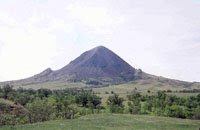
Bear Butte is a sacred site located in the Black Hills, eight miles east of Sturgis South Dakota.
The mountain is sacred to many of the Plains Tribes, including Lakota, Dakota, Nakota, Northern and Southern Cheyenne, Northern and Southern Arapaho. For thousands of years, Tribes have traveled up to hundreds of miles to Bear Butte for their annual ceremonies. Many people today still make their annual journeys to the mountain, from May through August.
Unfortunately, the ongoing struggle to Protect Bear Butte, against the continual encroachment and desecration caused by Sturgis Bike Rally venues, continues today. We have been battling these venues near Bear Butte since 2006. These large biker bars and concert venues continue to expand with further development, hosting huge concerts, bringing tens of thousands of people, vehicles and motorcycles towards Bear Butte.
During the August 2008 Sturgis Rally, Glencoe Campground’s, Rock’n the Rally venue located on Hwy 79 one mile south of Bear Butte, hosted the group KISS bringing absolute chaos to the area. Seven miles and three hours of gridlocked traffic, all headed towards Bear Butte. The same day, Buffalo Chip located off of Hwy 34 & 79, hosted Senator McCain and Kid Rock, multiplying to the chaos. Long time local residents stated they had never seen anything like this before, the worse traffic and chaos they had ever seen out this way.
The following day after the huge concert, a tornado warning swept thru Sturgis causing severe hail and thunderstorms. It was one of the worst thunderstorms in many years, right in the middle of the Sturgis Rally. Two people were actually struck by lightning at Glencoe Campground during this storm. The very campground, that caused all the chaos the previous day, next to Bear Butte. Coincidence, or a clear message from the Creator, you be the judge.
In December 2008, the virtual 600 acre bar, Glencoe Campground and Rock’n the Rally were sold to non residents Sean Clark and Devorah Lopez from California and Arizona, for a reported $8.4 million dollars. There are serious character issues with these individuals, which will be disclosed during the upcoming June 2nd hearing at Meade County Commissioners.
Another attack against the mountain during the 2008 Sturgis Rally, were helicopter flights from four separate Rally venues adjacent to Bear Butte, including Broken Spoke Campground, Buffalo Chip, Ride N Rest Campground and Lamphere Ranch.
In June 2008, Target Logistics, the new owners of Broken Spoke Campground, in their tenacity were quoted in the Rapid City Journal regarding the helicopter rides, stating "If someone asks to fly over Bear Butte, we'd take them unless it's not allowed." After several months of battling against it, publicly opposing the issue with our media campaign, working with FAA, and during the Rally physically being on the ground talking with these pilots, we were able to put a stop to flights over the mountain. After a huge fight regarding this issue, Broken Spoke finally stated they would not be flying over the mountain, and their helicopter pilot never showed up during the Rally. Three of the venues continued to offer flights, the pilots agreed to stay away from flying over the mountain.
The desecration from these venues worsens each year, with what they bring to the sacred mountain, Bear Butte. The disrespect is evidenced with loud music heard for miles, huge concerts, strobe lights, helicopters, motorcycle traffic, pyrotechnic firework shows, lude behavior, drunkenness and a half a million people, within less than a few miles of one of this nation’s most sacred places, Bear Butte.
People often ask, how can they get away with this and why isn’t the local governments doing anything about it? The simple answer is called greed, it is yet another sign of the times, a modern day disease that has consumed people. It continues to feed upon today’s money hungry corporate America, and a local county that refuses to take a stand to protect a sacred site and historical landmark. The bottom line is the tourism, promoting the Rally and adult entertainment in these venues, supersedes any Native American religious beliefs, our spirituality, the sacredness and tranquility of the mountain.
Laws were created and are in place to protect our religious rights, Including, The American Indian Freedom of Religion Act of 1978, Executive Order 13007
Protection and Accommodation of access to Indian Sacred Sites, and Native American Free Exercise of Religion Act of 1993, these laws are continually violated by the decisions made by the Meade County Commissioners and these venues.
In last years Meade County Commissioners hearing, I proposed a question asking for clarification on the Commissioners definitions of a “church.” Commissioner Robert Mallow responded to my questioning, stating that Bear Butte is NOT considered a “church” under their definition, that he was not going to debate religion with me.
Thousands of years of Tribal Nations coming here to pray, to fast, for healing and for guidance apparently doesn’t met their standards for classifying the mountain as a church. These statements were not only insulting, but demoralizing to an entire people’s spirituality and belief system.
As a local resident, I wonder what desecration the mountain will be subjected to this year, praying there will be a way to stop it. We have to continue to speak out and oppose what is occurring at all of our sacred places, if we sit back and accept the destruction, our way of life will fade away in a memory long so forgotten.
There have been many ups and downs in this issue, with many losses, but also a few victories. Each year there has been progress in these efforts, creating awareness for the issue, gaining support from across the country especially within the biker communities. The word is reaching out to the bikers about our plight to Protect Bear Butte, thru our ongoing efforts with the Bikers for Bear Butte campaign, which has been very successful thus far. Last year, we found that the bikers themselves were discussing the issue and helping us spread the word in a positive way, about the protection efforts. Education is a critical tool in order to help make a difference.
Many people, Native and non Native attend the Rally to participate in the events, we respectfully ask everyone to please remember the plight, to Protect Bear Butte and not endorse, patronize and participate in these venues surrounding Bear Butte. No matter how much you may want to see your favorite bands playing at these Rally venues, please remember these concerts surrounding Bear Butte are violating the sacred mountain! Help us take a stand against these Rally venues that continue to disrespect Bear Butte and its spiritual and historical significance.
We would like to ask each and every one of you, to assist us with the Protect Bear Butte struggle by helping spread the word!
Protect Sacred Sites Indigenous People, One Nation is a grass roots organization, working towards the protection of sacred sites across the country. Our organization has been actively involved with the ongoing struggle to Protect Bear Butte for many years. Our organization is currently leading the campaign regarding opposing the new developments and further expansions at Bear Butte.
Visit our main website at www.protectsacredsites.org and our dedicated website for the Bear Butte struggle at www.protectbearbutte.com .
Monday, May 25, 2009

Wednesday, May 6, 2009
Airport dig yields new anthropological discovery
Airport dig yields new anthropological discovery
Thursday, 30 April 2009
Depiction of a palisaded village from 1100 A.D. Archaeologist Tasha Benyshek was unaware of the existence of such structures in this time period.
By Marla Dalrymple & Tony Wheeler
Staff Writers
A significant historical discovery was made last week when archaeologists at the site of the proposed Macon County Airport runway extension discovered two palisaded villages, circa 1100 A.D.
“We had no idea there were palisaded villages in 1100 A.D.,” said Tasha Benyshek, senior archaeologist on the project with TRC Solutions.
Benyshek has been working at the site for several weeks, removing top soil and performing preliminary mapping of archaeological features. Her crew was hired to perform artifact removal and data recovery on a portion of the area slated for a runway extension.
The Macon County Airport is located in Iotla Valley on property that was once apparently home to several native peoples. Artifacts found on site date back as early as 2000 B.C., said Benyshek.
Two areas that were opened last week revealed features including post holes encircling structures.
The evidence suggests that vertical fences were used to fortify homesteads nearly one thousand years ago.
Benyshek called the discovery a rare find, citing few instances where such palisades were ever documented. “It’s a little known time period,” she said. “There are so many posts and features in that area.”
Most of what the archaeological crew has come across at the site dates to the Woodland Period, 500 A.D. Structures, storage and cooking pits have all been found.
Two palisaded villages date to 1100 A.D. complete with structures. The next period evidenced on the property is the Middle Qualla period, 1600-1750 A.D, with structures and pit features.
The crew will start systematically documenting structures and excavating pit features. “It is so dense,” said Benyshek, “it will take time. There’s quite a bit to do.”
The information gleaned will help scientists understand how people lived thousands of years ago. Benyshek said it will be interesting to learn if people lived in individual farmsteads, villages or compact villages during the different time periods.
The settlement patterns have been especially enlightening at the Iotla site, she said, providing vital clues about how villages were set up.
The two fortified villages, said Benyshek, were probably meant to keep people safe from something. “During some time periods, people felt the need to close themselves in,” said Benyshek.
Evidence can also provide clues to what people ate, what tools they used and what activities they participated in.
“It will be interesting to see what else evolves,” said Benyshek of the site.
The runway extension has been a source of controversy as some area residents have voiced concern over the historical and cultural significance of the site at county meetings.
Officials involved have stated that the extension will not only improve airport safety but may also help bring jobs to the area.
Cowee resident and Wild- South Cultural Heritage Director Lamar Marshall said that the new discovery substantiates the claims that the significance of the site was “glossed over” by agencies such as the State Historic Preservation Office, the Federal Aviation Administration and the Macon County Airport Authority.
“The airport expansion is a gross violation of taxpayer trust, a waste of taxpayer money for special interests, a slap in the face to the Cherokee Nation and their dead that are buried there, and a tragedy for the families and property owners of the Iotla Community,” said Marshall. “There appears to be a trail of special interests that could lead back to elite entities that will benefit from this ridiculous example of corporate welfare.”
Marshall has contacted an attorney on the grounds that violations have already occurred in regard to the extension and its preparations. Marshall said, “The people of Macon County and the Cherokee Nation will not be steamrolled without a fight.”
Airport Authority Meeting
Not much was on the agenda for the regular meeting of the Macon County Airport Authority on Tuesday, April 28 – mainly the election of officers to serve the next two years and an executive session to discuss contractual matters. Though the meetings have always been open to the public and always will be, until recently they were rarely attended by anyone other than authority members or the media. That has not been the case lately. Seven visitors showed up on Tuesday thinking they might have a question and answer session with the authority.
The authority did allow for a public comment period during a packed house at the last meeting, though some of the questions posed would have to be answered at a later time, said Chairman Milles Gregory. “The board is being as accommodating as it can by allowing this public discussion today,” Franklin Mayor Joe Collins said. Collins serves as a lawyer for the authority. “This isn’t a public hearing; we don’t have to do this. But realistically, it is always better to let the people be heard.”
At Tuesday’s meeting, four of the visitors signed up to speak during the public comment period and were given three minutes each to air their thoughts. Lucy Meadows Smarr had a few questions she wanted answered. “Specifically, I want to know what type of permanent jobs will be provided. In conversations, you’ve said the airport runway extension will bring in a lot of jobs. I want to know specifically,” she said.
Collins replied, “On behalf of the authority, this is a public comment session, it’s not a back and forth. You have the right to pose questions, but it’s not the job of the authority to provide feedback.
“Well, how can you get these answers?” Smarr asked.
Gregory told her, and the others wanting to speak, to submit the questions in writing to the authority secretary, Teresa McDowell, and he would provide an answer by mail.
Smarr also wanted to know about the petition against the runway extension. “I’d like to know how many are against the extension and who they are,” she said. She commented on the time of day the authority meetings are held, 4 p.m. “Most people are at work and can’t attend. How can we address changing the time of the meetings?”
“We’ll get an answer to you,” Gregory said.
Debby Boots addressed the authority next. Her comments concerned an article she read about the Department of Fish and Wildlife where they stated they had not been involved in discussions with the authority about the runway extension since 2002. Critical wildlife habitat is located downstream of the project and Boots wanted to know why Fish and Wildlife wasn’t involved.
“The board can speak if they like, but again, this is a public comment session. It’s designed for you all to give comments to the board, not a question and answer session,” Collins said.
Dolly Reed stepped up and asked about the 100 percent data recovery at the site. Gregory explained that they are not doing 100 percent recovery. On 3.5 acres, they are doing stripping, mapping, and identifying. She then asked what type of jets would be landing there and Gregory replied they would be the same types as are landing now.
Norm Roberts, a former authority member, gave a presentation on the instrument approach system and how important it is to the airport. Due to recent technological advances like GPS, the airport is now part of the Air Traffic Control System, and some flights can be monitored from Atlanta. He praised the authority members for all of the hard work they’ve been doing.
With more praise came Patricia Stoker. She lives on McCall Circle near the airstrip, she said. “I love the airport. When I first moved here people would tell me ‘Oh, be careful because they're going to expand the airport and there’s going to be all kinds of cargo and big casino jets coming in' and I said ‘Oh. Oh, good.’”
She said she was definitely for the expansion and is glad it’s finally happening. “I’d love to see this place become a tourist destination for private aircraft,” she said.
The authority then went on to business. They decided to send a draft budget to the Board of Commissioners totaling $47,000. This is the amount they received last year and kept the proposal at the same figure due to the economy. The budget is mostly for operating expenses, said Treasurer Pete Haithcock.
Milles Gregory was reelected as chairman, Harold Corbin as vice-chair, and Pete Haithcock as treasurer.
http://www.maconnews.com/index.php?option=com_content&task=view&id=4607&Itemid=34
Thursday, 30 April 2009
Depiction of a palisaded village from 1100 A.D. Archaeologist Tasha Benyshek was unaware of the existence of such structures in this time period.
By Marla Dalrymple & Tony Wheeler
Staff Writers
A significant historical discovery was made last week when archaeologists at the site of the proposed Macon County Airport runway extension discovered two palisaded villages, circa 1100 A.D.
“We had no idea there were palisaded villages in 1100 A.D.,” said Tasha Benyshek, senior archaeologist on the project with TRC Solutions.
Benyshek has been working at the site for several weeks, removing top soil and performing preliminary mapping of archaeological features. Her crew was hired to perform artifact removal and data recovery on a portion of the area slated for a runway extension.
The Macon County Airport is located in Iotla Valley on property that was once apparently home to several native peoples. Artifacts found on site date back as early as 2000 B.C., said Benyshek.
Two areas that were opened last week revealed features including post holes encircling structures.
The evidence suggests that vertical fences were used to fortify homesteads nearly one thousand years ago.
Benyshek called the discovery a rare find, citing few instances where such palisades were ever documented. “It’s a little known time period,” she said. “There are so many posts and features in that area.”
Most of what the archaeological crew has come across at the site dates to the Woodland Period, 500 A.D. Structures, storage and cooking pits have all been found.
Two palisaded villages date to 1100 A.D. complete with structures. The next period evidenced on the property is the Middle Qualla period, 1600-1750 A.D, with structures and pit features.
The crew will start systematically documenting structures and excavating pit features. “It is so dense,” said Benyshek, “it will take time. There’s quite a bit to do.”
The information gleaned will help scientists understand how people lived thousands of years ago. Benyshek said it will be interesting to learn if people lived in individual farmsteads, villages or compact villages during the different time periods.
The settlement patterns have been especially enlightening at the Iotla site, she said, providing vital clues about how villages were set up.
The two fortified villages, said Benyshek, were probably meant to keep people safe from something. “During some time periods, people felt the need to close themselves in,” said Benyshek.
Evidence can also provide clues to what people ate, what tools they used and what activities they participated in.
“It will be interesting to see what else evolves,” said Benyshek of the site.
The runway extension has been a source of controversy as some area residents have voiced concern over the historical and cultural significance of the site at county meetings.
Officials involved have stated that the extension will not only improve airport safety but may also help bring jobs to the area.
Cowee resident and Wild- South Cultural Heritage Director Lamar Marshall said that the new discovery substantiates the claims that the significance of the site was “glossed over” by agencies such as the State Historic Preservation Office, the Federal Aviation Administration and the Macon County Airport Authority.
“The airport expansion is a gross violation of taxpayer trust, a waste of taxpayer money for special interests, a slap in the face to the Cherokee Nation and their dead that are buried there, and a tragedy for the families and property owners of the Iotla Community,” said Marshall. “There appears to be a trail of special interests that could lead back to elite entities that will benefit from this ridiculous example of corporate welfare.”
Marshall has contacted an attorney on the grounds that violations have already occurred in regard to the extension and its preparations. Marshall said, “The people of Macon County and the Cherokee Nation will not be steamrolled without a fight.”
Airport Authority Meeting
Not much was on the agenda for the regular meeting of the Macon County Airport Authority on Tuesday, April 28 – mainly the election of officers to serve the next two years and an executive session to discuss contractual matters. Though the meetings have always been open to the public and always will be, until recently they were rarely attended by anyone other than authority members or the media. That has not been the case lately. Seven visitors showed up on Tuesday thinking they might have a question and answer session with the authority.
The authority did allow for a public comment period during a packed house at the last meeting, though some of the questions posed would have to be answered at a later time, said Chairman Milles Gregory. “The board is being as accommodating as it can by allowing this public discussion today,” Franklin Mayor Joe Collins said. Collins serves as a lawyer for the authority. “This isn’t a public hearing; we don’t have to do this. But realistically, it is always better to let the people be heard.”
At Tuesday’s meeting, four of the visitors signed up to speak during the public comment period and were given three minutes each to air their thoughts. Lucy Meadows Smarr had a few questions she wanted answered. “Specifically, I want to know what type of permanent jobs will be provided. In conversations, you’ve said the airport runway extension will bring in a lot of jobs. I want to know specifically,” she said.
Collins replied, “On behalf of the authority, this is a public comment session, it’s not a back and forth. You have the right to pose questions, but it’s not the job of the authority to provide feedback.
“Well, how can you get these answers?” Smarr asked.
Gregory told her, and the others wanting to speak, to submit the questions in writing to the authority secretary, Teresa McDowell, and he would provide an answer by mail.
Smarr also wanted to know about the petition against the runway extension. “I’d like to know how many are against the extension and who they are,” she said. She commented on the time of day the authority meetings are held, 4 p.m. “Most people are at work and can’t attend. How can we address changing the time of the meetings?”
“We’ll get an answer to you,” Gregory said.
Debby Boots addressed the authority next. Her comments concerned an article she read about the Department of Fish and Wildlife where they stated they had not been involved in discussions with the authority about the runway extension since 2002. Critical wildlife habitat is located downstream of the project and Boots wanted to know why Fish and Wildlife wasn’t involved.
“The board can speak if they like, but again, this is a public comment session. It’s designed for you all to give comments to the board, not a question and answer session,” Collins said.
Dolly Reed stepped up and asked about the 100 percent data recovery at the site. Gregory explained that they are not doing 100 percent recovery. On 3.5 acres, they are doing stripping, mapping, and identifying. She then asked what type of jets would be landing there and Gregory replied they would be the same types as are landing now.
Norm Roberts, a former authority member, gave a presentation on the instrument approach system and how important it is to the airport. Due to recent technological advances like GPS, the airport is now part of the Air Traffic Control System, and some flights can be monitored from Atlanta. He praised the authority members for all of the hard work they’ve been doing.
With more praise came Patricia Stoker. She lives on McCall Circle near the airstrip, she said. “I love the airport. When I first moved here people would tell me ‘Oh, be careful because they're going to expand the airport and there’s going to be all kinds of cargo and big casino jets coming in' and I said ‘Oh. Oh, good.’”
She said she was definitely for the expansion and is glad it’s finally happening. “I’d love to see this place become a tourist destination for private aircraft,” she said.
The authority then went on to business. They decided to send a draft budget to the Board of Commissioners totaling $47,000. This is the amount they received last year and kept the proposal at the same figure due to the economy. The budget is mostly for operating expenses, said Treasurer Pete Haithcock.
Milles Gregory was reelected as chairman, Harold Corbin as vice-chair, and Pete Haithcock as treasurer.
http://www.maconnews.com/index.php?option=com_content&task=view&id=4607&Itemid=34
Sunday, April 26, 2009
Bear Butte forum calls for understanding
Bear Butte forum calls for understanding
By Jason Gross, Meade County Times-Tribune staff | Sunday, April 26, 2009
STURGIS -- People who consider Bear Butte a sacred site met for three hours Saturday morning to share their views on issues they fear could damage the peaceful atmosphere there and the use of the park as a place of worship for Native Americans.
One of those is the Meade County fire ban, imposed each July during the Sturgis motorcycle rally. Bear Butte State Park Manager Jim Jandreau explained that no campfires are allowed because of potential wildfire danger.
Ceremonial rites are affected, according to Jandreau. He encouraged those concerned to visit with fire officials, Game, Fish & Parks personnel and others about the issue.
"The intent was a safety factor," Jandreau said of the yearly ban. "It has nothing to do with our spirituality or ceremonial ways."
Janet Clairmont said she will address the Meade County Commission on Wednesday, May 6. She will make a request for Bear Butte Lodge fire pit approval, according to the meeting agenda.
A proposed annexation of land east of Sturgis is also a concern.
Uma Black Crow Wilkinson, who said protection of Bear Butte's land and water are important to her, said not many people are aware of the proposal and called for more meetings about that and other issues surrounding the butte.
Area rancher Ross Lamphere addressed that annexation, saying if the effort succeeds, city limits will be about 1/4-mile north of Bear Butte Creek along S.D. Highway 79.
Lamphere estimates that boundary would be less than 3 miles from Bear Butte, and said the city, through state statute, will have jurisdiction for platting purposes.
At least four parcels around the butte are for sale. Meeting attendee Nancy Hilding said one of those, the Grubl property, occupies 120 acres and has been on sale for two or three years.
"Most of the legislators were receptive to purchase of land," Sen. Jim Bradford, R-Pine Ridge, said, referring to efforts to have the state buy some of the land to create a buffer zone. He said some state funds could be available because the state received some stimulus funding.
Bradford emphasized he attended the meeting to get the people's perspective. "The legislators are ready," he said. "They know they want to do something."
Native people need to be in a primary consultation role for butte use and management, Black Crow Wilkinson said. She said Natives are consulted but need to be in more of a leadership role.
"The sacredness of that site should probably be considered above and beyond any recreational use," Black Crow Wilkinson said.
Bear Butte is one of seven Black Hills sites sacred to the Lakota, elder Marie Randall said.
Randall called for understanding about how people can work together. "We need to learn to do more sharing than controlling," Randall said.
http://www.rapidcityjournal.com/articles/2009/04/26/news/local/doc49f3eb8c52743683964578.txt
By Jason Gross, Meade County Times-Tribune staff | Sunday, April 26, 2009
STURGIS -- People who consider Bear Butte a sacred site met for three hours Saturday morning to share their views on issues they fear could damage the peaceful atmosphere there and the use of the park as a place of worship for Native Americans.
One of those is the Meade County fire ban, imposed each July during the Sturgis motorcycle rally. Bear Butte State Park Manager Jim Jandreau explained that no campfires are allowed because of potential wildfire danger.
Ceremonial rites are affected, according to Jandreau. He encouraged those concerned to visit with fire officials, Game, Fish & Parks personnel and others about the issue.
"The intent was a safety factor," Jandreau said of the yearly ban. "It has nothing to do with our spirituality or ceremonial ways."
Janet Clairmont said she will address the Meade County Commission on Wednesday, May 6. She will make a request for Bear Butte Lodge fire pit approval, according to the meeting agenda.
A proposed annexation of land east of Sturgis is also a concern.
Uma Black Crow Wilkinson, who said protection of Bear Butte's land and water are important to her, said not many people are aware of the proposal and called for more meetings about that and other issues surrounding the butte.
Area rancher Ross Lamphere addressed that annexation, saying if the effort succeeds, city limits will be about 1/4-mile north of Bear Butte Creek along S.D. Highway 79.
Lamphere estimates that boundary would be less than 3 miles from Bear Butte, and said the city, through state statute, will have jurisdiction for platting purposes.
At least four parcels around the butte are for sale. Meeting attendee Nancy Hilding said one of those, the Grubl property, occupies 120 acres and has been on sale for two or three years.
"Most of the legislators were receptive to purchase of land," Sen. Jim Bradford, R-Pine Ridge, said, referring to efforts to have the state buy some of the land to create a buffer zone. He said some state funds could be available because the state received some stimulus funding.
Bradford emphasized he attended the meeting to get the people's perspective. "The legislators are ready," he said. "They know they want to do something."
Native people need to be in a primary consultation role for butte use and management, Black Crow Wilkinson said. She said Natives are consulted but need to be in more of a leadership role.
"The sacredness of that site should probably be considered above and beyond any recreational use," Black Crow Wilkinson said.
Bear Butte is one of seven Black Hills sites sacred to the Lakota, elder Marie Randall said.
Randall called for understanding about how people can work together. "We need to learn to do more sharing than controlling," Randall said.
http://www.rapidcityjournal.com/articles/2009/04/26/news/local/doc49f3eb8c52743683964578.txt
Tuesday, April 7, 2009
Bear Butte Mountain: A beautiful, sacred site in South Dakota
Bear Butte Mountain: A beautiful, sacred site in South Dakota
By Vincent Schilling, Today correspondent
Story Published: Apr 7, 2009
STURGIS, S.D. – Just outside Sturgis is the Sacred Mato Paha or Bear Butte Mountain. Bear Butte, a 4,426-foot mountain, rests on the northernmost part of the Black Hills. It has been a sacred site to the Northern Plains Indians for thousands of years.
Today, Bear Butte Mountain attracts visitors from all over the world. Bear Butte is still a place for traditional American Indian ceremonies. When hiking up the mountain on designated trails, it’s common to see trees bestowed with sacred tobacco offerings wrapped in colorful cloth as representations of prayers to the Creator.
According to a Lakota story, long ago a giant bear and a water monster similar to a dinosaur, battled for many days and nights. Because of the fierce battle, valleys filled with blood. The giant bear was wounded by the sea monster’s jagged teeth and the bear crawled away to die. The ground erupted, darkness covered the earth, and fire, ashes, water and mud went into the sky.
“You cannot take away the spirituality of this mountain, which is its true draw. That is its true magnificence. For everybody that comes here, I believe it is different. No two people that come here have the same experience.”
-- Jim Jandreau, Bear Butte Park manager
The story continues with the bear’s body disappearing, and in place of the bear was a hill in the shape of the bear’s sleeping body which continued to rumble and smolder.
To the native Lakota, Bear Butte has long been a place to hold council meetings and ceremonies such as vision quests and Sun dances. In the mid-1800s the father of Crazy Horse, a great holy man, climbed Bear Butte to seek spiritual guidance on a vision quest.
It has been said that Wakantanka appeared before the holy man in the form of a bear and gave him power to overcome obstacles and defeat his enemies. Crazy Horse’s father asked that the same gifts also be given to his son. After this bestowment, the mountain was known as Bear Butte or Mata Paha.
The history of Bear Butte is rich, as well as literal, artifacts dating back 10,000 years have been discovered near it. Tipi rings have been found along Bear Butte’s perimeter, as well as rocks the Sioux once placed along the mountain’s summit to establish claims to the land, to mark distance
or to offer prayers.
Many note a profound spiritual connection when visiting the site.
Jim Jandreau, who was born and raised on the Lower Brule Sioux in South Dakota is the first American Indian park manager at Bear Butte State park. Jandreau admits that although the sites of Bear Butte are majestic, the profound connection to spiritual matters are much more prevalent.
“You cannot take away the spirituality of this mountain, which is its true draw. That is its true magnificence. For everybody that comes here, I believe it is different. No two people that come here have the same experience.”
Jandreau said Bear Butte is open to anyone who wishes to visit.
“The medicine men that practice here and bring their people here to worship will all tell you that this mountain is not exclusive to only Indian people praying. Anybody who comes in the right mind and the right heart with prayer on their lips, with humbleness is welcome. When you go to that area with that humbleness then we are all truly equal.”
Bear Butte has long been the subject of preserving sacred sites by American Indian artists. Award-winning American Indian musician Michael Bucher, Cherokee, whose song off his “Seven” album entitled “Dirty Water” fights for the preservation of the site.
“I went to Bear Butte Mountain and climbed along the trails to look at the view and to feel the sanctity of the place. You can see buffalo at the base of Bear Butte and see prayer flags all over the trees. They are tobacco cloth offerings. Some of the multi-colored ribbons are old and faded and some of the flags are on trees that have been uprooted by the weather. It all adds to the holiness of the place that so many prayers for hundreds of years have been prayed there,”
Bucher said.
Both Bucher and Jandreau said that though visitors may go for the simple beauty of Bear Butte or to hike the trails that were once traversed by Indian people so many years ago, visitors leave with much more than they may have anticipated.
“Everyone that comes off this mountain, it doesn’t matter if they are Indian or non-Indian or what tribe they are from, when they come away from this mountain, and go to see that medicine man interpreter about their vision, none of them will ever be the same,” Jandreau said. “People who come here are changed spiritually and morally. They may not know it when they drive out of the gate, but that stays with them.”
By Vincent Schilling, Today correspondent
Story Published: Apr 7, 2009
STURGIS, S.D. – Just outside Sturgis is the Sacred Mato Paha or Bear Butte Mountain. Bear Butte, a 4,426-foot mountain, rests on the northernmost part of the Black Hills. It has been a sacred site to the Northern Plains Indians for thousands of years.
Today, Bear Butte Mountain attracts visitors from all over the world. Bear Butte is still a place for traditional American Indian ceremonies. When hiking up the mountain on designated trails, it’s common to see trees bestowed with sacred tobacco offerings wrapped in colorful cloth as representations of prayers to the Creator.
According to a Lakota story, long ago a giant bear and a water monster similar to a dinosaur, battled for many days and nights. Because of the fierce battle, valleys filled with blood. The giant bear was wounded by the sea monster’s jagged teeth and the bear crawled away to die. The ground erupted, darkness covered the earth, and fire, ashes, water and mud went into the sky.
“You cannot take away the spirituality of this mountain, which is its true draw. That is its true magnificence. For everybody that comes here, I believe it is different. No two people that come here have the same experience.”
-- Jim Jandreau, Bear Butte Park manager
The story continues with the bear’s body disappearing, and in place of the bear was a hill in the shape of the bear’s sleeping body which continued to rumble and smolder.
To the native Lakota, Bear Butte has long been a place to hold council meetings and ceremonies such as vision quests and Sun dances. In the mid-1800s the father of Crazy Horse, a great holy man, climbed Bear Butte to seek spiritual guidance on a vision quest.
It has been said that Wakantanka appeared before the holy man in the form of a bear and gave him power to overcome obstacles and defeat his enemies. Crazy Horse’s father asked that the same gifts also be given to his son. After this bestowment, the mountain was known as Bear Butte or Mata Paha.
The history of Bear Butte is rich, as well as literal, artifacts dating back 10,000 years have been discovered near it. Tipi rings have been found along Bear Butte’s perimeter, as well as rocks the Sioux once placed along the mountain’s summit to establish claims to the land, to mark distance
or to offer prayers.
Many note a profound spiritual connection when visiting the site.
Jim Jandreau, who was born and raised on the Lower Brule Sioux in South Dakota is the first American Indian park manager at Bear Butte State park. Jandreau admits that although the sites of Bear Butte are majestic, the profound connection to spiritual matters are much more prevalent.
“You cannot take away the spirituality of this mountain, which is its true draw. That is its true magnificence. For everybody that comes here, I believe it is different. No two people that come here have the same experience.”
Jandreau said Bear Butte is open to anyone who wishes to visit.
“The medicine men that practice here and bring their people here to worship will all tell you that this mountain is not exclusive to only Indian people praying. Anybody who comes in the right mind and the right heart with prayer on their lips, with humbleness is welcome. When you go to that area with that humbleness then we are all truly equal.”
Bear Butte has long been the subject of preserving sacred sites by American Indian artists. Award-winning American Indian musician Michael Bucher, Cherokee, whose song off his “Seven” album entitled “Dirty Water” fights for the preservation of the site.
“I went to Bear Butte Mountain and climbed along the trails to look at the view and to feel the sanctity of the place. You can see buffalo at the base of Bear Butte and see prayer flags all over the trees. They are tobacco cloth offerings. Some of the multi-colored ribbons are old and faded and some of the flags are on trees that have been uprooted by the weather. It all adds to the holiness of the place that so many prayers for hundreds of years have been prayed there,”
Bucher said.
Both Bucher and Jandreau said that though visitors may go for the simple beauty of Bear Butte or to hike the trails that were once traversed by Indian people so many years ago, visitors leave with much more than they may have anticipated.
“Everyone that comes off this mountain, it doesn’t matter if they are Indian or non-Indian or what tribe they are from, when they come away from this mountain, and go to see that medicine man interpreter about their vision, none of them will ever be the same,” Jandreau said. “People who come here are changed spiritually and morally. They may not know it when they drive out of the gate, but that stays with them.”
Monday, March 30, 2009
Ancient bones found at UCSD back in dispute
Ancient bones found at UCSD back in dispute
By Steve Schmidt (Contact) Union-Tribune Staff Writer
2:00 a.m. March 20, 2009
Background: San Diego County's Kumeyaay tribes had asked UCSD to turn over skeletal remains unearthed near the chancellor's home in La Jolla. Local American Indians say the remains are part of their ancestry. But UC researchers say there's not enough evidence to link the nearly 10,000-year-old bones to Kumeyaay culture.
What's changing: UCSD is seeking federal approval to hand over the bones to the tribes, even though the remains are classified as “culturally unidentifiable.”
The future: A National Park Service board is scheduled to consider the request in May.
Skeletal remains unearthed at the University of California San Diego more than 30 years ago have sparked a fresh debate between the interests of science and culture – and the university is caught in the crossfire.
Administrators at the La Jolla campus want federal approval to turn over bones found near the chancellor's seaside home to the region's Kumeyaay tribes. Unearthed in 1976, the nearly 10,000-year-old remains are believed to be among the oldest found in the Western Hemisphere.
But to UCSD's chagrin, the request has generated criticism from both major parties in the dispute – the Kumeyaay and UC researchers.
Both are asking the university to drop the request, but for conflicting reasons.
Two panels of university researchers say there's not enough evidence to link the bones to Kumeyaay culture, so they should remain available for research.
And the Indian bands, which formally requested the bones three years ago, now say they don't want them as long as researchers consider them “culturally unidentifiable,” calling the designation disrespectful.
“The Kumeyaay want their ancestors back, and they want to bury them appropriately,” Michele Fahley, an attorney representing the Kumeyaay Cultural Repatriation Committee, said yesterday.
Gary Matthews, UCSD vice chancellor for resource management,said that he was perplexed by the double-barreled opposition but that the university will stick with its request for now.
“We're really trying to do the right thing . . . and we've been criticized by both sides,” Matthews said. “What are we supposed to do?”
The remains are in a safe at the San Diego Archaeological Center, near Escondido. They consist of three sets of skeletal remains, including those of a young man and older woman buried together. Scientists believe the bones are between 8,977 and 9,603years old.
Kumeyaay leaders had asked UCSD to turn over the bones for reburial, saying their people have been in the region since the “beginning.”
“Leave them be. They are not here for your exploitation,” Louie Guassac, a Sycuan band member, said in a recent interview.
Fahley, an attorney with California Indian Legal Services in Escondido, said the tribes provided UCSD with evidence from scholars showing that the remains are linked to the modern-day Kumeyaay.
To argue otherwise “is disrespectful to the tribes and their ancestors,” she said.
But a panel chaired by UCSD anthropologist Margaret Schoeninger concluded last year that the bones can't be identified as Kumeyaay. A study conducted for the panel by a San Diego State University anthropologist identified the remains as American Indian but didn't link them to any particular tribe, Schoeninger said.
A systemwide University of California research committee reached a similar conclusion.
Schoeninger said handing over the remains would undermine scientific research because further study of the bones could reveal, with the development of new research technology in fields such as DNA sequencing, more about the peopling of the New World.
“These skeletons are not materials that can be duplicated in the future,” Schoeninger wrote in a March 5 letter to the UCSD Academic Senate, asking that Chancellor Marye Anne Fox withdraw the university's request.
“Despite more than a century of research, we don't know when the Americas were first populated, by whom they were populated, how people got here, or how many immigrations occurred,” Schoeninger wrote.
Ross Frank, an ethnic-studies professor at UCSD, was part of Schoeninger's panel – and the only member who considered the remains Kumeyaay. He said the archaeological record of the past 10,000 years is uneven, but the bulk of evidence points to a Kumeyaay link.
Also, turning over the bones “is the only appropriate, moral thing to do,” Frank said.
On Feb. 23, Matthews submitted a 37-page request on UCSD's behalf to the National Park Service, asking for a federal review board's support in turning over the bones to the tribes.
“We feel . . . this is the most prudent and responsible step forward,” he said of the university's decision.
The review board, which oversees the Native American Graves Preservation and Repatriation Act, is expected to consider the request at a meeting in late May.
If the panel backs UCSD's request, the issue would land on the desk of Interior Secretary Ken Salazar. A final decision could be made within a few months, said David Tarler, a program administrator based in Washington, D.C.
The act, created in 1990, allows universities, museums and other research institutions to return certain American Indian artifacts to federally recognized tribes that request them.
In several cases, federal officials have permitted the disposition of remains to American Indian groups, even if the bones weren't clearly linked to the tribes.
Kumeyaay representatives weren't ready yesterday to say how they would respond if UCSD continues with its request and wins approval.
Matthews believes scientists have had adequate time to study the remains. He said he's unaware of any formal request from researchers to examine the bones further.
Academic Senate Chairman Dan Donoghue said the university is in a delicate spot as it tries to weigh the legitimate needs of all major players on the issue.
“How do you balance those needs?” Donoghue asked.
Steve Schmidt: (619) 293-1380; steve.schmidt@uniontrib.com
Steve Schmidt: (619) 293-1380; (Contact)
http://www3.signonsandiego.com:80/stories/2009/mar/20/1n20bones002815-ancient-bones-found-ucsd-back-disp/
By Steve Schmidt (Contact) Union-Tribune Staff Writer
2:00 a.m. March 20, 2009
Background: San Diego County's Kumeyaay tribes had asked UCSD to turn over skeletal remains unearthed near the chancellor's home in La Jolla. Local American Indians say the remains are part of their ancestry. But UC researchers say there's not enough evidence to link the nearly 10,000-year-old bones to Kumeyaay culture.
What's changing: UCSD is seeking federal approval to hand over the bones to the tribes, even though the remains are classified as “culturally unidentifiable.”
The future: A National Park Service board is scheduled to consider the request in May.
Skeletal remains unearthed at the University of California San Diego more than 30 years ago have sparked a fresh debate between the interests of science and culture – and the university is caught in the crossfire.
Administrators at the La Jolla campus want federal approval to turn over bones found near the chancellor's seaside home to the region's Kumeyaay tribes. Unearthed in 1976, the nearly 10,000-year-old remains are believed to be among the oldest found in the Western Hemisphere.
But to UCSD's chagrin, the request has generated criticism from both major parties in the dispute – the Kumeyaay and UC researchers.
Both are asking the university to drop the request, but for conflicting reasons.
Two panels of university researchers say there's not enough evidence to link the bones to Kumeyaay culture, so they should remain available for research.
And the Indian bands, which formally requested the bones three years ago, now say they don't want them as long as researchers consider them “culturally unidentifiable,” calling the designation disrespectful.
“The Kumeyaay want their ancestors back, and they want to bury them appropriately,” Michele Fahley, an attorney representing the Kumeyaay Cultural Repatriation Committee, said yesterday.
Gary Matthews, UCSD vice chancellor for resource management,said that he was perplexed by the double-barreled opposition but that the university will stick with its request for now.
“We're really trying to do the right thing . . . and we've been criticized by both sides,” Matthews said. “What are we supposed to do?”
The remains are in a safe at the San Diego Archaeological Center, near Escondido. They consist of three sets of skeletal remains, including those of a young man and older woman buried together. Scientists believe the bones are between 8,977 and 9,603years old.
Kumeyaay leaders had asked UCSD to turn over the bones for reburial, saying their people have been in the region since the “beginning.”
“Leave them be. They are not here for your exploitation,” Louie Guassac, a Sycuan band member, said in a recent interview.
Fahley, an attorney with California Indian Legal Services in Escondido, said the tribes provided UCSD with evidence from scholars showing that the remains are linked to the modern-day Kumeyaay.
To argue otherwise “is disrespectful to the tribes and their ancestors,” she said.
But a panel chaired by UCSD anthropologist Margaret Schoeninger concluded last year that the bones can't be identified as Kumeyaay. A study conducted for the panel by a San Diego State University anthropologist identified the remains as American Indian but didn't link them to any particular tribe, Schoeninger said.
A systemwide University of California research committee reached a similar conclusion.
Schoeninger said handing over the remains would undermine scientific research because further study of the bones could reveal, with the development of new research technology in fields such as DNA sequencing, more about the peopling of the New World.
“These skeletons are not materials that can be duplicated in the future,” Schoeninger wrote in a March 5 letter to the UCSD Academic Senate, asking that Chancellor Marye Anne Fox withdraw the university's request.
“Despite more than a century of research, we don't know when the Americas were first populated, by whom they were populated, how people got here, or how many immigrations occurred,” Schoeninger wrote.
Ross Frank, an ethnic-studies professor at UCSD, was part of Schoeninger's panel – and the only member who considered the remains Kumeyaay. He said the archaeological record of the past 10,000 years is uneven, but the bulk of evidence points to a Kumeyaay link.
Also, turning over the bones “is the only appropriate, moral thing to do,” Frank said.
On Feb. 23, Matthews submitted a 37-page request on UCSD's behalf to the National Park Service, asking for a federal review board's support in turning over the bones to the tribes.
“We feel . . . this is the most prudent and responsible step forward,” he said of the university's decision.
The review board, which oversees the Native American Graves Preservation and Repatriation Act, is expected to consider the request at a meeting in late May.
If the panel backs UCSD's request, the issue would land on the desk of Interior Secretary Ken Salazar. A final decision could be made within a few months, said David Tarler, a program administrator based in Washington, D.C.
The act, created in 1990, allows universities, museums and other research institutions to return certain American Indian artifacts to federally recognized tribes that request them.
In several cases, federal officials have permitted the disposition of remains to American Indian groups, even if the bones weren't clearly linked to the tribes.
Kumeyaay representatives weren't ready yesterday to say how they would respond if UCSD continues with its request and wins approval.
Matthews believes scientists have had adequate time to study the remains. He said he's unaware of any formal request from researchers to examine the bones further.
Academic Senate Chairman Dan Donoghue said the university is in a delicate spot as it tries to weigh the legitimate needs of all major players on the issue.
“How do you balance those needs?” Donoghue asked.
Steve Schmidt: (619) 293-1380; steve.schmidt@uniontrib.com
Steve Schmidt: (619) 293-1380; (Contact)
http://www3.signonsandiego.com:80/stories/2009/mar/20/1n20bones002815-ancient-bones-found-ucsd-back-disp/
UTA shows little respect for Native Americans
UTA shows little respect for Native Americans
By John Florez
Published: Monday, March 30, 2009 12:05 a.m. MDT
Are Utah's Native Americans getting thrown under the bus? I can't believe Utah Transit Authority would do that. However, the Utah Legislature recently passed a bill, HB179, that permits UTA to consider building a FrontRunner station in Draper on a 3,000-year-old Native American archaeological site.
When the legislation was being deliberated, there was no involvement of Native American leaders, whose cultural heritage and spiritual grounds stood to be affected, which is highly concerning. Most disturbing was the Legislature's failure to respond to a letter sent to all lawmakers from Rupert Steele, chairman of the Confederated Tribes of the Goshute Indian Reservation, even after it was introduced from the floor by Sen. Luz Robles, D-Salt Lake. Steele opposed HB179 because, "This site contains evidence of some of my American Indian ancestors and is a very sacred place and we have a very strong spiritual connection with the area. Damage will be irreparable and disrespectful to my ancestry."
According to Chairman Steele, he never received a response from a legislator or a UTA board member, even though a state representative also serves on the UTA board. Such an oversight by a legislative body to a Native American tribe shows disrespect and ignores the voices of those most affected by the legislation. So there is reason to be skeptical about UTA's intent to consider the public's interest and the spirit of state and federal laws created to protect Native American interests.
It seems lawmakers were eager to showcase the rich Utah heritage of Native American culture during the 2002 Winter Games and then forget about the Native Americans until the next time they can serve their political purpose. We take pride in protecting groups from religious persecution, yet seem to be dismissive when it comes to respecting the artifacts sacred to Native Americans. We say we live by the law but often ignore its intent.
UTA administrators have indicated they are very early in the process of making a decision on the site for the Draper station and plan to involve all interested parties in the decision-making. Given the actions taken by the Legislature and UTA representatives, there is reason for concern that the rights and interests of others may be an afterthought. Adding to the skepticism is the perception of conflict of interest of board members precipitated by the Legislature passing a law requiring elected officials be appointed to the UTA board. One of my most rewarding community service experiences was serving on the UTA board, because its focus was on serving the public's interest. It invited public participation and even sought out the smallest voice. I trust the current board members will abide by that core value.
Utahns know the importance of protecting one's heritage, especially when it comes to respecting a people's spiritual grounds and symbols. They are reminders of who we are and our beliefs. Native Americans continue to be an afterthought in the making of public policy. Their silence and respect for the earth and others should not be interpreted as a sign of weakness or not caring, rather as one of pride and struggle to maintain their culture, values and beliefs. UTA board and staff should not seek Native American participation in a token, condescending manner, and as an afterthought, rather as significant members of our community. And lawmakers should be respectful and listen to all citizens and follow the spirit of the laws they are sworn to uphold.
A Utah native, John Florez has founded several Hispanic civil-rights organizations; been on the staff of Sen. Orrin Hatch; served on more than 45 state, local and volunteer boards; and filled White House appointments, including deputy assistant secretary of labor and as a member of the commission on Hispanic education. E-mail: jdflorez@comcast.net.
http://deseretnews.com/article/1,5143,705293963,00.html
By John Florez
Published: Monday, March 30, 2009 12:05 a.m. MDT
Are Utah's Native Americans getting thrown under the bus? I can't believe Utah Transit Authority would do that. However, the Utah Legislature recently passed a bill, HB179, that permits UTA to consider building a FrontRunner station in Draper on a 3,000-year-old Native American archaeological site.
When the legislation was being deliberated, there was no involvement of Native American leaders, whose cultural heritage and spiritual grounds stood to be affected, which is highly concerning. Most disturbing was the Legislature's failure to respond to a letter sent to all lawmakers from Rupert Steele, chairman of the Confederated Tribes of the Goshute Indian Reservation, even after it was introduced from the floor by Sen. Luz Robles, D-Salt Lake. Steele opposed HB179 because, "This site contains evidence of some of my American Indian ancestors and is a very sacred place and we have a very strong spiritual connection with the area. Damage will be irreparable and disrespectful to my ancestry."
According to Chairman Steele, he never received a response from a legislator or a UTA board member, even though a state representative also serves on the UTA board. Such an oversight by a legislative body to a Native American tribe shows disrespect and ignores the voices of those most affected by the legislation. So there is reason to be skeptical about UTA's intent to consider the public's interest and the spirit of state and federal laws created to protect Native American interests.
It seems lawmakers were eager to showcase the rich Utah heritage of Native American culture during the 2002 Winter Games and then forget about the Native Americans until the next time they can serve their political purpose. We take pride in protecting groups from religious persecution, yet seem to be dismissive when it comes to respecting the artifacts sacred to Native Americans. We say we live by the law but often ignore its intent.
UTA administrators have indicated they are very early in the process of making a decision on the site for the Draper station and plan to involve all interested parties in the decision-making. Given the actions taken by the Legislature and UTA representatives, there is reason for concern that the rights and interests of others may be an afterthought. Adding to the skepticism is the perception of conflict of interest of board members precipitated by the Legislature passing a law requiring elected officials be appointed to the UTA board. One of my most rewarding community service experiences was serving on the UTA board, because its focus was on serving the public's interest. It invited public participation and even sought out the smallest voice. I trust the current board members will abide by that core value.
Utahns know the importance of protecting one's heritage, especially when it comes to respecting a people's spiritual grounds and symbols. They are reminders of who we are and our beliefs. Native Americans continue to be an afterthought in the making of public policy. Their silence and respect for the earth and others should not be interpreted as a sign of weakness or not caring, rather as one of pride and struggle to maintain their culture, values and beliefs. UTA board and staff should not seek Native American participation in a token, condescending manner, and as an afterthought, rather as significant members of our community. And lawmakers should be respectful and listen to all citizens and follow the spirit of the laws they are sworn to uphold.
A Utah native, John Florez has founded several Hispanic civil-rights organizations; been on the staff of Sen. Orrin Hatch; served on more than 45 state, local and volunteer boards; and filled White House appointments, including deputy assistant secretary of labor and as a member of the commission on Hispanic education. E-mail: jdflorez@comcast.net.
http://deseretnews.com/article/1,5143,705293963,00.html
Sunday, March 29, 2009
NAGPRA: Writing and Managing a Successful Grant
NAGPRA: Writing and Managing a Successful Grant
Seattle, Washington
May 20-21, 2009
Purpose of the Seminar:
The National NAGPRA Program offers grants to assist museums, Indian tribes, Native Hawaiian organizations and Alaska Native villages and corporations with the NAGPRA process. Review practical tools and case studies of successful grant applications and projects. Learn how to assess the needs of a NAGPRA program, identify fundable projects, and write and manage a successful grant.
The seminar instructors are Sangita Chari, Grants Coordinator, National NAGPRA Program, and Jan I. Bernstein, Director, Bernstein & Associates.
Who May Attend:
The seminar is open to participants from Native American tribes, Alaska Native villages and corporations, Native Hawaiian organizations, museums, and individuals interested in NAGPRA grants.
How to Register:
Download and complete the registration form available at www.npi.org.
Cost and Funding Sources:
The cost of registration for the seminar is $375 before April 8, $425 regular rate, $175 student.
· If you are a representative of a Native American tribe, Alaska Native village or corporation, or Native Hawaiian organization, the National NAGPRA Program has scholarships available for registration. The scholarship application form is available at www.npi.org.
· NEW GRANTS for accommodations, travel and per diem!!!
If you are affiliated with a tribe, Native Hawaiian organization, or Alaska Native village or corporation and you are committed to attending the entire seminar, the National Museum of the American Indian is offering a $1,000 grant per applicant for the first 15 people who qualify. The grant is payable upon completion of the seminar to offset the costs for accommodations, travel and per diem to attend the workshop. No application necessary. Please contact the National Preservation Institute at info@npi.org or 703.765.0100.
· Additional funding opportunities are available at www.npi.org.
For more information contact:
National Preservation Institute
P.O Box 1702
Alexandria, VA 22313-1702
703.765.0100
info@npi.org
This training is offered through a partnership of the National NAGPRA Program, the National Preservation Institute and the National Museum of the American Indian.
Seattle, Washington
May 20-21, 2009
Purpose of the Seminar:
The National NAGPRA Program offers grants to assist museums, Indian tribes, Native Hawaiian organizations and Alaska Native villages and corporations with the NAGPRA process. Review practical tools and case studies of successful grant applications and projects. Learn how to assess the needs of a NAGPRA program, identify fundable projects, and write and manage a successful grant.
The seminar instructors are Sangita Chari, Grants Coordinator, National NAGPRA Program, and Jan I. Bernstein, Director, Bernstein & Associates.
Who May Attend:
The seminar is open to participants from Native American tribes, Alaska Native villages and corporations, Native Hawaiian organizations, museums, and individuals interested in NAGPRA grants.
How to Register:
Download and complete the registration form available at www.npi.org.
Cost and Funding Sources:
The cost of registration for the seminar is $375 before April 8, $425 regular rate, $175 student.
· If you are a representative of a Native American tribe, Alaska Native village or corporation, or Native Hawaiian organization, the National NAGPRA Program has scholarships available for registration. The scholarship application form is available at www.npi.org.
· NEW GRANTS for accommodations, travel and per diem!!!
If you are affiliated with a tribe, Native Hawaiian organization, or Alaska Native village or corporation and you are committed to attending the entire seminar, the National Museum of the American Indian is offering a $1,000 grant per applicant for the first 15 people who qualify. The grant is payable upon completion of the seminar to offset the costs for accommodations, travel and per diem to attend the workshop. No application necessary. Please contact the National Preservation Institute at info@npi.org or 703.765.0100.
· Additional funding opportunities are available at www.npi.org.
For more information contact:
National Preservation Institute
P.O Box 1702
Alexandria, VA 22313-1702
703.765.0100
info@npi.org
This training is offered through a partnership of the National NAGPRA Program, the National Preservation Institute and the National Museum of the American Indian.
Subscribe to:
Posts (Atom)


 Posts
Posts